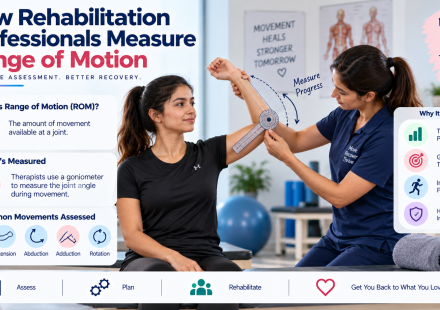
How Rehabilitation Professionals Measure Range of Motion

Learn how rehabilitation professionals measure range of motion using goniometers, inclinometers, observation, and digital tools. Discover active and passive ROM, assessment steps, accuracy, and its role in recovery. Range of motion, commonly called ROM,…
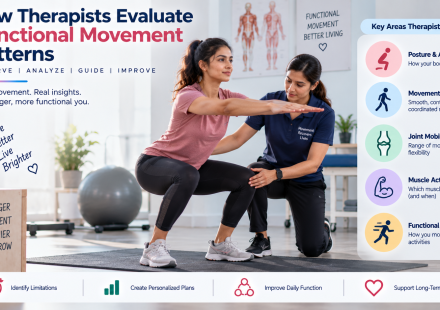
How Therapists Evaluate Functional Movement Patterns: A Complete Guide to Movement Assessment in Rehabilitation
Learn how therapists evaluate functional movement patterns, including posture, mobility, strength, balance, coordination, gait, and movement strategies, to create personalized rehabilitation plans. Human movement is more than the ability to move a single…
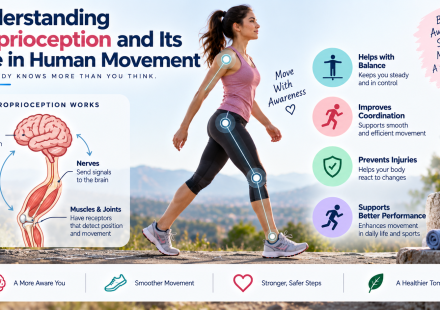
Understanding Proprioception: How Your Body Knows Where It Is and Why It Matters for Movement
Learn what proprioception is, how it helps the body sense position and movement, and why proprioception is essential for balance, coordination, rehabilitation, sports performance, and everyday activities. Have you ever closed your eyes and still known…
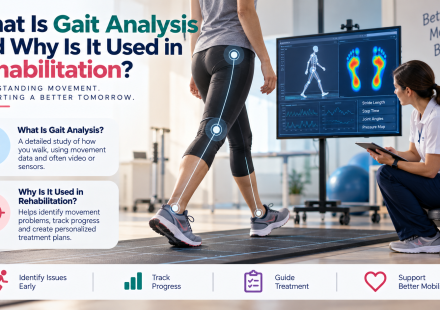
What Is Gait Analysis and Why Is It Used in Rehabilitation? A Complete Guide to Walking Assessment and Recovery
Learn what gait analysis is, how walking patterns are assessed, what gait parameters are measured, and why gait analysis is important for rehabilitation, physical therapy, balance, mobility, and recovery. Walking is one of the most important movements…
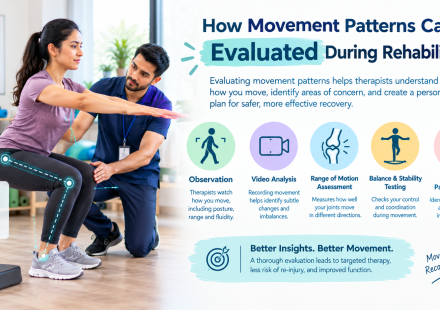
How Movement Patterns Are Evaluated During Rehabilitation: A Complete Guide to Functional Movement Assessment
Learn how movement patterns are evaluated during rehabilitation, including posture, balance, gait, coordination, strength, mobility, and functional tasks used to understand recovery and guide treatment. Movement is an important part of everyday life,…
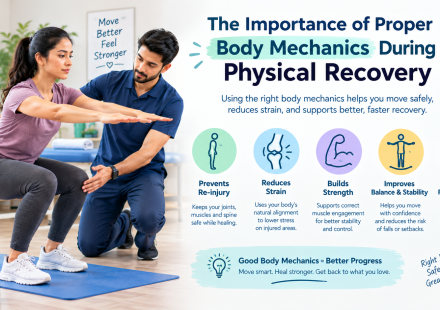
The Importance of Proper Body Mechanics During Physical Recovery: Safe Movement for Better Rehabilitation
Learn why proper body mechanics are important during physical recovery, how safe movement supports rehabilitation, reduces unnecessary strain, and improves confidence in everyday activities. Physical recovery is not only about completing exercises or…
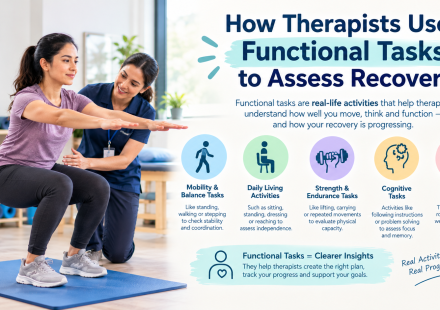
How Therapists Use Functional Tasks to Assess Recovery: Understanding Progress Through Everyday Movement
Learn how therapists use functional tasks to assess recovery, track movement, balance, strength, mobility, independence, and progress during rehabilitation. Recovery during rehabilitation is not measured only by muscle strength, flexibility, or how well…
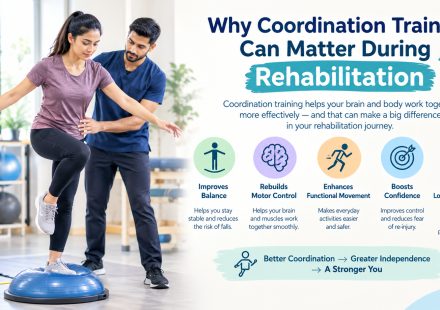
Why Coordination Training Matters During Rehabilitation: Improving Movement, Balance, and Everyday Independence
Discover why coordination training matters during rehabilitation and how it can support balance, movement control, walking, functional activities, confidence, and everyday independence. Coordination is an important part of almost every movement people…
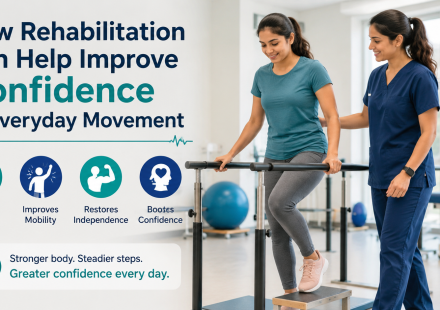
How Rehabilitation Can Help Improve Confidence in Everyday Movement
Discover how rehabilitation can improve confidence in everyday movement by rebuilding strength, balance, mobility, coordination and independence through gradual, guided recovery. Everyday movement may seem simple until an injury, surgery, illness,…
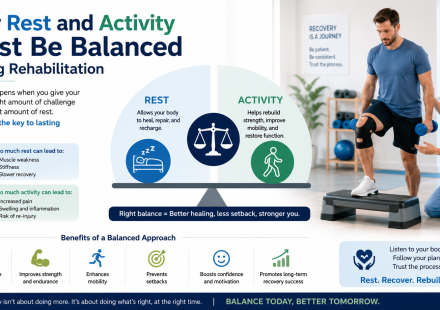
Why Rest and Activity Must Be Balanced During Rehabilitation
Learn why balancing rest and activity during rehabilitation is essential for recovery, including how proper exercise, rest, gradual progression and recovery support better physical function. Rehabilitation is a gradual process in which the body works to…