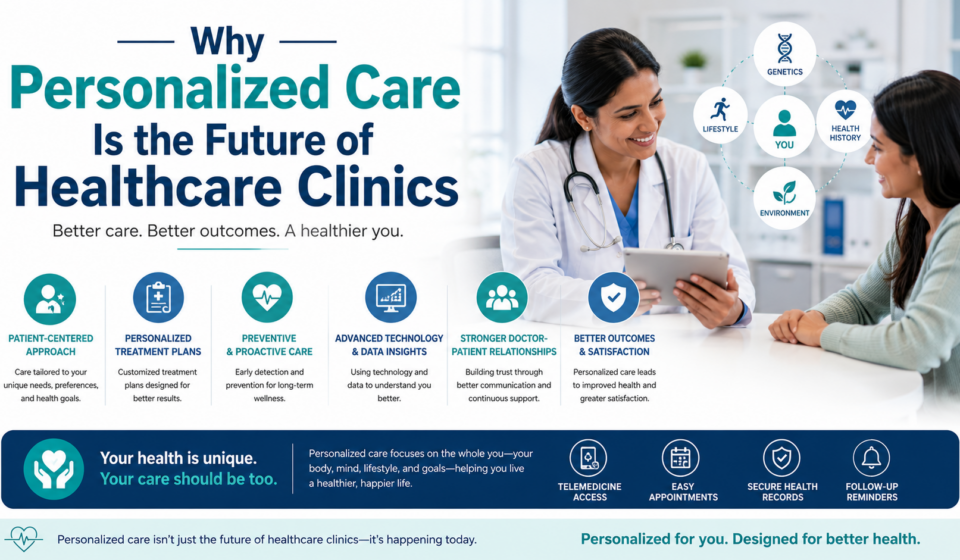

Healthcare is changing from a one-size-fits-all model to a more personal and patient-focused approach. In the past, many clinics treated patients mainly based on symptoms and general medical guidelines. Today, healthcare clinics are moving toward personalized care, where treatment is designed around each patient’s unique health condition, lifestyle, medical history, age, preferences, and long-term wellness goals.
What Is Personalized Care in Healthcare Clinics?
Personalized care means providing medical services based on the individual needs of each patient. Instead of giving the same treatment plan to every person with similar symptoms, doctors consider many personal factors before making decisions.
These factors may include medical history, family history, lifestyle habits, allergies, current medicines, test results, mental health, diet, occupation, and personal preferences. This approach helps doctors create more accurate and practical treatment plans.
In healthcare clinics, personalized care may include customized checkup plans, lifestyle counseling, chronic disease support, preventive screenings, follow-up reminders, and patient education.
Why Patients Prefer Personalized Care
Patients prefer personalized care because it makes them feel heard, respected, and understood. A patient is not just a medical case; they are a person with unique concerns and health goals.
When doctors take time to understand patients, trust improves. Patients are more likely to follow medical advice when they understand why a treatment is recommended and how it benefits them.
Personalized care also reduces confusion. Patients receive clear guidance that matches their condition instead of general advice that may not suit their lifestyle.
Better Diagnosis and Treatment Decisions
Personalized care supports better diagnosis because doctors look beyond basic symptoms. Two patients may have the same complaint, such as fatigue, but the reasons may be completely different. One may have anemia, another may have thyroid problems, stress, poor sleep, or diabetes.
By reviewing patient history, lifestyle, and test results, clinics can identify the real cause more accurately. This helps doctors choose the right treatment faster and avoid unnecessary medicines or repeated visits.
Better diagnosis leads to better care, faster recovery, and fewer complications.
Role of Technology in Personalized Care
Technology plays a major role in making personalized healthcare possible. Modern clinics use electronic health records, digital prescriptions, online reports, wearable devices, patient portals, and appointment reminders.
Electronic health records help doctors review previous visits, medicines, allergies, lab reports, and treatment progress. This makes care more continuous and organized.
Wearable devices and health apps can also provide useful information about heart rate, sleep, activity, blood pressure, and blood sugar. This data helps doctors understand a patient’s daily health patterns and provide better advice.
Personalized Preventive Healthcare
Preventive care is one of the strongest benefits of personalized healthcare. Instead of waiting for illness to appear, clinics can help patients identify risks early.
For example, a person with a family history of diabetes may need regular blood sugar tests and lifestyle guidance. Someone with high stress and poor sleep may need mental wellness support. A patient with heart disease risk may need cholesterol checks, diet advice, and exercise planning.
Personalized preventive care helps patients avoid serious health problems and maintain long-term wellness.
Improved Chronic Disease Management
Chronic diseases such as diabetes, hypertension, asthma, thyroid disorders, arthritis, and heart disease require regular care. Personalized care is especially important for these conditions because every patient responds differently to treatment.
Modern clinics can create individual care plans based on each patient’s health status, lifestyle, medication response, and risk factors. Doctors can adjust medicines, suggest diet changes, schedule follow-ups, and monitor progress.
This approach helps patients control chronic diseases better and reduces the risk of complications.
Stronger Doctor-Patient Relationships
A strong relationship between doctors and patients is an important part of good healthcare. Personalized care builds this relationship by encouraging better communication.
When patients feel comfortable sharing their concerns, doctors can understand the full picture. This helps in making better treatment decisions.
Patients are also more likely to return for follow-ups when they trust their healthcare provider. This continuity improves care quality and long-term health management.
Better Patient Experience
Modern patients expect convenience, comfort, and clear communication. Personalized care improves the patient experience by making healthcare more relevant and supportive.
Clinics can send reminders for appointments, follow-ups, medicines, vaccinations, and health checkups. Staff can guide patients through the process and make visits smoother.
When patients receive care that matches their needs, they feel more satisfied and confident. This creates a positive image for the clinic and encourages long-term patient loyalty.
Personalized Care for Families
Family healthcare becomes easier when clinics understand the needs of different age groups. Children, adults, women, and elderly patients all require different types of care.
Personalized clinics can provide vaccination plans for children, wellness checkups for adults, women’s health services, and chronic disease support for elderly patients.
This family-focused approach helps every member receive the right care at the right time.
Mental Health and Emotional Support
Personalized care also includes mental and emotional well-being. Physical health is closely connected to stress, sleep, anxiety, work pressure, and lifestyle habits.
Modern clinics are beginning to recognize the importance of mental health support. Doctors may ask about stress levels, sleep quality, mood changes, and emotional concerns during consultations.
This helps provide more complete care. Patients receive support not only for physical symptoms but also for overall wellness.
Reducing Unnecessary Treatments
One major advantage of personalized care is that it can reduce unnecessary treatments. When doctors understand a patient’s condition clearly, they can avoid giving medicines or tests that may not be needed.
This saves time, money, and effort for patients. It also reduces the risk of side effects and improves treatment safety.
Personalized care focuses on the right treatment for the right patient at the right time.
The Future of Healthcare Clinics
The future of healthcare clinics will be more digital, preventive, and patient-centered. Personalized care will become a key part of this future because patients want healthcare that understands them individually.
Clinics that offer customized treatment plans, digital records, telemedicine, regular follow-ups, and wellness support will stand out. They will not only treat illness but also help patients live healthier lives.
As technology continues to improve, personalized care will become easier, faster, and more accurate.
Source
https://l1nq.com/ugkrxhi
https://l1nq.com/vt9gd3s
Conclusion
Personalized care is the future of healthcare clinics because it focuses on the unique needs of every patient. It improves diagnosis, treatment, prevention, chronic disease management, patient satisfaction, and long-term wellness.
Modern patients want care that is convenient, respectful, and designed around their lifestyle. Personalized healthcare helps clinics meet these expectations by combining medical expertise with technology, communication, and compassion.
Healthcare clinics that adopt personalized care will be better prepared for the future. They will build stronger patient relationships, deliver better outcomes, and create a healthier community.
FAQs
1. What is personalized care in healthcare clinics?
Personalized care means creating treatment and wellness plans based on each patient’s health condition, medical history, lifestyle, and individual needs.
2. Why is personalized care important?
Personalized care is important because it helps doctors provide more accurate treatment, better prevention, and improved patient satisfaction.
3. How does technology support personalized care?
Technology supports personalized care through electronic health records, health apps, wearable devices, digital reports, appointment reminders, and telemedicine.
4. Is personalized care useful for chronic diseases?
Yes, personalized care is very helpful for chronic diseases such as diabetes, hypertension, asthma, thyroid problems, and heart disease because each patient needs regular and customized support.
5. How does personalized care improve patient experience?
It improves patient experience by offering clear communication, customized guidance, convenient follow-ups, and care that matches the patient’s lifestyle.