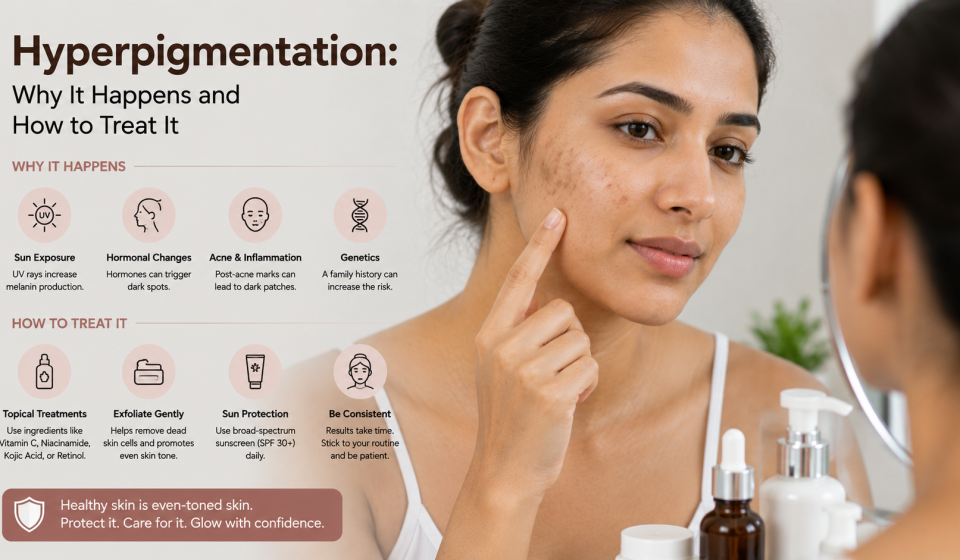

Learn about hyperpigmentation, its causes, symptoms, treatment options, and prevention tips. Discover how to reduce dark spots and maintain an even, healthy skin tone.
Hyperpigmentation is a common skin condition in which certain areas of the skin become darker than the surrounding skin. This happens due to an increase in melanin, the natural pigment responsible for skin, hair, and eye color. Hyperpigmentation can affect people of all skin types and ages and may appear as small spots, larger patches, or widespread discoloration.
Although hyperpigmentation is usually harmless, it can affect self-confidence and may sometimes indicate an underlying skin condition. Common triggers include sun exposure, acne, hormonal changes, inflammation, aging, and certain medications. Fortunately, many cases of hyperpigmentation can be improved with proper skincare, sun protection, and medical treatments when necessary.
This article explains the causes of hyperpigmentation, different types, symptoms, treatment options, and practical skincare tips to help achieve a healthier, more even skin tone.
What Is Hyperpigmentation?
Hyperpigmentation occurs when the skin produces excess melanin in certain areas.
Melanin is the pigment that gives color to:
- Skin
- Hair
- Eyes
When melanin production increases, dark patches or spots become visible on the skin.
Hyperpigmentation is generally not harmful but may require treatment for cosmetic reasons or if associated with another medical condition.
How Does Melanin Work?
Melanin protects the skin from harmful ultraviolet (UV) rays.
Specialized skin cells called melanocytes produce melanin.
When the skin experiences inflammation, injury, hormonal changes, or excessive sun exposure, melanocytes may produce extra melanin, leading to darker skin patches.
Common Causes of Hyperpigmentation
Several factors can increase melanin production.
Common causes include:
- Excessive sun exposure
- Acne scars
- Skin injuries
- Hormonal changes
- Pregnancy
- Aging
- Certain medications
- Inflammatory skin conditions
Identifying the underlying cause helps guide appropriate treatment.
Sun Exposure
Sun exposure is one of the leading causes of hyperpigmentation.
Ultraviolet rays stimulate melanin production as a natural defense mechanism.
Over time, repeated sun exposure may lead to:
- Sunspots
- Age spots
- Uneven skin tone
- Dark patches
Daily sunscreen use is one of the most effective preventive measures.
Post-Inflammatory Hyperpigmentation (PIH)
Post-inflammatory hyperpigmentation develops after the skin heals from inflammation or injury.
Common triggers include:
- Acne
- Eczema
- Psoriasis
- Cuts
- Burns
- Insect bites
The skin may remain darker for weeks or even months after healing.
Melasma
Melasma is a common type of hyperpigmentation caused mainly by hormonal changes.
It often appears as brown or grayish patches on:
- Forehead
- Cheeks
- Nose
- Upper lip
Melasma is frequently seen during pregnancy or in people taking hormonal medications.
Age Spots
Age spots, also known as liver spots or solar lentigines, develop after years of sun exposure.
They commonly appear on:
- Face
- Hands
- Arms
- Shoulders
These spots become more common with increasing age.
Risk Factors
Certain factors increase the likelihood of developing hyperpigmentation.
These include:
- Frequent sun exposure
- Darker skin tones
- Hormonal changes
- Pregnancy
- Acne-prone skin
- Chronic skin inflammation
- Family history
- Aging
Understanding risk factors helps with prevention.
Symptoms of Hyperpigmentation
Symptoms vary depending on the cause.
Common signs include:
- Brown patches
- Black spots
- Grayish discoloration
- Uneven skin tone
- Flat dark areas
- Spots that become darker after sun exposure
Most areas are painless but may be cosmetically concerning.
Areas Commonly Affected
Hyperpigmentation frequently develops on:
- Face
- Neck
- Hands
- Arms
- Shoulders
- Back
- Chest
Sun-exposed areas are particularly vulnerable.
How Hyperpigmentation Is Diagnosed
Healthcare professionals diagnose hyperpigmentation through:
- Medical history
- Physical examination
- Skin assessment
- Review of medications
- Evaluation of hormonal factors
In some cases, additional tests may be recommended to identify underlying medical conditions.
Treatment Options
Treatment depends on the cause and severity.
Common treatment options include:
- Prescription lightening creams
- Topical retinoids
- Azelaic acid
- Vitamin C serums
- Chemical peels
- Laser therapy
- Microneedling
- Cryotherapy for selected lesions
Treatment should always be supervised by a qualified healthcare professional.
Daily Skincare Routine for Hyperpigmentation
A consistent skincare routine helps improve skin tone.
Recommended steps include:
Step 1: Gentle Cleansing
Wash your face twice daily using a mild cleanser that does not irritate the skin.
Step 2: Apply Antioxidant Products
Products containing Vitamin C or niacinamide may help brighten the skin and reduce uneven pigmentation over time.
Step 3: Moisturize
Use a fragrance-free moisturizer to maintain the skin barrier and reduce irritation.
Step 4: Wear Sunscreen Every Day
Apply a broad-spectrum sunscreen with SPF 30 or higher every morning, even on cloudy days.
Sun protection is essential because UV exposure can worsen existing pigmentation.
Ingredients That May Help Reduce Hyperpigmentation
Several skincare ingredients may improve dark spots.
Commonly recommended ingredients include:
- Vitamin C
- Niacinamide
- Azelaic acid
- Retinoids
- Kojic acid
- Tranexamic acid
- Alpha arbutin
- Glycolic acid
Use these ingredients under professional guidance, especially if you have sensitive skin.
Healthy Lifestyle Habits
Healthy habits support overall skin health.
Recommendations include:
- Drink enough water.
- Eat a balanced diet rich in fruits and vegetables.
- Get adequate sleep.
- Manage stress.
- Avoid smoking.
- Exercise regularly.
Healthy lifestyle choices support skin repair and renewal.
Foods That Support Healthy Skin
Nutrition plays an important role in skin health.
Include foods rich in:
- Vitamin C
- Vitamin E
- Zinc
- Omega-3 fatty acids
- Protein
- Antioxidants
Good choices include:
- Citrus fruits
- Berries
- Leafy green vegetables
- Nuts
- Seeds
- Fish
- Eggs
Skin Care Mistakes to Avoid
Certain habits can worsen pigmentation.
Avoid:
- Picking acne or pimples
- Skipping sunscreen
- Using harsh scrubs
- Over-exfoliating
- Trying multiple active ingredients at once
- Using unverified home remedies
Gentle skincare helps protect the skin barrier and reduce inflammation.
Can Hyperpigmentation Be Prevented?
Many cases can be prevented or minimized through healthy habits.
Preventive measures include:
- Wear sunscreen daily.
- Reapply sunscreen every two hours when outdoors.
- Wear protective clothing and hats.
- Treat acne early.
- Avoid picking or scratching the skin.
- Follow a consistent skincare routine.
Prevention is often easier than treating established pigmentation.
When Should You See a Healthcare Professional?
Consult a healthcare professional if:
- Dark patches appear suddenly.
- Pigmentation changes rapidly.
- Skin lesions bleed or change shape.
- Home treatments do not improve pigmentation.
- Hyperpigmentation affects your quality of life.
Early evaluation ensures appropriate diagnosis and treatment.
Common Myths About Hyperpigmentation
Several misconceptions exist about hyperpigmentation.
Common myths include:
- Only people with darker skin develop hyperpigmentation.
- Lemon juice safely removes dark spots.
- Sunscreen is unnecessary indoors.
- Dark spots disappear quickly without treatment.
- Scrubbing the skin removes pigmentation.
Understanding the facts helps prevent skin damage.
Living with Hyperpigmentation
Managing hyperpigmentation requires patience and consistency.
Helpful habits include:
- Protecting your skin from the sun
- Following a gentle skincare routine
- Using products as recommended
- Avoiding skin irritation
- Attending regular dermatology follow-ups if needed
Improvement often occurs gradually over several weeks or months.
Sources
https://www.nhs.uk
https://www.who.int
https://www.cdc.gov
https://dermnetnz.org
Conclusion
Hyperpigmentation is a common skin condition caused by excess melanin production due to sun exposure, hormonal changes, acne, inflammation, aging, and other factors. Although it is usually harmless, dark patches can affect confidence and may take time to fade.
A consistent skincare routine, daily sunscreen use, healthy lifestyle habits, and appropriate medical treatments can significantly improve skin tone and reduce discoloration. If pigmentation changes suddenly, becomes widespread, or does not improve with proper skincare, consult a qualified healthcare professional for a personalized evaluation and treatment plan.
FAQs
1. What causes hyperpigmentation?
Hyperpigmentation is caused by excess melanin production. Common triggers include sun exposure, acne, hormonal changes, skin injuries, inflammation, pregnancy, aging, and certain medications.
2. Can hyperpigmentation go away naturally?
Some types, such as post-inflammatory hyperpigmentation, may fade gradually over several months. Others, like melasma or age spots, often require treatment and consistent sun protection.
3. Is sunscreen important for hyperpigmentation?
Yes. Daily use of a broad-spectrum sunscreen with SPF 30 or higher helps prevent existing dark spots from becoming darker and reduces the risk of new pigmentation.
4. Which skincare ingredients help reduce dark spots?
Ingredients such as Vitamin C, niacinamide, azelaic acid, retinoids, kojic acid, tranexamic acid, and alpha arbutin may help improve hyperpigmentation when used appropriately.
5. When should I see a dermatologist?
Consult a dermatologist if pigmentation appears suddenly, changes rapidly, becomes widespread, or does not improve with consistent skincare and sun protection.