
Learn about dandruff, its causes, symptoms, treatment options, and prevention tips. Discover effective ways to control flakes, reduce scalp itching, and maintain a healthy scalp and hair.
Dandruff is one of the most common scalp conditions, affecting people of all ages. It is characterized by white or yellowish flakes of dead skin that shed from the scalp and may be accompanied by itching, irritation, or redness. Although dandruff is not contagious or serious, it can cause discomfort, embarrassment, and affect a person’s confidence.
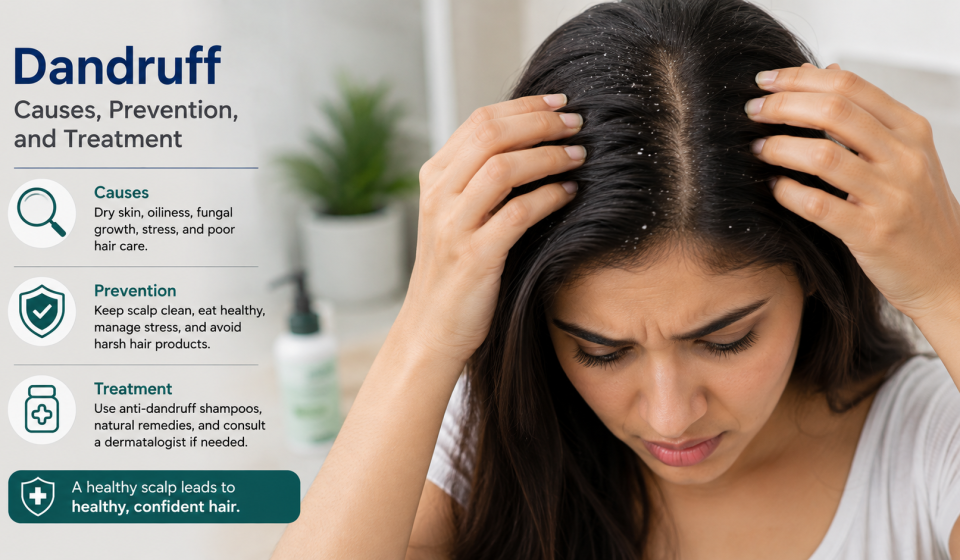
Many factors can contribute to dandruff, including dry skin, excess oil production, fungal overgrowth, sensitivity to hair care products, and certain skin conditions. Fortunately, dandruff is usually manageable with proper scalp care, medicated shampoos, and healthy lifestyle habits.
Recognizing the symptoms early and following an appropriate treatment plan can help reduce flaking and improve overall scalp health. This article explains the common causes of dandruff, its symptoms, treatment options, and practical prevention tips to help keep your scalp clean and healthy.
What Is Dandruff?
Dandruff is a common scalp condition that causes excessive shedding of dead skin cells.
The flakes may be:
- White
- Yellowish
- Dry
- Oily
Dandruff is usually not harmful, but persistent symptoms may indicate an underlying scalp condition that requires medical attention.
How the Scalp Normally Works
The scalp naturally produces new skin cells while old cells shed over time.
Normally, this shedding process is not noticeable.
In dandruff, skin cells are shed much more rapidly, causing visible flakes to accumulate in the hair and on clothing.
Common Causes of Dandruff
Several factors can contribute to dandruff.
Common causes include:
- Dry scalp
- Oily scalp
- Overgrowth of Malassezia yeast
- Seborrheic dermatitis
- Infrequent shampooing
- Sensitivity to hair products
- Psoriasis
- Eczema
Often, more than one factor is involved.
Dry Scalp
Dry skin is one of the most common causes of mild dandruff.
Signs include:
- Small white flakes
- Tight scalp
- Mild itching
- Dry skin elsewhere on the body
Dry weather often worsens symptoms.
Oily Scalp
Excess oil production can also contribute to dandruff.
An oily scalp allows yeast to grow more easily, leading to irritation and flaking.
Symptoms include:
- Larger yellow flakes
- Greasy scalp
- Persistent itching
Malassezia Yeast
A naturally occurring yeast called Malassezia lives on most healthy scalps.
In some individuals, it grows excessively and irritates the scalp, increasing skin cell turnover and causing dandruff.
Seborrheic Dermatitis
Seborrheic dermatitis is a more severe form of dandruff.
Symptoms include:
- Red, inflamed skin
- Greasy scales
- Persistent itching
- Yellowish flakes
It may also affect the eyebrows, ears, nose, and chest.
Sensitivity to Hair Products
Some people develop scalp irritation after using certain hair care products.
Possible triggers include:
- Hair dyes
- Hair sprays
- Shampoos
- Conditioners
- Styling gels
- Fragrances
Switching to gentle or fragrance-free products may improve symptoms.
Risk Factors
Anyone can develop dandruff, but certain factors increase the risk.
These include:
- Oily skin
- Stress
- Cold weather
- Hormonal changes
- Poor scalp hygiene
- Certain neurological conditions
- Weakened immune system
Understanding these risk factors can help reduce flare-ups.
Common Symptoms
Dandruff symptoms vary from person to person.
Common symptoms include:
- White flakes on the scalp
- Flakes on clothing
- Itchy scalp
- Mild redness
- Dry scalp
- Oily scalp
- Scalp irritation
Symptoms often worsen during winter or periods of stress.
How Dandruff Is Diagnosed
Healthcare professionals usually diagnose dandruff through:
- Medical history
- Scalp examination
- Review of symptoms
Additional tests are rarely required unless another skin condition is suspected.
Treatment Options
Treatment depends on the severity and underlying cause.
Common treatment options include:
- Anti-dandruff shampoos
- Antifungal shampoos
- Zinc pyrithione shampoos
- Selenium sulfide shampoos
- Ketoconazole shampoos
- Salicylic acid shampoos
- Coal tar shampoos
- Prescription topical medications for severe cases
Use medicated shampoos as directed for the best results.
Choosing the Right Shampoo
Different ingredients work in different ways.
Common anti-dandruff ingredients include:
- Ketoconazole
- Zinc pyrithione
- Selenium sulfide
- Salicylic acid
- Coal tar
If one shampoo is not effective, your healthcare provider may recommend another type.
Proper Hair Washing Habits
Healthy hair washing habits help control dandruff.
Recommendations include:
- Wash your hair regularly.
- Massage shampoo gently into the scalp.
- Leave medicated shampoo on the scalp for several minutes before rinsing.
- Rinse thoroughly.
- Avoid scratching the scalp.
Proper cleansing helps reduce oil buildup and flakes.
Home Care Tips
Simple daily habits can improve scalp health.
Helpful tips include:
- Brush hair gently.
- Keep the scalp clean.
- Avoid excessive heat styling.
- Use mild hair products.
- Stay hydrated.
- Protect the scalp from excessive sun exposure.
These habits support healthy scalp function.
Healthy Diet for Scalp Health
Nutrition contributes to healthy skin and hair.
Include foods rich in:
- Protein
- Zinc
- Iron
- Omega-3 fatty acids
- Vitamin B complex
- Vitamin D
- Fruits
- Vegetables
- Whole grains
A balanced diet supports overall scalp health.
Lifestyle Habits That May Help
Healthy lifestyle choices may reduce dandruff flare-ups.
Recommendations include:
- Manage stress.
- Exercise regularly.
- Sleep 7–9 hours each night.
- Stay hydrated.
- Avoid smoking.
- Limit alcohol intake.
Good overall health often improves scalp condition.
How to Prevent Dandruff
Although dandruff cannot always be prevented, the following habits may help:
- Wash your hair regularly.
- Choose products suitable for your scalp type.
- Keep your scalp clean.
- Avoid excessive use of styling products.
- Manage stress effectively.
- Eat a nutritious diet.
- Protect your scalp from harsh weather.
Consistency is important for long-term control.
When Should You See a Healthcare Professional?
Consult a healthcare professional if:
- Dandruff does not improve after several weeks of treatment.
- The scalp becomes painful.
- Severe redness develops.
- There is swelling or pus.
- Hair loss accompanies dandruff.
- Symptoms become severe or widespread.
Persistent symptoms may indicate another scalp condition requiring medical evaluation.
Common Myths About Dandruff
Several misconceptions exist about dandruff.
Some common myths include:
- Dandruff is caused by poor hygiene alone.
- Dandruff is contagious.
- Shaving your head cures dandruff.
- Only adults get dandruff.
- Oily hair cannot develop dandruff.
Understanding the facts helps people manage dandruff more effectively.
Living with Dandruff
Most people successfully manage dandruff through:
- Regular scalp care
- Using appropriate shampoos
- Identifying triggers
- Following treatment recommendations
- Maintaining healthy lifestyle habits
With proper care, symptoms often become much less noticeable.
Sources
https://www.nhs.uk
https://www.cdc.gov
https://www.who.int
https://www.msdmanuals.com
Conclusion
Dandruff is a common scalp condition that can usually be managed effectively with proper scalp hygiene, medicated shampoos, and healthy lifestyle habits. While it is not contagious or dangerous, persistent dandruff can affect comfort and confidence if left untreated.
Recognizing early symptoms, identifying possible triggers, and following a consistent hair care routine are key steps toward maintaining a healthy scalp. If dandruff becomes severe, persists despite treatment, or is associated with significant redness or hair loss, consult a qualified healthcare professional for further evaluation and personalized care.
FAQs
1. What causes dandruff?
Dandruff can result from dry skin, oily scalp, overgrowth of Malassezia yeast, seborrheic dermatitis, sensitivity to hair products, or certain skin conditions such as psoriasis and eczema.
2. Is dandruff contagious?
No. Dandruff is not contagious and cannot spread through physical contact or sharing personal items.
3. Can dandruff cause hair loss?
Dandruff itself usually does not cause permanent hair loss. However, severe itching and frequent scratching may contribute to temporary hair shedding or scalp irritation.
4. How can I prevent dandruff?
Regular hair washing, using suitable shampoos, maintaining good scalp hygiene, eating a balanced diet, and managing stress can help reduce dandruff.
5. When should I see a doctor for dandruff?
Seek medical advice if dandruff persists despite treatment, causes severe itching, redness, swelling, pain, noticeable hair loss, or signs of infection.