
Learn about the common causes of hair loss, symptoms, treatment options, and prevention tips. Discover effective solutions and healthy habits to promote stronger, healthier hair.
Hair loss is a common concern that affects millions of people worldwide, regardless of age or gender. While losing some hair every day is a normal part of the hair growth cycle, excessive hair shedding or noticeable thinning may indicate an underlying problem. Hair loss can affect the scalp or other parts of the body and may develop gradually or occur suddenly, depending on the cause.
For many people, hair is closely linked to confidence and self-image. Experiencing hair loss can be emotionally challenging, but understanding its causes and seeking appropriate care can make a significant difference. Fortunately, many types of hair loss are temporary or treatable, especially when identified early.
This article explains the common causes of hair loss, symptoms to watch for, available treatment options, and practical tips to help maintain healthy hair and reduce excessive hair fall.
What Is Hair Loss?
Hair loss, medically known as alopecia, refers to excessive shedding or thinning of hair from the scalp or other parts of the body.
It may appear as:
- Gradual thinning
- Sudden hair shedding
- Bald patches
- Receding hairline
- Widening part in the hair
- Complete loss of hair in specific areas
The severity varies from mild thinning to significant hair loss.
Understanding the Hair Growth Cycle
Healthy hair follows a natural growth cycle consisting of three main phases:
- Anagen (Growth Phase): Hair actively grows for several years.
- Catagen (Transition Phase): Hair growth slows and the follicle shrinks.
- Telogen (Resting Phase): Hair rests before naturally falling out, allowing new hair to grow.
Disruptions to this cycle can result in increased hair shedding.
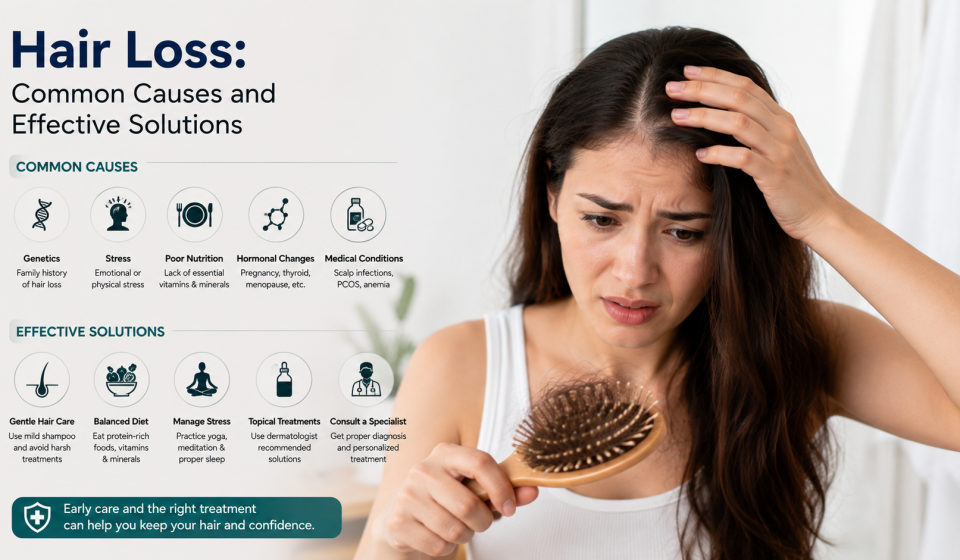
Common Causes of Hair Loss
Hair loss can occur due to many different factors.
Common causes include:
- Genetics
- Hormonal changes
- Stress
- Nutritional deficiencies
- Certain medications
- Medical conditions
- Scalp infections
- Poor hair care practices
Identifying the underlying cause is important for choosing the right treatment.
Genetic Hair Loss
Hereditary hair loss is the most common cause of permanent hair thinning.
It may present as:
- Receding hairline in men
- Thinning at the crown
- Widening hair part in women
- Overall reduction in hair density
Genetic hair loss usually develops gradually over time.
Hormonal Changes
Hormonal fluctuations can affect the normal hair growth cycle.
Common causes include:
- Pregnancy
- Childbirth
- Menopause
- Thyroid disorders
- Polycystic ovary syndrome (PCOS)
Hormonal hair loss may improve once hormone levels become balanced.
Stress and Hair Loss
Physical or emotional stress can temporarily increase hair shedding.
Examples include:
- Major illness
- Surgery
- High fever
- Emotional trauma
- Significant weight loss
Stress-related hair loss often improves once the body recovers.
Nutritional Deficiencies
Healthy hair requires adequate nutrition.
Deficiencies that may contribute to hair loss include:
- Iron deficiency
- Vitamin D deficiency
- Zinc deficiency
- Protein deficiency
- Vitamin B12 deficiency
A balanced diet supports healthy hair growth.
Medical Conditions
Several health conditions can contribute to hair loss.
These include:
- Thyroid disorders
- Autoimmune diseases
- Diabetes
- Scalp infections
- Anemia
- Lupus
Treating the underlying condition often helps improve hair growth.
Scalp Infections
Certain fungal or bacterial infections may damage hair follicles.
Symptoms may include:
- Scaly patches
- Redness
- Itching
- Hair breakage
- Bald spots
Early treatment helps reduce the risk of permanent hair loss.
Medications
Some medications may cause temporary hair loss as a side effect.
Examples include medicines used for:
- Cancer treatment
- High blood pressure
- Arthritis
- Depression
- Certain hormonal conditions
Never stop prescribed medications without consulting your healthcare provider.
Symptoms of Hair Loss
Symptoms vary depending on the cause.
Common signs include:
- Increased hair shedding
- Thinning hair
- Widening hair part
- Receding hairline
- Bald patches
- Hair breakage
- Itchy scalp
- Excess hair on pillows or in the shower
Persistent symptoms should be evaluated by a healthcare professional.
How Hair Loss Is Diagnosed
Healthcare professionals may diagnose hair loss through:
- Medical history
- Physical examination
- Scalp examination
- Hair pull test
- Blood tests
- Scalp biopsy in selected cases
Proper diagnosis helps determine the most effective treatment.
Treatment Options
Treatment depends on the underlying cause.
Common treatment options include:
- Topical medications
- Oral medications
- Nutritional supplements (when deficiencies are confirmed)
- Treatment of underlying medical conditions
- Platelet-rich plasma (PRP) therapy in selected cases
- Hair transplant surgery for suitable candidates
- Low-level laser therapy
Treatment should always be guided by a qualified healthcare professional.
Healthy Hair Care Routine
A gentle hair care routine helps reduce unnecessary hair damage.
Healthy habits include:
- Wash hair with a mild shampoo.
- Avoid excessive heat styling.
- Use conditioner regularly.
- Avoid tight hairstyles.
- Comb wet hair gently.
- Trim split ends regularly.
Proper hair care helps protect existing hair.
Foods That Support Healthy Hair
Nutrition plays an important role in maintaining healthy hair.
Include foods rich in:
- Protein
- Iron
- Zinc
- Omega-3 fatty acids
- Vitamin D
- Vitamin C
- Biotin
- Leafy green vegetables
- Eggs
- Fish
- Nuts
- Seeds
A balanced diet supports healthy hair growth.
Lifestyle Tips to Reduce Hair Loss
Simple lifestyle changes can help improve overall hair health.
Recommendations include:
- Manage stress effectively.
- Get adequate sleep.
- Stay hydrated.
- Exercise regularly.
- Avoid smoking.
- Limit alcohol consumption.
- Maintain a balanced diet.
Healthy habits support stronger hair and overall well-being.
Hair Care Mistakes to Avoid
Certain habits may increase hair damage.
Avoid:
- Frequent chemical treatments
- Excessive hair coloring
- Tight ponytails or braids
- Aggressive brushing
- Very hot water during hair washing
- Excessive use of hair straighteners or curling irons
Protecting your hair helps reduce breakage.
Can Hair Loss Be Prevented?
Not all forms of hair loss can be prevented, especially hereditary conditions.
However, you can reduce your risk by:
- Eating a nutritious diet
- Treating medical conditions promptly
- Practicing gentle hair care
- Managing stress
- Avoiding unnecessary chemical treatments
- Keeping the scalp clean
Early intervention often produces better results.
When Should You See a Healthcare Professional?
Consult a healthcare professional if:
- Hair loss is sudden.
- You develop bald patches.
- Hair shedding becomes excessive.
- Scalp pain or itching occurs.
- Hair loss is associated with other symptoms such as fatigue or weight changes.
- Home care does not improve the condition.
Early evaluation helps identify treatable causes.
Myths About Hair Loss
Several myths exist about hair loss.
Common misconceptions include:
- Wearing hats causes baldness.
- Shampooing daily causes hair loss.
- Hair loss only affects men.
- Cutting hair frequently makes it grow faster.
- Stress is the only cause of hair loss.
Understanding the facts helps you make informed decisions about hair care.
Sources
https://www.nhs.uk
https://www.cdc.gov
https://www.who.int
https://www.aafp.org
Conclusion
Hair loss is a common condition with many possible causes, including genetics, hormonal changes, nutritional deficiencies, stress, medical conditions, and poor hair care habits. While some hair loss is a natural part of the hair growth cycle, excessive shedding or noticeable thinning should not be ignored.
Maintaining a healthy diet, following a gentle hair care routine, managing stress, and seeking early medical advice when symptoms appear can help protect hair health and improve treatment outcomes. With proper diagnosis and personalized care, many people can successfully manage hair loss and maintain healthy, stronger hair.
FAQs
1. How much hair loss is considered normal?
Losing approximately 50 to 100 hairs per day is considered a normal part of the natural hair growth cycle.
2. What is the most common cause of hair loss?
The most common cause is hereditary hair loss, also known as androgenetic alopecia. Other causes include hormonal changes, stress, nutritional deficiencies, medical conditions, and certain medications.
3. Can stress cause hair loss?
Yes. Significant physical or emotional stress can temporarily increase hair shedding, but hair often regrows once the stress is managed.
4. Can hair loss be treated?
Many types of hair loss can be treated successfully with medications, lifestyle changes, nutritional support, or medical procedures, depending on the underlying cause.
5. When should I see a doctor for hair loss?
Seek medical advice if hair loss is sudden, severe, accompanied by scalp symptoms, or continues despite maintaining a healthy hair care routine.