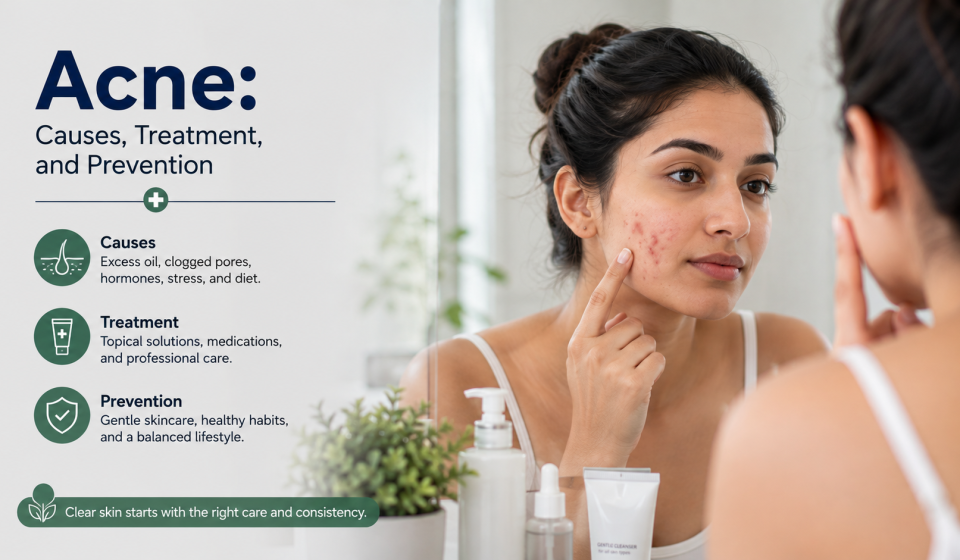

Learn about acne, its causes, symptoms, treatment options, and prevention tips. Discover effective skincare habits and lifestyle changes to maintain healthy, clear skin.
Acne is one of the most common skin conditions, affecting millions of people worldwide. Although it is often associated with teenagers, acne can occur at any age, including adulthood. It develops when hair follicles become clogged with excess oil, dead skin cells, and bacteria, leading to pimples, blackheads, whiteheads, or deeper, painful cysts.
While acne is not a life-threatening condition, it can affect self-confidence, emotional well-being, and quality of life. Fortunately, most cases can be effectively managed with proper skincare, healthy lifestyle habits, and appropriate medical treatment when necessary.
Understanding what causes acne, recognizing its different types, and following preventive measures can help reduce breakouts and minimize the risk of permanent acne scars. This article explains everything you need to know about acne, including its causes, symptoms, treatment options, and practical prevention tips.
What Is Acne?
Acne is a chronic inflammatory skin condition that develops when pores become blocked by oil (sebum), dead skin cells, and bacteria.
Acne commonly appears on areas with the highest concentration of oil glands, including:
- Face
- Forehead
- Nose
- Chin
- Chest
- Upper back
- Shoulders
The severity of acne varies from occasional pimples to severe cystic acne.
Types of Acne
Acne can appear in different forms.
Common types include:
- Whiteheads (closed clogged pores)
- Blackheads (open clogged pores)
- Papules (small red bumps)
- Pustules (pus-filled pimples)
- Nodules (large, painful lumps beneath the skin)
- Cysts (deep, painful, pus-filled lesions)
Severe forms of acne are more likely to leave permanent scars if not treated promptly.
Common Causes of Acne
Several factors contribute to acne development.
These include:
- Excess oil production
- Blocked hair follicles
- Bacterial growth
- Hormonal changes
- Inflammation
Acne usually develops due to a combination of these factors rather than a single cause.
Hormonal Changes
Hormonal fluctuations are one of the most common causes of acne.
Hormone-related acne may occur during:
- Puberty
- Menstrual cycles
- Pregnancy
- Menopause
- Certain hormonal disorders
Hormones increase oil production, making pores more likely to become clogged.
Excess Oil Production
Sebaceous glands naturally produce oil to protect and moisturize the skin.
However, excessive oil production can mix with dead skin cells and block pores, creating an environment where acne-causing bacteria can grow.
Bacteria
The skin naturally contains bacteria, including Cutibacterium acnes.
When pores become blocked, these bacteria multiply and trigger inflammation, resulting in red, swollen pimples.
Dead Skin Cell Build-Up
Normally, dead skin cells shed naturally.
If they accumulate inside hair follicles instead, they can contribute to blocked pores and acne formation.
Family History
Genetics may influence acne risk.
Individuals with a family history of moderate or severe acne are more likely to develop the condition themselves.
Factors That Can Trigger Acne
Several factors may worsen acne, including:
- Stress
- Heavy or oily cosmetic products
- Friction from helmets or tight clothing
- Humid weather
- Certain medications
- Touching or picking at pimples
Recognizing personal triggers may help reduce breakouts.
Common Symptoms of Acne
Symptoms depend on the severity of the condition.
They may include:
- Whiteheads
- Blackheads
- Red pimples
- Painful bumps
- Pus-filled lesions
- Tender skin
- Acne scars
- Dark spots after healing
Symptoms often appear gradually and may fluctuate over time.
Acne Scars
Untreated or severe acne can damage deeper layers of the skin, leading to permanent scars.
Common types include:
- Ice pick scars
- Rolling scars
- Boxcar scars
- Raised scars
Early treatment can reduce the risk of scarring.
Daily Skincare Routine for Acne-Prone Skin
A gentle skincare routine supports healthier skin.
Recommended steps include:
- Wash your face twice daily using a mild cleanser.
- Use non-comedogenic moisturizers.
- Apply sunscreen every day.
- Remove makeup before sleeping.
- Avoid harsh scrubbing.
Consistent skincare is more effective than aggressive treatments.
Avoid Picking or Squeezing Pimples
Picking acne lesions can:
- Increase inflammation
- Spread bacteria
- Delay healing
- Cause permanent scars
- Increase skin pigmentation
Allow pimples to heal naturally or seek appropriate treatment.
Healthy Diet and Acne
Research suggests that some dietary habits may influence acne in certain individuals.
A balanced diet should include:
- Fruits
- Vegetables
- Whole grains
- Lean proteins
- Healthy fats
- Plenty of water
Limiting sugary foods and highly processed snacks may benefit some people, although diet affects everyone differently.
Stay Hydrated
Drinking enough water supports overall skin health.
Hydration helps maintain normal skin function and contributes to overall wellness, although it is not a direct treatment for acne.
Manage Stress
Stress does not directly cause acne but may worsen existing breakouts.
Helpful stress-management techniques include:
- Regular exercise
- Deep breathing
- Meditation
- Adequate sleep
- Spending time outdoors
Managing stress supports overall skin and mental health.
Choose Skin-Friendly Products
Look for products labeled:
- Non-comedogenic
- Oil-free
- Fragrance-free (for sensitive skin)
These products are less likely to block pores.
Treatment Options for Acne
Treatment depends on acne severity.
Common options include:
- Topical benzoyl peroxide
- Topical retinoids
- Salicylic acid products
- Azelaic acid
- Topical antibiotics
- Oral antibiotics
- Hormonal therapy for selected patients
- Oral isotretinoin for severe acne under specialist supervision
Treatment should be guided by a qualified healthcare professional, especially for persistent or severe acne.
When Should You See a Healthcare Professional?
Seek medical advice if:
- Acne is severe.
- Over-the-counter treatments are ineffective.
- Painful cysts develop.
- Acne leaves scars.
- Acne affects your emotional well-being.
- Breakouts suddenly become worse.
Early treatment can improve outcomes and reduce long-term skin damage.
Myths About Acne
Several misconceptions exist about acne.
Common myths include:
- Acne is caused only by poor hygiene.
- Washing your face repeatedly will cure acne.
- Sun exposure clears acne permanently.
- Toothpaste is an effective acne treatment.
- Only teenagers get acne.
Understanding the facts helps you make better skincare decisions.
Healthy Habits for Clearer Skin
Simple daily habits include:
- Cleanse your face gently twice daily.
- Use non-comedogenic skincare products.
- Avoid touching your face unnecessarily.
- Eat a balanced diet.
- Stay hydrated.
- Get adequate sleep.
- Manage stress.
- Wear sunscreen daily.
- Avoid picking pimples.
Consistency is essential for maintaining healthy skin.
Sources
https://www.aad.org
https://www.niams.nih.gov
https://www.mayoclinic.org
https://medlineplus.gov
Conclusion
Acne is a common but manageable skin condition that affects people of all ages. While excess oil production, clogged pores, bacteria, hormonal changes, and genetics all contribute to acne development, healthy skincare habits and early treatment can significantly improve skin health.
A gentle skincare routine, balanced nutrition, stress management, and the use of appropriate skincare products can help reduce breakouts and prevent long-term complications such as acne scars. If acne becomes severe, painful, or persistent, consulting a qualified healthcare professional can help you receive personalized treatment and achieve healthier, clearer skin.
FAQs
1. What causes acne?
Acne develops when hair follicles become clogged with excess oil, dead skin cells, and bacteria. Hormonal changes, genetics, stress, and certain skincare products may also contribute.
2. Can adults get acne?
Yes. Although acne is common during adolescence, many adults also experience acne due to hormonal changes, genetics, stress, medications, or other factors.
3. Does diet affect acne?
Some studies suggest that high-sugar and highly processed foods may worsen acne in certain individuals. Eating a balanced diet rich in fruits, vegetables, whole grains, and lean proteins supports overall skin health.
4. Should I pop my pimples?
No. Squeezing or picking pimples can increase inflammation, spread bacteria, delay healing, and increase the risk of permanent acne scars.
5. When should I see a doctor for acne?
Consult a healthcare professional if your acne is severe, painful, persistent, causing scars, affecting your confidence, or not improving with over-the-counter treatments.