
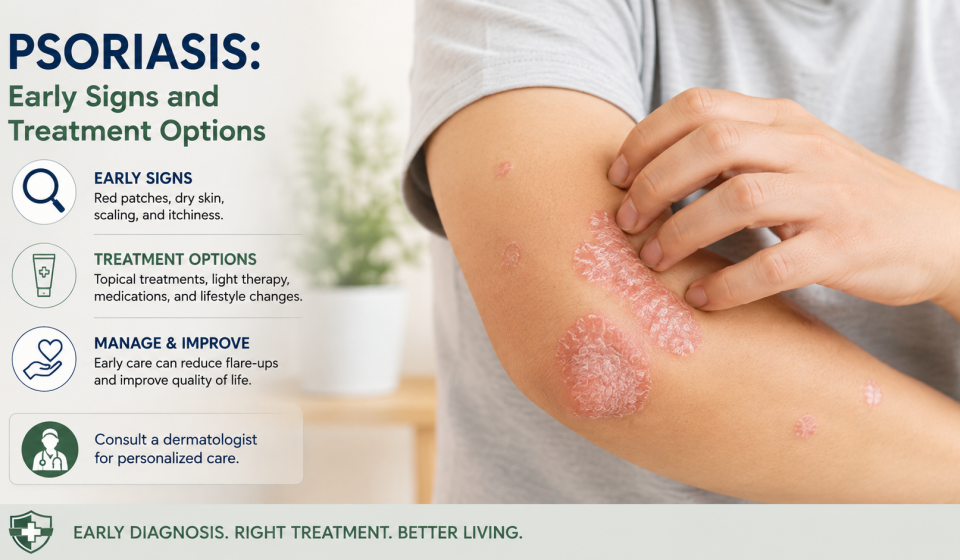

Learn about psoriasis, its early signs, causes, symptoms, treatment options, and prevention tips. Discover effective ways to manage psoriasis flare-ups and maintain healthier skin.
Psoriasis is a chronic autoimmune skin condition that affects millions of people worldwide. It causes skin cells to multiply much faster than normal, leading to the formation of thick, red patches covered with silvery-white scales. Although psoriasis is not contagious, it can significantly affect physical comfort, self-confidence, and overall quality of life.
The condition often develops in early adulthood but can occur at any age. Psoriasis typically follows a cycle of flare-ups and remission, where symptoms worsen for a period before improving. While there is currently no permanent cure, advances in medical treatments and proper skin care can effectively control symptoms and reduce the frequency of flare-ups.
Recognizing the early signs of psoriasis and beginning treatment promptly can help prevent complications such as skin infections, nail damage, and joint problems. This article explains the causes, symptoms, treatment options, lifestyle management, and prevention strategies for psoriasis.
What Is Psoriasis?
Psoriasis is a long-term inflammatory disease caused by an overactive immune system.
Normally, skin cells are replaced every 28 to 30 days. In people with psoriasis, this process takes only 3 to 7 days, causing skin cells to build up rapidly on the surface instead of shedding naturally.
The condition most commonly affects:
- Scalp
- Elbows
- Knees
- Lower back
- Hands
- Feet
- Fingernails
- Toenails
The severity varies from mild localized patches to widespread skin involvement.
Early Signs of Psoriasis
Recognizing psoriasis early allows treatment to begin before symptoms become more severe.
Common early symptoms include:
- Small red or pink patches of skin
- Dry or cracked skin
- Silvery-white scales
- Persistent itching
- Burning or soreness
- Thickened skin plaques
- Skin flaking
- Mild bleeding after scratching
Symptoms may appear gradually or develop suddenly after a trigger.
Common Types of Psoriasis
Psoriasis occurs in several forms.
The most common types include:
Plaque Psoriasis
This is the most common type.
Features include:
- Thick raised patches
- Silvery scales
- Red, inflamed skin
- Itching
Guttate Psoriasis
Usually appears after bacterial infections.
Symptoms include:
- Small drop-shaped spots
- Common in children and young adults
- Often appears on the trunk and limbs
Inverse Psoriasis
Occurs in skin folds such as:
- Under the breasts
- Groin
- Armpits
The skin appears smooth, shiny, and inflamed.
Pustular Psoriasis
Characterized by:
- White pus-filled blisters
- Red surrounding skin
- Painful inflammation
Nail Psoriasis
Can affect fingernails and toenails by causing:
- Pitting
- Thickening
- Discoloration
- Nail separation
Erythrodermic Psoriasis
A rare but serious form that may cause:
- Widespread redness
- Severe peeling
- Intense itching
- Fever
- Dehydration
This type requires immediate medical attention.
What Causes Psoriasis?
The exact cause is unknown.
Researchers believe psoriasis develops because of a combination of:
- Immune system dysfunction
- Genetic factors
- Environmental triggers
The immune system mistakenly attacks healthy skin cells, leading to excessive skin cell production.
Risk Factors
Certain factors increase the likelihood of developing psoriasis.
These include:
- Family history
- Autoimmune disorders
- Smoking
- Obesity
- Frequent infections
- Emotional stress
- Certain medications
- Skin injuries
Having risk factors does not necessarily mean you will develop psoriasis.
Common Psoriasis Triggers
Many people notice flare-ups after exposure to certain triggers.
Common triggers include:
- Stress
- Cold weather
- Dry air
- Skin cuts or burns
- Throat infections
- Smoking
- Excessive alcohol use
- Some blood pressure medications
- Certain antimalarial drugs
Learning your personal triggers helps improve symptom control.
Symptoms of Psoriasis
Symptoms differ from person to person.
Common symptoms include:
- Raised red skin patches
- Thick silvery scales
- Dry cracked skin
- Bleeding skin
- Itching
- Burning sensation
- Painful plaques
- Thickened nails
- Joint stiffness
Symptoms often improve and worsen over time.
Psoriatic Arthritis
Approximately one-third of people with psoriasis may develop psoriatic arthritis.
Warning signs include:
- Joint pain
- Swollen fingers or toes
- Morning stiffness
- Reduced joint movement
- Back pain
Early diagnosis helps prevent permanent joint damage.
How Psoriasis Is Diagnosed
Healthcare professionals usually diagnose psoriasis through:
- Medical history
- Physical examination
- Skin assessment
- Nail examination
- Skin biopsy (in uncertain cases)
Most cases can be diagnosed by examining the appearance of the skin.
Treatment Options
Treatment depends on the severity and type of psoriasis.
Common treatments include:
Topical Treatments
These are often recommended for mild psoriasis.
Examples include:
- Corticosteroid creams
- Vitamin D analogs
- Salicylic acid
- Coal tar products
- Moisturizers
Phototherapy
Controlled ultraviolet light helps slow excessive skin cell growth.
Phototherapy may be recommended for moderate psoriasis.
Oral Medications
More severe psoriasis may require prescription medications that reduce inflammation or regulate the immune system.
Biologic Therapies
Biologic medicines target specific parts of the immune system and are often used for moderate to severe psoriasis that has not responded to other treatments.
Treatment should always be supervised by a qualified healthcare professional.
Daily Skin Care Tips
Healthy skin care helps reduce flare-ups.
Recommended habits include:
- Moisturize twice daily.
- Bathe using lukewarm water.
- Choose fragrance-free skincare products.
- Avoid harsh soaps.
- Pat skin dry gently.
- Apply moisturizer immediately after bathing.
Consistent moisturizing helps strengthen the skin barrier.
Healthy Lifestyle Changes
Lifestyle choices can influence psoriasis symptoms.
Healthy habits include:
- Eat a balanced diet.
- Exercise regularly.
- Maintain a healthy weight.
- Drink enough water.
- Sleep 7–9 hours each night.
- Avoid smoking.
- Limit alcohol consumption.
- Manage stress effectively.
Healthy living supports overall skin health.
Can Diet Help?
Although no specific diet cures psoriasis, healthy eating may help reduce inflammation.
Include foods such as:
- Fruits
- Vegetables
- Whole grains
- Fish rich in omega-3 fatty acids
- Lean proteins
- Nuts
- Seeds
Maintaining a healthy weight may also improve treatment outcomes.
Preventing Flare-Ups
While psoriasis cannot always be prevented, the following habits may reduce flare-ups:
- Moisturize every day.
- Protect your skin from injuries.
- Wear sunscreen outdoors.
- Treat infections promptly.
- Follow prescribed medications.
- Avoid smoking.
- Manage stress.
Consistency is essential for long-term symptom control.
When Should You See a Healthcare Professional?
Seek medical attention if:
- Skin lesions become widespread.
- Symptoms interfere with daily activities.
- Joint pain develops.
- Home care does not improve symptoms.
- Skin becomes infected.
- Flare-ups become more frequent.
Early treatment can reduce complications and improve quality of life.
Living Well with Psoriasis
Many individuals with psoriasis successfully manage their condition.
Helpful long-term habits include:
- Following your treatment plan
- Keeping regular follow-up appointments
- Protecting your skin
- Staying physically active
- Maintaining emotional well-being
- Learning your personal triggers
With proper care, most people can continue normal daily activities.
Sources
https://www.psoriasis.org
https://www.aad.org
https://www.niams.nih.gov
https://medlineplus.gov
Conclusion
Psoriasis is a chronic autoimmune skin disease that requires ongoing management but can often be controlled successfully with modern treatments and healthy lifestyle habits. Recognizing early symptoms, beginning treatment promptly, and maintaining a consistent skincare routine can significantly reduce flare-ups and improve skin health.
Although there is no permanent cure, advances in topical therapies, phototherapy, biologic medications, and lifestyle management have made it possible for many people to live comfortably with psoriasis. If you notice persistent scaly skin patches, nail changes, or joint symptoms, consult a qualified healthcare professional for an accurate diagnosis and personalized treatment plan.
FAQs
1. What are the first signs of psoriasis?
Early signs include red patches of skin with silvery scales, itching, dryness, cracked skin, burning sensations, and thickened skin plaques.
2. Is psoriasis contagious?
No. Psoriasis is an autoimmune disease and cannot spread through touching, sharing personal items, or close physical contact.
3. Can psoriasis be cured permanently?
There is currently no permanent cure, but treatments can effectively control symptoms, reduce flare-ups, and improve quality of life.
4. What triggers psoriasis flare-ups?
Common triggers include stress, infections, cold weather, skin injuries, smoking, excessive alcohol consumption, and certain medications.
5. When should I see a doctor?
Consult a healthcare professional if your symptoms worsen, become widespread, cause severe discomfort, involve joint pain, or do not improve with regular skin care.