
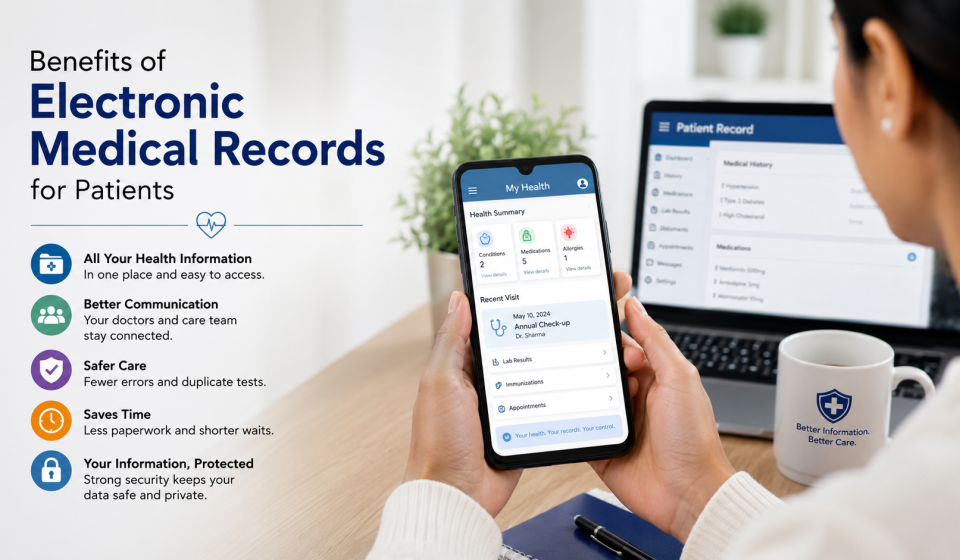

Learn the benefits of Electronic Medical Records (EMRs) for patients, including improved healthcare coordination, faster diagnosis, better safety, secure access to medical information, and enhanced patient care.
Healthcare has changed significantly with the adoption of digital technology, and one of the most important advancements is the use of Electronic Medical Records (EMRs). Instead of relying on paper files, healthcare providers can securely store and access patient information electronically. This transformation has improved the efficiency, accuracy, and quality of medical care while making healthcare more convenient for both patients and providers.
Electronic Medical Records contain important health information such as medical history, diagnoses, medications, allergies, laboratory reports, imaging results, vaccination records, and treatment plans. Having this information readily available helps healthcare providers make informed decisions quickly and reduces the chances of medical errors.
For patients, EMRs offer many advantages, including better communication with healthcare providers, easier access to medical information, improved coordination between specialists, and more personalized care. This article explores the benefits of Electronic Medical Records, how they improve patient care, and why they have become an essential part of modern healthcare.
What Are Electronic Medical Records (EMRs)?
Electronic Medical Records are digital versions of traditional paper medical records maintained by healthcare providers.
An EMR may include:
- Personal information
- Medical history
- Current and past illnesses
- Medications
- Allergies
- Laboratory reports
- Imaging results
- Vaccination records
- Treatment plans
- Progress notes
Healthcare professionals can securely access and update this information whenever necessary.
Why Electronic Medical Records Are Important
EMRs improve healthcare by making patient information easily available when needed.
Their importance includes:
- Faster access to health records
- Better communication among healthcare providers
- Improved patient safety
- More accurate diagnoses
- Better continuity of care
- Reduced paperwork
These benefits contribute to higher-quality healthcare services.
Quick Access to Medical Information
One of the greatest advantages of EMRs is immediate access to patient information.
Healthcare providers can quickly review:
- Previous diagnoses
- Medical history
- Current medications
- Allergies
- Test results
- Previous treatments
Fast access allows quicker and more informed medical decisions.
Improved Coordination Between Healthcare Providers
Many patients receive care from multiple healthcare professionals.
Electronic Medical Records help coordinate care between:
- Primary care providers
- Specialists
- Nurses
- Pharmacists
- Laboratories
- Diagnostic imaging centers
Better communication reduces duplicate testing and improves treatment planning.
Improved Patient Safety
Electronic Medical Records help reduce medical errors by providing accurate and up-to-date information.
Safety features include:
- Allergy alerts
- Medication interaction warnings
- Updated medication lists
- Accurate patient identification
- Clinical reminders
These tools help healthcare providers make safer treatment decisions.
Better Management of Chronic Diseases
Patients living with long-term conditions benefit greatly from EMRs.
Healthcare providers can monitor conditions such as:
- Diabetes
- High blood pressure
- Heart disease
- Asthma
- Chronic kidney disease
Regular access to health information supports better disease management and follow-up care.
Faster Diagnosis and Treatment
Healthcare providers can review previous test results and medical history without waiting for paper records.
This helps:
- Reduce delays
- Improve diagnostic accuracy
- Begin treatment sooner
- Avoid unnecessary repeat testing
Timely care often leads to better health outcomes.
Easier Access to Laboratory and Imaging Results
Electronic systems allow healthcare providers to review:
- Blood test results
- Urine test reports
- X-rays
- Ultrasound reports
- CT scans
- MRI reports
Patients may also access their reports through secure patient portals, depending on the healthcare system.
Better Medication Management
EMRs help healthcare providers monitor medications more effectively.
Benefits include:
- Updated prescription history
- Medication reminders
- Reduced prescription errors
- Identification of drug interactions
- Safer prescribing practices
Accurate medication records improve patient safety.
Reduced Duplicate Testing
When healthcare providers have access to previous laboratory and imaging reports, unnecessary repeat testing can often be avoided.
This may help:
- Save time
- Reduce healthcare costs
- Minimize patient inconvenience
- Limit unnecessary procedures
Efficient record sharing improves healthcare coordination.
Improved Preventive Healthcare
Electronic Medical Records support preventive care by tracking important health information.
Healthcare providers can receive reminders for:
- Vaccinations
- Cancer screenings
- Blood pressure checks
- Cholesterol testing
- Diabetes screening
- Routine health examinations
Preventive care helps identify health problems before symptoms appear.
Better Communication with Patients
Many healthcare organizations use secure patient portals connected to EMRs.
Patients may be able to:
- Schedule appointments
- View laboratory results
- Request prescription refills
- Receive appointment reminders
- Access health education materials
- Communicate securely with healthcare providers
Improved communication encourages patients to participate actively in their healthcare.
Supporting Emergency Medical Care
During emergencies, quick access to medical information can be lifesaving.
Healthcare providers can immediately review:
- Allergies
- Current medications
- Chronic medical conditions
- Previous surgeries
- Blood type (when available)
Having accurate information available supports faster and safer emergency treatment.
Improved Healthcare Efficiency
Electronic Medical Records reduce administrative work by replacing paper documentation.
Benefits include:
- Faster documentation
- Easier record retrieval
- Reduced paperwork
- Better appointment management
- Improved workflow
Healthcare providers can spend more time focusing on patient care.
Enhanced Privacy and Security
Modern EMR systems use multiple security measures to protect patient information.
These include:
- Password protection
- User authentication
- Data encryption
- Secure backups
- Access controls
Healthcare organizations follow privacy regulations to help protect confidential medical information.
Encouraging Patient Engagement
Patients who have access to their medical records often become more involved in managing their health.
They can:
- Review test results
- Track chronic conditions
- Understand treatment plans
- Monitor medications
- Prepare questions before appointments
Active participation often improves treatment adherence and health outcomes.
Challenges of Electronic Medical Records
Although EMRs provide many benefits, they also present some challenges.
Examples include:
- Learning new technology
- System maintenance
- Internet connectivity issues
- Cybersecurity risks
- Initial implementation costs
Healthcare organizations continue improving digital systems to enhance reliability and security.
The Future of Electronic Medical Records
As healthcare technology continues to evolve, EMRs are expected to become even more advanced.
Future improvements may include:
- Greater integration with wearable devices
- Artificial intelligence-assisted clinical support
- Improved patient portals
- Enhanced interoperability between healthcare systems
- Faster access to healthcare information
These innovations aim to deliver more efficient, connected, and patient-centered care.
Healthy Habits Still Matter
While Electronic Medical Records improve healthcare delivery, maintaining healthy habits remains essential.
Healthy daily practices include:
- Eat a balanced diet.
- Exercise regularly.
- Stay hydrated.
- Get enough sleep.
- Avoid smoking.
- Limit alcohol consumption.
- Attend routine health checkups.
- Follow your healthcare provider’s recommendations.
Technology supports healthcare but does not replace healthy lifestyle choices.
Sources
https://www.healthit.gov
https://www.who.int
https://www.cdc.gov
https://www.nih.gov
Conclusion
Electronic Medical Records have transformed modern healthcare by making patient information more accessible, accurate, and secure. They improve communication among healthcare providers, reduce medical errors, support chronic disease management, enhance preventive care, and encourage greater patient involvement in healthcare decisions.
Although challenges such as cybersecurity and technology adoption remain, the benefits of EMRs continue to improve healthcare quality and patient safety. As digital healthcare evolves, Electronic Medical Records will remain an essential tool in delivering efficient, coordinated, and patient-centered care for people of all ages.
FAQs
1. What are Electronic Medical Records (EMRs)?
Electronic Medical Records are digital versions of traditional paper medical records that securely store a patient’s medical history, medications, allergies, laboratory reports, imaging results, and treatment information.
2. How do EMRs benefit patients?
EMRs improve patient care by providing faster access to medical information, improving communication between healthcare providers, reducing medical errors, supporting chronic disease management, and enhancing preventive healthcare.
3. Are Electronic Medical Records secure?
Yes. Modern EMR systems use security measures such as encryption, password protection, user authentication, and controlled access to help protect patient information.
4. Can patients access their Electronic Medical Records?
Many healthcare organizations provide secure patient portals that allow patients to view laboratory results, appointment information, medications, and portions of their medical records.
5. How do EMRs improve emergency medical care?
EMRs allow emergency healthcare providers to quickly access important medical information such as allergies, medications, chronic illnesses, and previous treatments, helping them provide faster and safer care.