
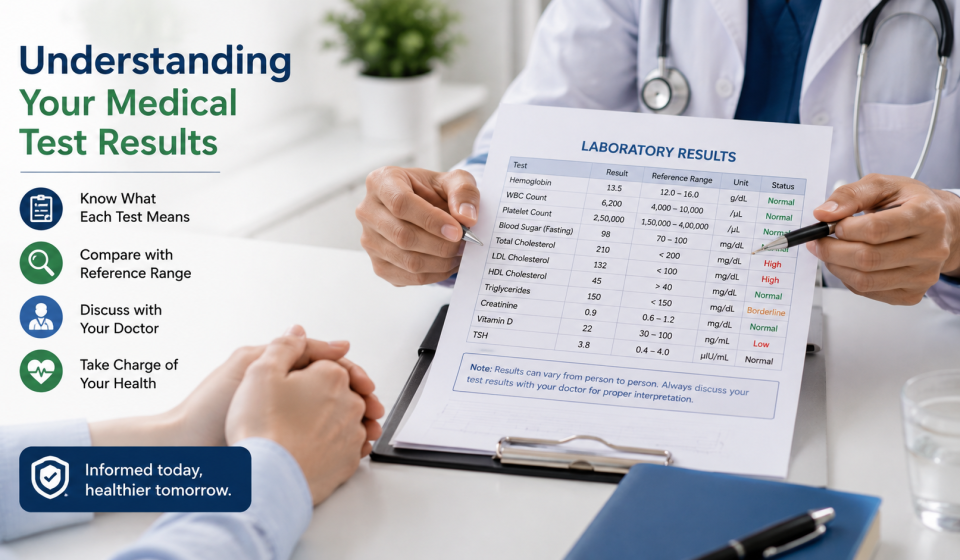

Learn how to understand your medical test results, what normal and abnormal values mean, common laboratory tests, and when to discuss your results with your healthcare provider.
Medical tests are an essential part of modern healthcare. They help diagnose diseases, monitor ongoing medical conditions, evaluate treatment effectiveness, and detect health problems before symptoms develop. However, receiving laboratory reports filled with numbers, abbreviations, and reference ranges can be confusing for many patients.
It is important to remember that test results should always be interpreted within the context of your overall health, symptoms, medical history, age, and lifestyle. A result outside the normal range does not necessarily indicate a serious illness, and a normal result does not always rule out every medical condition. Your healthcare provider considers many factors before making a diagnosis or recommending treatment.
Understanding the purpose of common medical tests and knowing what your results generally indicate can help you become a more informed participant in your healthcare. This article explains how to read medical reports, understand common laboratory tests, and know when to discuss your results with your doctor.
Why Medical Tests Are Important
Medical tests provide valuable information about your health.
They help healthcare providers:
- Diagnose illnesses
- Detect diseases early
- Monitor chronic conditions
- Evaluate treatment effectiveness
- Identify nutritional deficiencies
- Assess organ function
- Guide medical decisions
Routine testing plays an important role in preventive healthcare.
Understanding Reference Ranges
Most laboratory reports include a reference range, sometimes called the normal range.
Reference ranges are based on results from healthy individuals and provide a guideline for comparison.
Keep in mind:
- Slight variations may be normal.
- Results may differ between laboratories.
- Age, sex, medications, and pregnancy can influence values.
Only your healthcare provider can interpret your results accurately.
Complete Blood Count (CBC)
A Complete Blood Count (CBC) is one of the most commonly ordered blood tests.
It measures:
- Red blood cells
- White blood cells
- Hemoglobin
- Hematocrit
- Platelets
A CBC helps detect:
- Anemia
- Infection
- Inflammation
- Blood disorders
Abnormal results usually require further evaluation rather than immediate concern.
Blood Sugar Tests
Blood glucose tests help assess how well your body regulates sugar.
Common tests include:
- Fasting blood glucose
- Random blood glucose
- HbA1c (glycated hemoglobin)
These tests help diagnose and monitor:
- Prediabetes
- Diabetes
- Blood sugar control
Healthy eating, exercise, and medical treatment can improve blood sugar levels when needed.
Lipid Profile
A lipid profile evaluates the fats in your blood.
It commonly measures:
- Total cholesterol
- LDL (“bad”) cholesterol
- HDL (“good”) cholesterol
- Triglycerides
This test helps assess the risk of:
- Heart disease
- Stroke
- Cardiovascular complications
Lifestyle changes and medications may be recommended if levels are abnormal.
Liver Function Tests
Liver function tests evaluate how well your liver is working.
They may include:
- ALT
- AST
- ALP
- Bilirubin
- Albumin
Abnormal values may suggest:
- Liver inflammation
- Fatty liver disease
- Hepatitis
- Other liver conditions
Additional testing may be needed to determine the exact cause.
Kidney Function Tests
Kidney tests assess how effectively your kidneys filter waste from the blood.
Common measurements include:
- Creatinine
- Blood urea nitrogen (BUN)
- Estimated glomerular filtration rate (eGFR)
These tests help detect:
- Kidney disease
- Dehydration
- Reduced kidney function
Regular monitoring is especially important for people with diabetes or high blood pressure.
Thyroid Function Tests
Thyroid tests evaluate hormone production.
Common tests include:
- Thyroid-stimulating hormone (TSH)
- Free T4
- Free T3
These tests help diagnose:
- Hypothyroidism
- Hyperthyroidism
- Other thyroid disorders
Proper interpretation depends on your symptoms and medical history.
Vitamin and Mineral Tests
Some laboratory tests measure nutrient levels.
Examples include:
- Vitamin D
- Vitamin B12
- Iron
- Ferritin
- Folate
These tests help identify nutritional deficiencies that may contribute to fatigue, anemia, or other health concerns.
Urine Tests
Urinalysis provides important information about kidney and urinary tract health.
It may detect:
- Infection
- Kidney disease
- Diabetes
- Dehydration
- Protein in the urine
Further evaluation may be recommended if abnormalities are found.
Imaging Test Results
Imaging studies may include:
- X-rays
- Ultrasound
- CT scans
- MRI scans
- Mammograms
These tests help evaluate:
- Bones
- Organs
- Soft tissues
- Blood vessels
Your healthcare provider will explain the findings and whether further testing is necessary.
Why Abnormal Results Do Not Always Mean Disease
An abnormal laboratory value does not always indicate a serious medical condition.
Results can be influenced by:
- Recent illness
- Exercise
- Medications
- Diet
- Stress
- Hydration status
- Pregnancy
Your doctor considers the complete clinical picture before making a diagnosis.
Follow-Up Testing
Sometimes repeat testing is necessary to:
- Confirm abnormal findings
- Monitor treatment
- Track disease progression
- Ensure recovery
Follow-up testing is a normal part of medical care and should not automatically cause concern.
Questions to Ask About Your Test Results
During your appointment, consider asking:
- What do my results mean?
- Are any results outside the normal range?
- Do I need additional testing?
- Should I change my diet or lifestyle?
- Do I need medication?
- When should I repeat the tests?
- Are there warning signs I should watch for?
These questions help you better understand your health.
Healthy Habits That Support Better Test Results
Healthy lifestyle choices can improve many laboratory values over time.
Daily habits include:
- Eat a balanced diet.
- Stay physically active.
- Maintain a healthy weight.
- Drink enough water.
- Sleep 7–9 hours each night.
- Avoid smoking.
- Limit alcohol consumption.
- Manage stress.
- Follow prescribed medications.
Consistent healthy habits support long-term wellness.
When Should You Contact Your Healthcare Provider?
Consult your healthcare provider if:
- You receive abnormal test results.
- Your symptoms worsen.
- You do not understand your report.
- New symptoms develop.
- You have questions about medications or follow-up testing.
Never change or stop medications without medical advice.
Avoid Self-Diagnosis
Searching medical information online can be helpful for learning, but it should not replace professional medical advice.
Avoid:
- Interpreting reports without context
- Starting supplements unnecessarily
- Ignoring abnormal results
- Delaying medical consultation
Discuss your concerns with your healthcare provider for accurate interpretation.
Sources
https://www.who.int
https://www.cdc.gov
https://www.nih.gov
https://medlineplus.gov
Conclusion
Medical test results provide valuable information about your health, but they are only one part of the overall picture. Understanding common laboratory tests, reference ranges, and the purpose of different investigations can help you feel more confident and informed during your healthcare journey.
Remember that test results should always be interpreted alongside your symptoms, medical history, physical examination, and other findings. Regular health checkups, healthy lifestyle habits, and open communication with your healthcare provider are essential for maintaining good health and making informed medical decisions.
FAQs
1. What does a normal reference range mean?
A reference range represents the values typically found in healthy individuals. However, results slightly outside this range do not always indicate disease.
2. Should I worry if one of my test results is abnormal?
Not necessarily. Many factors such as age, medications, diet, hydration, recent illness, or laboratory variations can influence results. Your healthcare provider will interpret them in context.
3. Why might I need repeat blood tests?
Repeat testing may be recommended to confirm abnormal findings, monitor treatment, assess recovery, or evaluate changes over time.
4. Can lifestyle changes improve my medical test results?
Yes. A healthy diet, regular exercise, adequate sleep, hydration, stress management, and avoiding smoking can improve many laboratory values and overall health.
5. Should I interpret my test results on my own?
No. Medical test results should always be discussed with a qualified healthcare professional, who can interpret them based on your medical history, symptoms, and overall health.