
Learn when to seek emergency medical care by recognizing life-threatening symptoms such as chest pain, stroke signs, severe injuries, breathing difficulties, and other medical emergencies.
Medical emergencies can happen unexpectedly and often require immediate attention to prevent serious complications or save a person’s life. While some health problems can safely wait for a scheduled doctor’s appointment, others demand urgent medical care. Knowing how to recognize the warning signs of a medical emergency can make a significant difference in treatment outcomes and recovery.
Many people delay seeking emergency medical care because they are unsure whether their symptoms are serious enough. Unfortunately, waiting too long during conditions such as a heart attack, stroke, severe allergic reaction, or major injury can increase the risk of permanent damage or even death. Understanding the symptoms that require immediate medical evaluation helps individuals make informed decisions during critical situations.
This article explains when to seek emergency medical care, common warning signs, and how prompt medical attention can improve health outcomes.
What Is Emergency Medical Care?
Emergency medical care is immediate treatment provided for serious illnesses or injuries that require prompt attention.
The primary goals are to:
- Save lives
- Prevent permanent disability
- Stabilize serious medical conditions
- Reduce complications
- Begin urgent treatment as quickly as possible
Emergency departments are equipped to manage life-threatening situations at any time.
Why Seeking Timely Emergency Care Is Important
Receiving immediate medical care can:
- Improve survival rates
- Reduce long-term complications
- Prevent permanent organ damage
- Shorten recovery time
- Increase treatment success
Delaying emergency treatment can significantly worsen certain medical conditions.
Chest Pain or Pressure
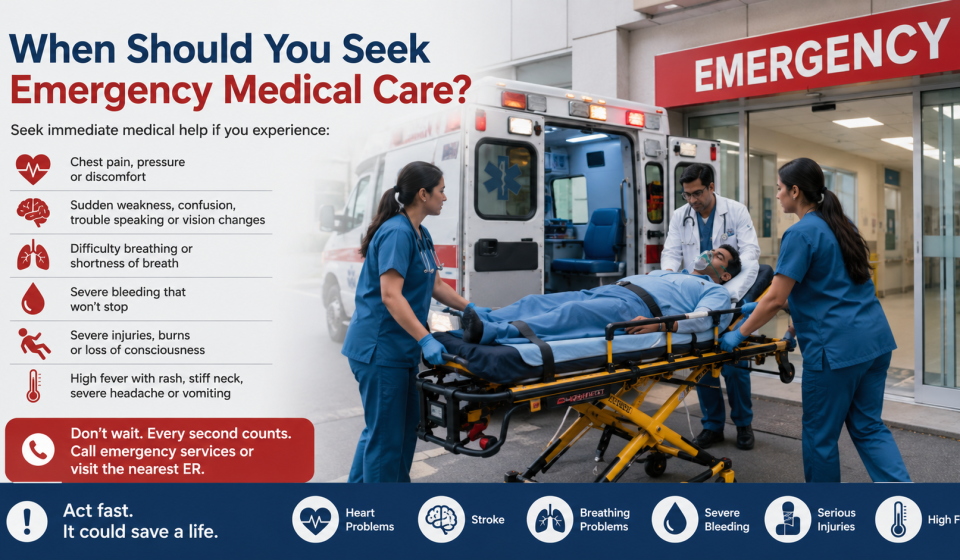
Chest pain should never be ignored, especially if it is sudden, severe, or persistent.
Seek emergency medical care if chest pain is accompanied by:
- Shortness of breath
- Pain spreading to the arm, shoulder, jaw, neck, or back
- Cold sweats
- Nausea
- Dizziness
These symptoms may indicate a heart attack or another serious heart condition.
Signs of a Stroke
A stroke requires immediate medical treatment because brain cells begin to die within minutes.
Watch for the FAST warning signs:
- Face: One side of the face droops.
- Arms: One arm becomes weak or numb.
- Speech: Slurred or difficult speech.
- Time: Seek emergency medical care immediately.
Additional symptoms include sudden confusion, vision changes, severe headache, or difficulty walking.
Difficulty Breathing
Emergency evaluation is necessary if someone experiences:
- Severe shortness of breath
- Difficulty breathing
- Wheezing that worsens rapidly
- Blue lips or fingertips
- Chest tightness
These symptoms may result from asthma, pneumonia, severe allergic reactions, or heart problems.
Severe Allergic Reactions
A severe allergic reaction (anaphylaxis) is a medical emergency.
Symptoms may include:
- Swelling of the face, lips, tongue, or throat
- Difficulty breathing
- Rapid heartbeat
- Dizziness
- Fainting
- Widespread hives
Immediate treatment is essential to prevent life-threatening complications.
Severe Bleeding
Seek emergency medical care if bleeding:
- Cannot be controlled with direct pressure
- Is heavy or continuous
- Results from a deep wound
- Follows a serious injury
Excessive blood loss can quickly become life-threatening.
Loss of Consciousness
Any unexplained loss of consciousness should be evaluated immediately.
Possible causes include:
- Heart problems
- Stroke
- Seizures
- Low blood sugar
- Head injury
Even if the person regains consciousness, medical evaluation is still important.
Serious Head Injuries
Head injuries require urgent medical attention if they involve:
- Loss of consciousness
- Persistent vomiting
- Severe headache
- Confusion
- Difficulty speaking
- Seizures
- Clear fluid leaking from the nose or ears
Prompt evaluation helps detect brain injuries.
Severe Burns
Emergency care is recommended for burns that:
- Cover a large area of the body
- Involve the face, hands, feet, or genitals
- Are deep or charred
- Result from chemicals or electricity
Proper treatment reduces complications and supports healing.
Broken Bones and Major Injuries
Seek emergency medical attention if there is:
- Severe pain
- Visible bone deformity
- Bone protruding through the skin
- Inability to move a limb
- Heavy bleeding
Major injuries should always be professionally evaluated.
Severe Abdominal Pain
Sudden, intense abdominal pain may indicate serious conditions such as:
- Appendicitis
- Gallbladder disease
- Pancreatitis
- Intestinal blockage
- Internal bleeding
Do not ignore persistent or worsening abdominal pain.
High Fever With Serious Symptoms
A high fever accompanied by any of the following requires immediate medical attention:
- Confusion
- Difficulty breathing
- Severe headache
- Stiff neck
- Persistent vomiting
- Seizures
These symptoms may indicate a serious infection.
Seizures
Emergency medical care is needed if:
- The seizure lasts longer than five minutes.
- Multiple seizures occur without recovery.
- It is the person’s first seizure.
- Injury occurs during the seizure.
- Breathing does not return to normal afterward.
Remain calm and protect the person from injury until help arrives.
Sudden Vision Changes
Seek immediate evaluation for:
- Sudden loss of vision
- Double vision
- Severe eye pain
- Sudden blindness in one or both eyes
These symptoms may indicate stroke, retinal problems, or other serious conditions.
Severe Dehydration
Emergency treatment may be necessary if dehydration causes:
- Extreme weakness
- Confusion
- Very little or no urine
- Rapid heartbeat
- Dizziness
- Fainting
Young children and older adults are particularly vulnerable.
Poisoning or Overdose
Immediately seek emergency medical care if poisoning or medication overdose is suspected.
Possible signs include:
- Confusion
- Difficulty breathing
- Seizures
- Loss of consciousness
- Persistent vomiting
Bring the medication container or substance information if possible.
Pregnancy-Related Emergencies
Pregnant individuals should seek urgent medical attention for:
- Heavy vaginal bleeding
- Severe abdominal pain
- Sudden swelling of the face or hands
- Severe headache
- Vision changes
- Decreased fetal movement
- Leakage of amniotic fluid before labor
Prompt evaluation helps protect both parent and baby.
Mental Health Emergencies
Immediate medical attention is necessary if someone experiences:
- Thoughts of self-harm or suicide
- Violent behavior
- Severe confusion
- Hallucinations
- Inability to care for themselves due to a mental health crisis
Mental health emergencies deserve the same urgency as physical emergencies.
When a Condition May Not Require Emergency Care
Some health concerns may be managed through a scheduled clinic visit or urgent care, including:
- Mild cold symptoms
- Minor cuts
- Mild sore throat
- Stable chronic pain
- Routine medication refills
- Minor skin rashes without severe symptoms
If you are uncertain about the severity of your symptoms, contact a healthcare professional for guidance.
How to Prepare for an Emergency
Being prepared can save valuable time.
Helpful steps include:
- Keep emergency contact numbers easily accessible.
- Maintain an updated list of medications and allergies.
- Know your medical conditions.
- Carry identification and insurance information if applicable.
- Learn basic first aid and CPR.
Preparation helps you respond more effectively during emergencies.
Healthy Habits That Reduce Medical Emergencies
Many emergencies can be prevented by maintaining healthy habits such as:
- Eating a balanced diet
- Exercising regularly
- Controlling blood pressure and blood sugar
- Avoiding smoking
- Limiting alcohol consumption
- Wearing seat belts and helmets
- Taking medications as prescribed
- Attending regular health checkups
Preventive healthcare lowers the risk of many serious conditions.
Sources
https://www.who.int
https://www.cdc.gov
https://www.nih.gov
https://medlineplus.go
Conclusion
Knowing when to seek emergency medical care is essential for protecting your health and the health of your loved ones. Symptoms such as chest pain, difficulty breathing, signs of stroke, severe bleeding, loss of consciousness, major injuries, and severe allergic reactions should never be ignored. Prompt medical attention can prevent complications, reduce long-term disability, and save lives.
While not every illness requires emergency treatment, understanding the warning signs allows you to make informed decisions during critical situations. Maintaining healthy lifestyle habits, attending regular health checkups, and seeking timely medical care when serious symptoms occur are important steps toward better overall health and safety.
FAQs
1. What symptoms always require emergency medical care?
Symptoms such as chest pain, difficulty breathing, signs of stroke, severe bleeding, loss of consciousness, major injuries, severe allergic reactions, seizures lasting more than five minutes, and sudden vision loss require immediate medical attention.
2. How can I tell if chest pain is an emergency?
Chest pain accompanied by shortness of breath, pain spreading to the arm or jaw, nausea, cold sweats, dizziness, or fainting should be treated as a medical emergency.
3. Should I seek emergency care for severe allergic reactions?
Yes. Swelling of the face or throat, difficulty breathing, widespread hives, dizziness, or fainting may indicate anaphylaxis, which requires immediate emergency treatment.
4. What should I do if someone shows signs of a stroke?
Remember the FAST warning signs: Face drooping, Arm weakness, Speech difficulty, Time to seek emergency medical care immediately. Do not delay treatment.
5. Can some health problems wait for a clinic appointment?
Yes. Minor illnesses such as mild colds, routine medication refills, stable chronic conditions, or small cuts without heavy bleeding may be appropriate for a scheduled clinic visit. However, if symptoms suddenly worsen or you are unsure, seek medical advice promptly.