
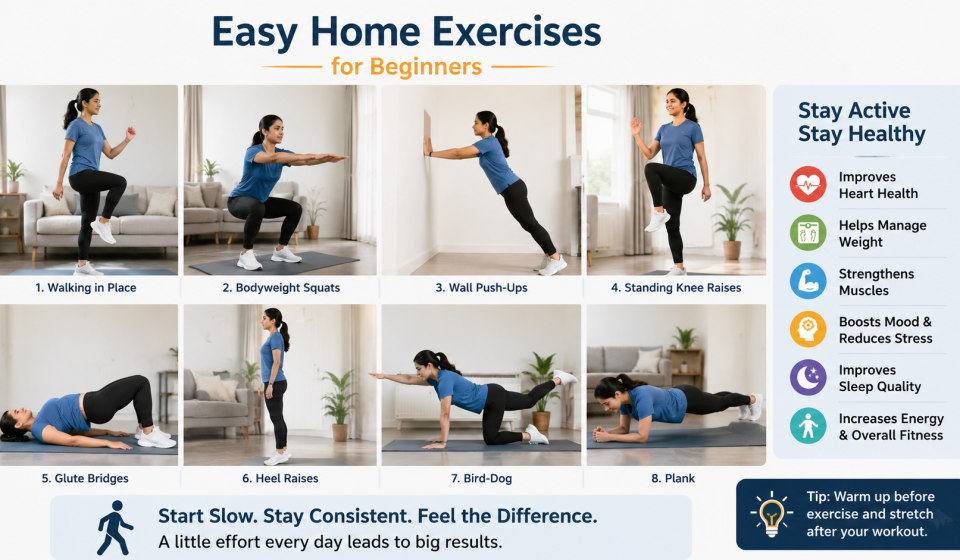

Discover easy home exercises for beginners that improve strength, flexibility, balance, and overall fitness. Learn simple workouts you can do at home without equipment.
Regular physical activity is one of the most effective ways to improve overall health, increase energy levels, maintain a healthy weight, and reduce the risk of chronic diseases. However, many people believe they need a gym membership or expensive equipment to start exercising. The truth is that beginners can achieve excellent health benefits by performing simple exercises at home using only their body weight.
Home workouts are convenient, affordable, and easy to fit into busy schedules. They allow individuals to exercise in a comfortable environment while gradually building strength, endurance, flexibility, and confidence. Starting with beginner-friendly exercises also reduces the risk of injury and helps develop a sustainable fitness routine.
This article explains the benefits of home exercise, introduces simple beginner workouts, and provides practical tips for exercising safely and consistently.
Why Exercise Is Important
Regular exercise benefits both physical and mental health.
It helps:
- Improve heart health
- Strengthen muscles and bones
- Increase flexibility
- Boost energy levels
- Support healthy weight management
- Improve balance and coordination
- Reduce stress
- Promote better sleep
Even short daily workouts contribute to long-term wellness.
Benefits of Exercising at Home
Home workouts offer several advantages.
They are:
- Convenient
- Cost-effective
- Time-saving
- Suitable for all fitness levels
- Easy to perform without equipment
- Flexible for busy schedules
Exercising at home removes many common barriers to staying active.
Warm Up Before Exercising
A proper warm-up prepares the body for physical activity.
Warm-up exercises may include:
- Marching in place
- Shoulder rolls
- Arm circles
- Gentle neck movements
- Leg swings
Spend 5–10 minutes warming up before each workout.
Walking in Place
Walking in place is an excellent beginner cardio exercise.
Benefits include:
- Increased heart rate
- Improved circulation
- Better endurance
- Low impact on joints
Start with 5–10 minutes and gradually increase the duration.
Bodyweight Squats
Squats strengthen the lower body and improve balance.
They primarily work:
- Thighs
- Glutes
- Hips
- Core muscles
Perform slow, controlled movements while maintaining proper posture.
Wall Push-Ups
Wall push-ups are easier than traditional push-ups and ideal for beginners.
Benefits include strengthening:
- Chest
- Shoulders
- Arms
- Upper back
As strength improves, progress to incline or standard push-ups.
Chair Squats
Chair squats help beginners practice proper squat technique.
This exercise improves:
- Leg strength
- Balance
- Mobility
Use a sturdy chair for support if needed.
Standing Knee Raises
Standing knee raises strengthen the abdominal muscles and improve balance.
Benefits include:
- Core stability
- Hip flexibility
- Better coordination
Lift one knee at a time in a slow, controlled motion.
Glute Bridges
Glute bridges strengthen the lower body and core.
They target:
- Glute muscles
- Lower back
- Hamstrings
- Core
This exercise also supports better posture.
Heel Raises
Heel raises strengthen the calf muscles and improve ankle stability.
Benefits include:
- Better balance
- Improved walking ability
- Increased lower-leg strength
Use a wall or chair for support if necessary.
Step-Ups
Step-ups mimic climbing stairs and improve lower-body strength.
Use a stable step or platform.
Benefits include:
- Stronger legs
- Improved balance
- Better cardiovascular fitness
Perform slowly and maintain proper form.
Bird-Dog Exercise
The bird-dog exercise strengthens the back and core.
It improves:
- Balance
- Coordination
- Core stability
- Posture
Move slowly while maintaining a neutral spine.
Plank
The plank is one of the best bodyweight exercises for core strength.
It also strengthens:
- Shoulders
- Arms
- Back
- Abdominal muscles
Beginners can start by holding the position for 10–20 seconds.
Stretching After Exercise
Cooling down is just as important as warming up.
Gentle stretches improve:
- Flexibility
- Muscle recovery
- Blood circulation
- Relaxation
Stretch major muscle groups after every workout.
Exercise Frequency for Beginners
Beginners should aim for:
- At least 150 minutes of moderate physical activity each week
- Strength exercises two or more days per week
Start slowly and gradually increase exercise intensity and duration.
Stay Hydrated
Drink water:
- Before exercise
- During longer workouts
- After exercise
Proper hydration supports performance and recovery.
Listen to Your Body
Exercise should be challenging but not painful.
Stop exercising and seek medical advice if you experience:
- Chest pain
- Severe dizziness
- Shortness of breath
- Joint pain
- Injury
Always prioritize safety.
Build a Simple Beginner Workout
A beginner routine may include:
- 5-minute warm-up
- Walking in place
- Bodyweight squats
- Wall push-ups
- Standing knee raises
- Glute bridges
- Heel raises
- Plank
- Stretching
This routine can be completed in approximately 20–30 minutes.
Tips to Stay Motivated
Consistency is the key to success.
Helpful strategies include:
- Set realistic goals.
- Exercise at the same time each day.
- Track your progress.
- Wear comfortable clothing.
- Exercise with family or friends.
- Celebrate small achievements.
Building a routine makes exercise a lasting habit.
Common Beginner Exercise Mistakes
Avoid these common mistakes:
- Skipping warm-ups
- Exercising with poor posture
- Doing too much too soon
- Ignoring rest days
- Holding your breath
- Not staying hydrated
Learning proper technique reduces injury risk.
Pair Exercise with Healthy Lifestyle Habits
Exercise works best when combined with:
- Balanced nutrition
- Adequate sleep
- Stress management
- Proper hydration
- Regular health checkups
Healthy habits work together to improve overall wellness.
When Should You Consult a Healthcare Professional?
Consult a healthcare provider before starting an exercise program if you have:
- Heart disease
- High blood pressure
- Diabetes
- Joint disorders
- Chronic lung disease
- Recent surgery
- Pregnancy
- Persistent pain
Professional guidance helps ensure safe physical activity.
Benefits of Staying Consistent
Regular exercise provides long-term health benefits such as:
- Better physical fitness
- Improved mood
- Stronger muscles
- Better balance
- Healthy body weight
- Reduced disease risk
- Greater independence as you age
Consistency is more valuable than perfection.
Sources
https://www.who.int
https://www.cdc.gov
https://www.nih.gov
https://www.acsm.org
Conclusion
Home exercise is an excellent way for beginners to improve their health without needing expensive equipment or a gym membership. Simple bodyweight exercises such as squats, wall push-ups, knee raises, planks, and walking in place help build strength, improve flexibility, enhance cardiovascular health, and increase overall fitness. Starting slowly, maintaining proper form, and staying consistent are the keys to long-term success.
Combined with balanced nutrition, adequate hydration, quality sleep, and regular health checkups, home workouts provide a practical and sustainable approach to maintaining a healthy lifestyle. Even a few minutes of daily movement can make a meaningful difference in your physical and mental well-being.
FAQs
1. Can beginners exercise at home without equipment?
Yes. Many effective exercises such as squats, wall push-ups, planks, and walking in place require only your body weight.
2. How long should a beginner workout last?
A beginner workout can last between 20 and 30 minutes, including warm-up and cool-down exercises.
3. Is it safe to exercise every day?
Light to moderate exercise is generally safe for most healthy adults. Include rest or lighter activity days to allow your body to recover.
4. What is the best home exercise for beginners?
Walking in place, bodyweight squats, wall push-ups, chair squats, and stretching are excellent exercises for beginners.
5. Should I warm up before exercising?
Yes. Warming up helps prepare your muscles and joints, improves circulation, and reduces the risk of injury.