
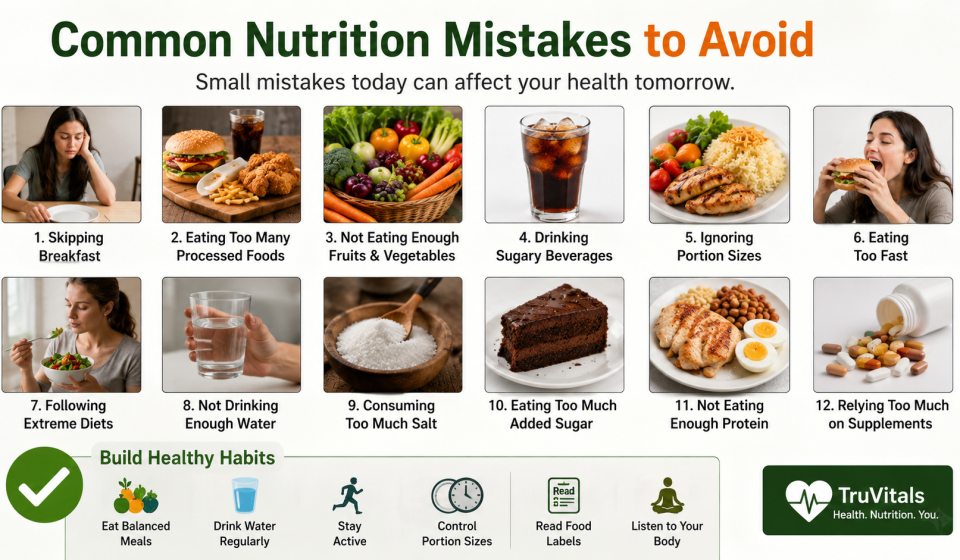

Discover the most common nutrition mistakes people make and learn practical tips to build healthier eating habits, improve nutrition, and support long-term wellness.
Good nutrition is one of the most important foundations of a healthy lifestyle. A balanced diet provides the body with essential nutrients needed for growth, energy, immunity, and disease prevention. However, many people unknowingly make nutrition mistakes that can affect their health over time. These habits may not seem harmful at first, but consistently making poor food choices can increase the risk of obesity, diabetes, heart disease, high blood pressure, digestive problems, and nutrient deficiencies.
Nutrition is not about following strict diets or eliminating entire food groups. Instead, it focuses on balance, moderation, and making informed choices every day. Even small improvements in eating habits can lead to significant long-term health benefits.
Understanding common nutrition mistakes is the first step toward developing healthier habits. This article explains frequent dietary errors and offers simple strategies to improve your nutrition and overall well-being.
Why Good Nutrition Matters
Proper nutrition supports nearly every function in the body.
Healthy eating helps:
- Maintain a healthy weight
- Strengthen the immune system
- Improve energy levels
- Support heart health
- Build strong bones and muscles
- Promote healthy digestion
- Improve brain function
- Reduce the risk of chronic diseases
Making nutritious food choices every day contributes to a healthier and more active life.
Skipping Breakfast
Many people skip breakfast because of busy schedules or the belief that it helps with weight loss.
Skipping breakfast may lead to:
- Low energy levels
- Poor concentration
- Increased hunger later in the day
- Overeating during subsequent meals
A healthy breakfast that includes protein, whole grains, and fruits can provide sustained energy throughout the morning.
Eating Too Many Processed Foods
Processed foods are often high in:
- Added sugars
- Sodium
- Saturated fats
- Unhealthy additives
Regular consumption of highly processed foods may increase the risk of obesity, heart disease, and type 2 diabetes.
Choose whole foods whenever possible, including fruits, vegetables, whole grains, lean proteins, and legumes.
Not Eating Enough Fruits and Vegetables
Fruits and vegetables are rich in:
- Vitamins
- Minerals
- Fiber
- Antioxidants
Insufficient intake may increase the risk of nutritional deficiencies and chronic diseases.
Aim to include colorful fruits and vegetables with every meal.
Drinking Sugary Beverages
Soft drinks, sweetened juices, energy drinks, and flavored beverages often contain large amounts of added sugar.
Frequent consumption may contribute to:
- Weight gain
- Tooth decay
- Type 2 diabetes
- Heart disease
Replace sugary drinks with:
- Water
- Unsweetened tea
- Infused water
- Low-fat milk
Ignoring Portion Sizes
Even healthy foods can contribute to excessive calorie intake when eaten in large quantities.
Large portions may lead to:
- Overeating
- Weight gain
- Digestive discomfort
Using smaller plates and paying attention to hunger cues can improve portion control.
Eating Too Fast
Eating quickly often prevents the brain from recognizing fullness.
This may result in:
- Overeating
- Poor digestion
- Reduced meal satisfaction
Slow down by chewing food thoroughly and enjoying each bite.
Following Extreme Diets
Restrictive diets may promise rapid weight loss but are often difficult to maintain.
Extreme dieting can cause:
- Nutrient deficiencies
- Muscle loss
- Low energy
- Unhealthy eating patterns
A balanced and sustainable eating plan is generally more effective for long-term health.
Not Drinking Enough Water
Water plays an important role in:
- Digestion
- Temperature regulation
- Nutrient transport
- Joint lubrication
Dehydration may cause:
- Fatigue
- Headaches
- Constipation
- Poor concentration
Drink water regularly throughout the day.
Consuming Too Much Salt
Excess sodium intake may increase the risk of:
- High blood pressure
- Heart disease
- Stroke
Limit processed foods and choose fresh ingredients whenever possible.
Flavor meals with herbs and spices instead of excessive salt.
Eating Too Much Added Sugar
Added sugars provide calories without significant nutritional value.
High sugar intake is associated with:
- Obesity
- Fatty liver disease
- Diabetes
- Heart disease
Read nutrition labels and choose foods with lower added sugar content.
Not Eating Enough Protein
Protein is essential for:
- Muscle repair
- Growth
- Immune function
- Healthy aging
Healthy protein sources include:
- Fish
- Eggs
- Chicken
- Beans
- Lentils
- Tofu
- Greek yogurt
Include protein in every meal for better satiety.
Avoiding Healthy Fats
Not all fats are unhealthy.
Healthy fats support:
- Brain health
- Heart health
- Hormone production
Choose healthy fats from:
- Avocados
- Nuts
- Seeds
- Olive oil
- Fatty fish
Limit trans fats and excessive saturated fats.
Depending Too Much on Supplements
Dietary supplements may help in specific situations but should not replace nutritious foods.
Whole foods provide:
- Fiber
- Phytochemicals
- Antioxidants
- Balanced nutrients
Consult a healthcare professional before taking supplements.
Ignoring Food Labels
Nutrition labels help consumers understand:
- Calories
- Serving sizes
- Added sugars
- Sodium
- Fat content
- Ingredients
Reading food labels makes healthier shopping easier.
Emotional Eating
Stress, boredom, sadness, or anxiety may lead to eating without physical hunger.
Emotional eating can result in:
- Weight gain
- Poor food choices
- Guilt after eating
Managing stress through exercise, hobbies, or relaxation techniques may reduce emotional eating.
Eating Late at Night
Large meals close to bedtime may contribute to:
- Acid reflux
- Poor sleep
- Excess calorie intake
If hungry, choose a light and nutritious evening snack.
Skipping Meals
Missing meals often leads to excessive hunger later.
This may increase:
- Portion sizes
- Snacking
- Cravings for unhealthy foods
Eating regular balanced meals helps maintain steady energy levels.
Not Planning Meals
Without meal planning, people are more likely to choose fast food or processed snacks.
Planning meals helps:
- Improve nutrition
- Save time
- Reduce food waste
- Support healthier eating habits
Prepare healthy meals and snacks in advance whenever possible.
Forgetting About Fiber
Low-fiber diets may contribute to:
- Constipation
- Poor digestion
- Increased hunger
Fiber-rich foods include:
- Fruits
- Vegetables
- Whole grains
- Beans
- Lentils
- Oats
Increasing fiber intake supports digestive and heart health.
Healthy Eating Habits to Develop
Simple daily habits can improve nutrition.
- Eat balanced meals.
- Include fruits and vegetables daily.
- Drink enough water.
- Read nutrition labels.
- Control portion sizes.
- Eat slowly.
- Choose whole grains.
- Limit processed foods.
- Include lean proteins.
- Stay physically active.
Small changes practiced consistently produce lasting results.
When Should You Seek Professional Advice?
Consult a healthcare professional or registered dietitian if you have:
- Diabetes
- Heart disease
- High blood pressure
- Kidney disease
- Digestive disorders
- Food allergies
- Nutritional deficiencies
- Difficulty managing your weight
Professional guidance can help create an individualized nutrition plan.
Sources
https://www.who.int
https://www.cdc.gov
https://www.nih.gov
https://www.nhs.uk
Conclusion
Healthy nutrition is not about perfection but about making consistent, informed choices. Many common nutrition mistakes—such as skipping meals, eating excessive processed foods, consuming sugary drinks, ignoring portion sizes, or neglecting fruits and vegetables—can gradually affect overall health. Fortunately, these habits can often be improved with simple lifestyle changes.
Building a balanced diet that includes whole foods, lean proteins, healthy fats, fiber-rich fruits and vegetables, and adequate hydration supports long-term wellness. By recognizing and avoiding common nutrition mistakes, individuals can improve energy levels, maintain a healthy weight, reduce the risk of chronic diseases, and enjoy a healthier, more active life.
FAQs
1. What is the most common nutrition mistake?
One of the most common mistakes is relying heavily on processed foods that are high in added sugars, sodium, and unhealthy fats.
2. Why is skipping meals unhealthy?
Skipping meals may lead to overeating later, reduced energy levels, poor concentration, and unhealthy food cravings.
3. How can I improve my eating habits?
Eat balanced meals, increase fruits and vegetables, drink enough water, control portion sizes, and choose whole foods over processed foods.
4. Are all fats unhealthy?
No. Healthy fats from foods like nuts, seeds, avocados, olive oil, and fatty fish support heart and brain health.
5. Why is reading nutrition labels important?
Nutrition labels help you compare products, monitor calories, identify added sugars and sodium, and make healthier food choices.