
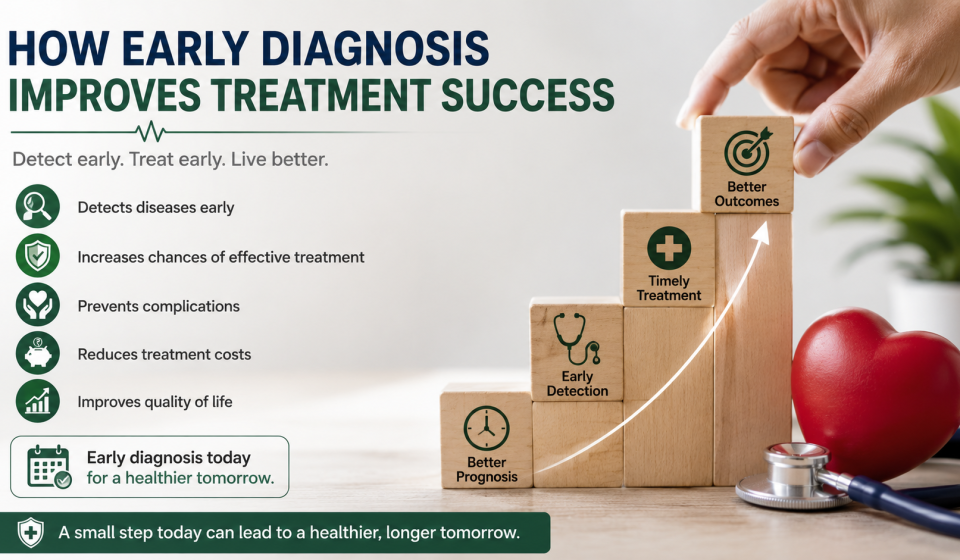

Learn how early diagnosis improves treatment success by detecting diseases sooner, reducing complications, and supporting faster recovery and better long-term health.
Early diagnosis is one of the most important factors in successful medical treatment. Many diseases develop gradually and may not cause noticeable symptoms in their early stages. By the time symptoms become severe, the condition may have progressed, making treatment more complex and reducing the chances of a full recovery. Detecting a disease early gives healthcare providers the opportunity to begin treatment before complications arise, often leading to better outcomes and improved quality of life.
Regular health checkups, preventive screenings, and paying attention to unusual symptoms all contribute to early diagnosis. Conditions such as diabetes, high blood pressure, heart disease, certain cancers, and thyroid disorders can often be identified before they cause significant damage. Early intervention not only increases treatment success but also reduces healthcare costs, shortens recovery time, and helps people maintain a healthier lifestyle.
This article explains why early diagnosis is essential, how it improves treatment outcomes, and the role of preventive healthcare in protecting long-term health.
What Is Early Diagnosis?
Early diagnosis refers to identifying a disease or medical condition at its earliest stage, often before noticeable symptoms develop or before the condition becomes severe.
The goal of early diagnosis is to:
- Detect diseases promptly
- Begin treatment as early as possible
- Prevent disease progression
- Reduce complications
- Improve survival rates
- Enhance overall quality of life
Early diagnosis is a key component of preventive healthcare and plays a significant role in maintaining long-term wellness.
Why Early Diagnosis Matters
Many serious health conditions progress silently. Waiting until symptoms become severe may reduce treatment options and increase the risk of complications.
Early diagnosis helps:
- Start treatment sooner
- Prevent permanent organ damage
- Improve treatment effectiveness
- Reduce recovery time
- Lower healthcare costs
- Increase survival rates for certain diseases
Recognizing health problems early allows healthcare providers to intervene before the disease becomes more difficult to manage.
Benefits of Early Diagnosis
Improves Treatment Success
One of the greatest advantages of early diagnosis is that treatment is often more successful when a disease is detected in its initial stages.
Early treatment can:
- Slow disease progression
- Prevent complications
- Reduce the need for invasive procedures
- Improve long-term health outcomes
- Increase the likelihood of complete recovery
For many conditions, early intervention provides the best chance for successful treatment.
Prevents Serious Complications
Untreated medical conditions can lead to significant health complications over time.
Early diagnosis helps prevent complications associated with:
- Diabetes
- Hypertension
- Heart disease
- Kidney disease
- Liver disease
- Thyroid disorders
- Osteoporosis
Managing these conditions early can protect vital organs and improve quality of life.
Reduces Healthcare Costs
Treating advanced diseases often requires hospitalization, surgery, intensive treatments, and long-term medications.
Early diagnosis may reduce healthcare expenses by:
- Preventing emergency medical situations
- Reducing hospital admissions
- Limiting disease progression
- Minimizing expensive treatments
Preventive care is often more cost-effective than treating advanced illness.
Diseases That Benefit from Early Diagnosis
Many common medical conditions can be effectively managed when detected early.
These include:
- Type 2 diabetes
- High blood pressure
- High cholesterol
- Heart disease
- Stroke risk factors
- Breast cancer
- Cervical cancer
- Colorectal cancer
- Prostate conditions
- Thyroid disorders
- Chronic kidney disease
- Liver disease
Routine medical evaluations increase the likelihood of detecting these conditions before symptoms worsen.
The Role of Regular Health Checkups
Annual health checkups are one of the most effective ways to identify health concerns before they become serious.
Routine checkups typically include:
- Physical examination
- Blood pressure measurement
- Blood sugar testing
- Cholesterol screening
- Weight and Body Mass Index (BMI) assessment
- Laboratory investigations based on individual needs
- Lifestyle and medical history review
These evaluations provide valuable information about your overall health and help detect hidden medical conditions.
Health Screenings That Support Early Diagnosis
Preventive health screenings play a vital role in identifying diseases at an early stage.
Blood Pressure Screening
Regular blood pressure monitoring helps detect hypertension before it causes damage to the heart, brain, or kidneys.
Diabetes Screening
Blood glucose and HbA1c tests can identify diabetes or prediabetes early, allowing lifestyle changes and treatment to begin before complications develop.
Cholesterol Testing
Monitoring cholesterol levels helps reduce the risk of heart attacks and strokes through early intervention.
Cancer Screenings
Age-appropriate cancer screening tests may include:
- Mammography for breast cancer
- Pap smear and HPV testing for cervical cancer
- Colon cancer screening
- Prostate evaluation
- Skin examinations
Early cancer detection often improves treatment success and survival rates.
Recognizing Early Warning Signs
Not every disease is detected through routine screening. Paying attention to changes in your body is equally important.
Consult a healthcare provider if you experience:
- Persistent fatigue
- Unexplained weight loss
- Chest pain
- Shortness of breath
- Persistent cough
- Blood in urine or stool
- Frequent headaches
- Changes in vision
- Ongoing digestive problems
- Unusual lumps or swelling
Seeking medical advice promptly can help identify the underlying cause before complications develop.
How Lifestyle Choices Support Early Detection
Healthy habits work hand in hand with early diagnosis by reducing disease risk and encouraging regular healthcare visits.
Important lifestyle practices include:
- Eating a balanced diet
- Exercising regularly
- Maintaining a healthy weight
- Avoiding tobacco products
- Limiting alcohol intake
- Managing stress
- Getting adequate sleep
- Staying up to date with vaccinations
Individuals who actively care for their health are more likely to notice unusual symptoms early and seek medical advice promptly.
The Importance of Family Medical History
Your family medical history can provide valuable information about your risk of developing certain conditions.
Inform your healthcare provider if close family members have a history of:
- Diabetes
- Heart disease
- High blood pressure
- Cancer
- Stroke
- Thyroid disorders
- Kidney disease
Knowing your risk allows your doctor to recommend earlier or more frequent screening when appropriate.
Mental Health and Early Diagnosis
Early diagnosis is not limited to physical illnesses. Mental health conditions also benefit from timely recognition and treatment.
Early evaluation can improve outcomes for:
- Anxiety disorders
- Depression
- Stress-related conditions
- Sleep disorders
Seeking help early can improve emotional well-being, strengthen relationships, and enhance overall quality of life.
Who Should Prioritize Early Diagnosis?
Although everyone benefits from preventive healthcare, early diagnosis is especially important for individuals who:
- Are over 40 years of age
- Have a family history of chronic diseases
- Smoke or use tobacco products
- Are overweight or obese
- Have diabetes or high blood pressure
- Lead a sedentary lifestyle
- Experience ongoing stress
Regular medical evaluations help identify health risks before they become serious.
Tips to Improve Early Detection
You can increase the chances of early diagnosis by following these simple steps:
- Schedule annual health checkups.
- Follow recommended screening guidelines.
- Do not ignore persistent symptoms.
- Maintain a healthy lifestyle.
- Monitor blood pressure and blood sugar if advised.
- Keep vaccinations up to date.
- Discuss your family medical history with your doctor.
- Seek medical advice whenever you notice unusual changes in your health.
Being proactive about your health can lead to better outcomes and a healthier future.
sources
https://www.who.int
https://www.cancer.gov
https://www.nih.gov
https://www.cdc.gov
Conclusion
Early diagnosis plays a crucial role in improving treatment success and protecting long-term health. Detecting diseases in their initial stages allows healthcare providers to begin timely treatment, reduce complications, improve recovery, and increase the likelihood of successful outcomes. Whether through regular health checkups, preventive screenings, or paying attention to early warning signs, taking action before symptoms become severe can make a significant difference.
Making preventive healthcare a priority is one of the best investments you can make for yourself and your family. By staying informed, adopting healthy lifestyle habits, and seeking medical care when needed, you can reduce health risks, improve your quality of life, and enjoy better overall well-being for years to come.
FAQs
1. Why is early diagnosis important?
Early diagnosis helps detect diseases before they become severe, allowing timely treatment, reducing complications, improving recovery, and increasing the chances of successful treatment.
2. Which diseases benefit the most from early diagnosis?
Conditions such as diabetes, high blood pressure, heart disease, thyroid disorders, chronic kidney disease, and many types of cancer often have better treatment outcomes when diagnosed early.
3. How can I improve the chances of early disease detection?
You can improve early detection by scheduling annual health checkups, following recommended screening tests, maintaining a healthy lifestyle, and seeking medical advice if you notice persistent or unusual symptoms.
4. What are some common warning signs that should not be ignored?
Persistent fatigue, unexplained weight loss, chest pain, prolonged cough, blood in urine or stool, difficulty breathing, changes in vision, and unusual lumps should always be evaluated by a healthcare professional.
5. Are regular health checkups necessary even if I feel healthy?
Yes. Many diseases develop without noticeable symptoms. Routine medical examinations help identify hidden health problems before they become serious, making treatment more effective.