
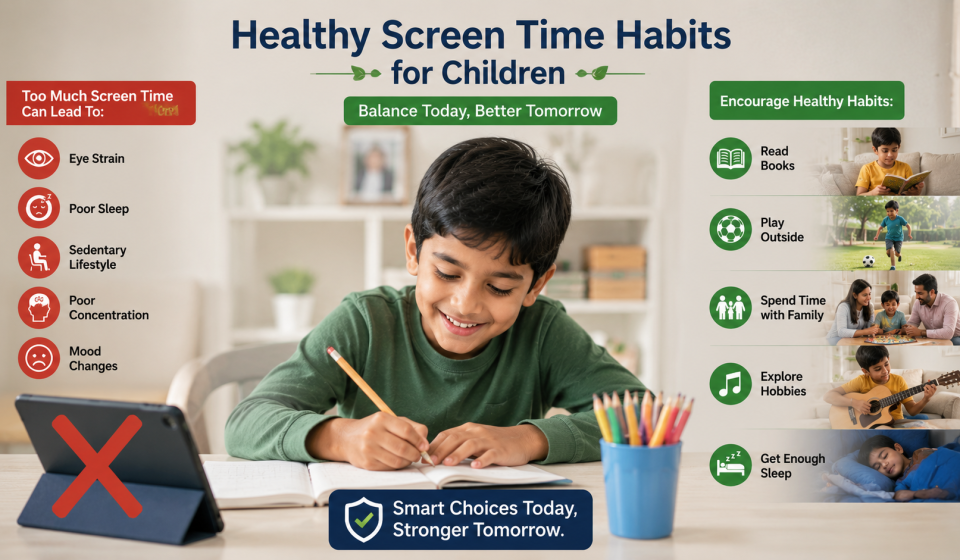

Learn how to develop healthy screen time habits for children. Discover recommended screen time limits, practical parenting tips, digital safety, and ways to balance technology with healthy activities.
Digital devices have become an important part of everyday life. Smartphones, tablets, computers, televisions, and gaming devices provide children with opportunities to learn, communicate, and entertain themselves. While technology offers many educational and social benefits, excessive or inappropriate screen time can affect children’s physical health, mental well-being, sleep quality, learning, and social development.
The goal is not to eliminate screens completely but to help children develop healthy and balanced screen time habits. Parents and caregivers play a vital role in setting boundaries, encouraging quality content, promoting physical activity, and ensuring that technology supports rather than replaces healthy childhood experiences.
This article explains the effects of screen time on children’s health, recommended screen time practices, and practical strategies to help families create a healthy digital lifestyle.
What Is Screen Time?
Screen time refers to the amount of time spent using digital devices with screens, including:
- Smartphones
- Tablets
- Computers
- Laptops
- Televisions
- Video game consoles
- Smart devices
Screen time may include educational activities, entertainment, communication, and online learning.
Why Healthy Screen Time Matters
Using technology in moderation can support learning and creativity, but excessive screen use may negatively affect a child’s overall health.
Healthy screen habits help children:
- Maintain physical activity
- Improve sleep quality
- Enhance concentration
- Support emotional well-being
- Build social skills
- Encourage family interaction
- Reduce eye strain
- Promote healthy growth and development
A balanced approach allows children to benefit from technology while reducing potential health risks.
Benefits of Appropriate Screen Use
When used responsibly, digital technology can provide several benefits.
Positive uses include:
- Educational learning
- Interactive educational games
- Virtual classrooms
- Creative activities
- Communication with family
- Developing digital literacy
- Building problem-solving skills
The quality of screen content is often more important than the amount of time alone.
Risks of Excessive Screen Time
Too much screen exposure may contribute to several health concerns.
Possible effects include:
- Reduced physical activity
- Eye strain
- Poor posture
- Neck and back discomfort
- Sleep disturbances
- Difficulty concentrating
- Increased risk of overweight and obesity
- Reduced face-to-face social interaction
Balanced daily routines help reduce these risks.
Recommended Screen Time Guidelines
Screen time recommendations vary depending on age and developmental needs.
Parents should:
- Prioritize educational and age-appropriate content.
- Avoid unnecessary screen exposure for very young children.
- Set consistent daily limits.
- Encourage regular breaks.
- Balance screen time with active play and family interaction.
Children benefit most when screen use is supervised and purposeful.
Choose High-Quality Content
Not all digital content provides the same value.
Look for content that:
- Is educational
- Encourages creativity
- Supports learning
- Is age-appropriate
- Promotes positive behavior
- Avoids violence and inappropriate material
Review apps, games, and videos before allowing children to use them.
Create a Family Screen Time Plan
A family plan helps establish healthy digital habits.
Consider setting rules such as:
- Screen-free meal times
- No devices before bedtime
- Homework before recreational screen use
- Daily outdoor play
- Shared family activities without screens
Consistency helps children understand expectations.
Encourage Physical Activity
Children need regular movement every day.
Physical activity supports:
- Healthy growth
- Strong bones and muscles
- Heart health
- Healthy weight
- Better sleep
- Improved mood
Outdoor play, sports, cycling, walking, and active games help balance screen use.
Protect Children’s Sleep
Using screens before bedtime may interfere with healthy sleep because the light emitted from screens can affect the body’s natural sleep cycle.
To promote better sleep:
- Turn off screens at least one hour before bedtime.
- Keep electronic devices out of bedrooms.
- Maintain a consistent bedtime routine.
- Encourage relaxing bedtime activities such as reading.
Adequate sleep supports healthy growth, learning, and immune function.
Protect Children’s Eyes
Extended screen use may lead to digital eye strain.
Symptoms may include:
- Dry eyes
- Blurred vision
- Eye fatigue
- Headaches
Encourage the 20-20-20 rule:
Every 20 minutes, children should look at something about 20 feet away for at least 20 seconds.
Good lighting and proper screen positioning also help reduce eye strain.
Encourage Face-to-Face Interaction
Children develop communication and social skills through real-life interactions.
Encourage activities such as:
- Family conversations
- Playing with friends
- Reading together
- Creative play
- Board games
- Outdoor activities
These experiences help build emotional intelligence and confidence.
Teach Good Digital Citizenship
Children should learn to use technology responsibly.
Teach them to:
- Be respectful online.
- Protect personal information.
- Avoid talking to strangers online.
- Report inappropriate content.
- Ask permission before downloading apps.
- Understand online safety rules.
Parents should maintain open communication about internet use.
Monitor Online Safety
Children should use the internet under appropriate supervision.
Helpful safety measures include:
- Using parental controls
- Monitoring online activity
- Limiting access to inappropriate websites
- Reviewing privacy settings
- Discussing cyberbullying
- Encouraging children to report uncomfortable online experiences
A safe digital environment supports healthy technology use.
Be a Positive Role Model
Children often copy adult behavior.
Parents can set a good example by:
- Limiting their own screen use.
- Putting away devices during meals.
- Spending quality family time together.
- Reading books.
- Participating in outdoor activities.
- Engaging in conversations without distractions.
Healthy family habits encourage children to do the same.
Encourage Screen-Free Activities
Children benefit from a variety of activities beyond digital entertainment.
Healthy alternatives include:
- Reading books
- Drawing and painting
- Playing outdoors
- Sports
- Music
- Dancing
- Building puzzles
- Gardening
- Arts and crafts
These activities support creativity, learning, and physical development.
Balance Technology with Daily Life
Technology should complement—not replace—healthy routines.
A balanced day should include:
- Nutritious meals
- Schoolwork
- Physical activity
- Family time
- Outdoor play
- Adequate sleep
- Recreational screen time in moderation
Creating a healthy daily schedule helps children develop lifelong habits.
When Should Parents Seek Professional Advice?
Consult a healthcare professional if excessive screen use is associated with:
- Sleep problems
- Poor academic performance
- Behavioral changes
- Social withdrawal
- Persistent headaches
- Eye discomfort
- Lack of physical activity
- Anxiety or emotional concerns
Early guidance can help restore healthy habits.
Tips for Healthy Screen Time Habits
Simple family routines can make a big difference.
- Set daily screen time limits.
- Choose educational content.
- Keep bedrooms screen-free.
- Encourage outdoor play every day.
- Schedule family meals without devices.
- Use parental controls when appropriate.
- Promote regular physical activity.
- Encourage reading and creative hobbies.
- Monitor online safety.
- Be a positive digital role model.
Conclusion
Technology is an important part of modern childhood, but healthy screen time habits are essential for children’s physical, emotional, and social well-being. A balanced approach that includes age-appropriate content, regular physical activity, sufficient sleep, family interaction, and responsible digital use allows children to enjoy the benefits of technology while reducing potential health risks.
Parents and caregivers have a significant role in guiding healthy technology use by setting consistent boundaries, encouraging screen-free activities, modeling positive behavior, and maintaining open conversations about online safety. By creating balanced digital routines early in life, families can help children develop healthy habits that support lifelong wellness.
FAQs
1. What is considered healthy screen time for children?
Healthy screen time focuses on age-appropriate, educational, and high-quality content while balancing technology use with physical activity, sleep, learning, and family interaction.
2. Can too much screen time affect a child’s health?
Yes. Excessive screen time may contribute to eye strain, poor posture, reduced physical activity, sleep disturbances, difficulty concentrating, and decreased face-to-face social interaction.
3. How can parents reduce children’s screen time?
Parents can establish daily limits, create screen-free zones, encourage outdoor play, offer creative activities, model healthy device use, and develop a family screen time plan.
4. How can screen time affect children’s sleep?
Using digital devices before bedtime may interfere with the body’s natural sleep cycle, making it harder for children to fall asleep and get sufficient restful sleep.
5. Why is parental supervision important during screen time?
Parental supervision helps children access age-appropriate content, stay safe online, develop responsible digital habits, and maintain a healthy balance between technology and other daily activities.