
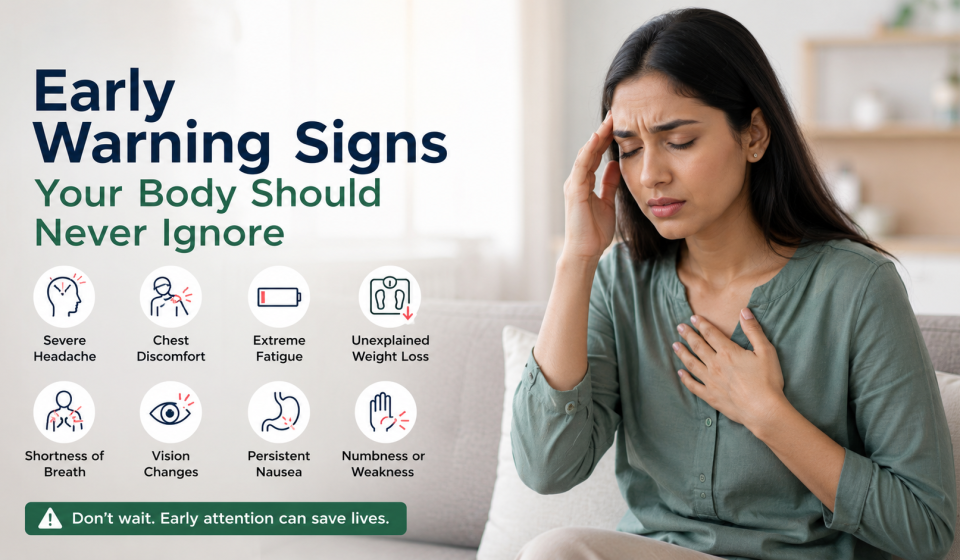

Learn the early warning signs your body should never ignore. Discover symptoms that may indicate serious health conditions and when to seek medical care.
Our bodies constantly communicate with us through signs and symptoms. While some changes are harmless and temporary, others may indicate an underlying health condition that requires medical attention. Unfortunately, many people ignore persistent symptoms, assuming they will go away on their own. Delaying medical evaluation can allow certain illnesses to progress, making treatment more difficult.
Recognizing early warning signs is one of the most effective ways to protect your health. Symptoms such as unexplained weight loss, persistent fatigue, chest pain, or changes in bowel habits may seem minor at first but can sometimes signal serious medical conditions. Paying attention to these warning signs and seeking timely medical advice can lead to early diagnosis, better treatment outcomes, and improved quality of life.
This article explains the common warning signs your body should never ignore, why they matter, and when it is important to consult a healthcare professional.
Why Paying Attention to Your Body Matters
Every person’s body functions differently, but sudden or persistent changes should never be overlooked. Many diseases, including heart disease, diabetes, cancer, and neurological disorders, often begin with subtle symptoms.
Early recognition helps:
- Detect diseases before complications develop
- Improve treatment success
- Prevent medical emergencies
- Reduce long-term health risks
- Promote faster recovery
- Improve overall well-being
Listening to your body and acting promptly can make a significant difference in your health.
Persistent Fatigue That Doesn’t Improve
Feeling tired after a busy day is normal. However, ongoing fatigue that lasts for several weeks despite adequate sleep and rest should not be ignored.
Persistent fatigue may be associated with:
- Anemia
- Diabetes
- Thyroid disorders
- Heart disease
- Chronic infections
- Sleep disorders
- Depression or anxiety
- Vitamin deficiencies
If fatigue interferes with your daily activities or is accompanied by other symptoms, it is important to seek medical evaluation.
Unexplained Weight Loss
Losing weight without changing your diet or exercise routine may indicate an underlying medical problem.
Possible causes include:
- Diabetes
- Hyperthyroidism
- Digestive disorders
- Cancer
- Chronic infections
- Liver disease
Unintentional weight loss of more than 5% of your body weight within six to twelve months should always be assessed by a healthcare provider.
Chest Pain or Pressure
Chest discomfort is one of the most serious warning signs that should never be ignored.
Chest pain may feel like:
- Pressure
- Tightness
- Burning
- Squeezing
- Heaviness
Although chest pain can sometimes result from indigestion or muscle strain, it may also indicate:
- Heart attack
- Angina
- Pulmonary embolism
- Lung disease
Seek emergency medical attention immediately if chest pain is severe or accompanied by:
- Shortness of breath
- Sweating
- Dizziness
- Pain spreading to the jaw, shoulder, neck, or arm
- Nausea
Shortness of Breath
Difficulty breathing during normal daily activities or while resting requires prompt medical attention.
Possible causes include:
- Asthma
- Chronic obstructive pulmonary disease (COPD)
- Pneumonia
- Heart failure
- Blood clots in the lungs
- Severe allergic reactions
Sudden or worsening shortness of breath should never be ignored, especially if accompanied by chest pain or bluish lips.
Persistent Fever
A mild fever often accompanies common viral infections. However, a fever that lasts several days or repeatedly returns may indicate a more serious illness.
Persistent fever can be associated with:
- Bacterial infections
- Tuberculosis
- Autoimmune diseases
- Certain cancers
- Urinary tract infections
Medical evaluation is recommended if a fever lasts longer than three days or is associated with severe symptoms.
Severe or Frequent Headaches
Occasional headaches are common, but sudden, severe, or persistent headaches deserve medical attention.
Warning signs include:
- A headache unlike any you’ve experienced before
- Sudden “thunderclap” headache
- Headache with fever
- Vision changes
- Confusion
- Weakness
- Difficulty speaking
These symptoms may indicate neurological emergencies such as stroke, meningitis, or bleeding in the brain.
Changes in Vision
Your eyes can reveal important information about your overall health.
Seek prompt medical care if you experience:
- Sudden blurred vision
- Double vision
- Loss of vision
- Flashes of light
- New floaters
- Eye pain
Vision changes may be caused by:
- Diabetes
- High blood pressure
- Retinal disorders
- Stroke
- Glaucoma
Early diagnosis can help prevent permanent vision loss.
Unusual Bleeding
Bleeding that occurs without an obvious cause should always be evaluated.
Examples include:
- Blood in urine
- Blood in stool
- Persistent nosebleeds
- Coughing up blood
- Vomiting blood
- Heavy menstrual bleeding
These symptoms may indicate infections, digestive disorders, blood clotting disorders, or certain cancers.
Persistent Cough
A cough caused by a cold usually improves within a few weeks. However, a cough lasting longer than three weeks requires medical evaluation.
Possible causes include:
- Asthma
- Chronic bronchitis
- Gastroesophageal reflux disease (GERD)
- Tuberculosis
- Lung cancer
- Pneumonia
A cough accompanied by blood, weight loss, or difficulty breathing should be assessed immediately.
Changes in Bowel or Bladder Habits
Persistent changes in bowel or bladder function can signal digestive or urinary disorders.
Warning signs include:
- Chronic constipation
- Persistent diarrhea
- Blood in stool
- Black stools
- Frequent urination
- Painful urination
- Difficulty emptying the bladder
These symptoms may indicate infections, inflammatory bowel disease, kidney disease, or colorectal cancer.
Persistent Abdominal Pain
Abdominal discomfort that continues for several days or becomes severe should not be ignored.
Potential causes include:
- Gallstones
- Appendicitis
- Stomach ulcers
- Kidney stones
- Liver disease
- Pancreatitis
Sudden severe abdominal pain requires immediate medical attention.
Unusual Skin Changes
Your skin often reflects your overall health.
Watch for:
- New or changing moles
- Non-healing wounds
- Persistent rashes
- Yellowing of the skin
- Dark patches
- Unexplained bruising
These changes may indicate skin cancer, liver disease, diabetes, or blood disorders.
Swelling in the Legs or Feet
Persistent swelling in the lower limbs may indicate poor circulation or underlying medical conditions.
Possible causes include:
- Heart failure
- Kidney disease
- Liver disease
- Blood clots
- Venous insufficiency
Swelling accompanied by pain, redness, or shortness of breath requires urgent evaluation.
Numbness or Weakness
Sudden numbness or weakness, especially on one side of the body, can be a sign of a stroke.
Other warning signs include:
- Difficulty speaking
- Facial drooping
- Loss of balance
- Confusion
- Sudden vision changes
Immediate emergency treatment can significantly improve recovery from stroke.
When Should You See a Doctor?
Do not ignore symptoms that:
- Last longer than expected
- Become more severe over time
- Interfere with daily activities
- Return repeatedly
- Occur suddenly without explanation
- Are accompanied by fever, severe pain, bleeding, or breathing difficulties
Trust your instincts. If something feels unusual or concerning, consult a healthcare professional rather than waiting for symptoms to worsen.
Tips to Protect Your Health
Preventive care is just as important as recognizing warning signs.
You can support your health by:
- Scheduling annual health checkups
- Eating a balanced diet
- Exercising regularly
- Staying hydrated
- Getting adequate sleep
- Avoiding smoking and excessive alcohol consumption
- Managing stress effectively
- Keeping vaccinations up to date
- Following recommended health screenings for your age
Sources
https://www.who.int
https://www.nih.gov
https://www.cdc.gov
https://www.cancer.gov
Conclusion
Your body often provides early warning signs before a serious illness develops. Recognizing symptoms such as persistent fatigue, unexplained weight loss, chest pain, changes in vision, unusual bleeding, or prolonged cough can lead to early diagnosis and more effective treatment. Ignoring these signs may delay medical care and increase the risk of complications.
Staying aware of changes in your body, maintaining regular health checkups, and seeking timely medical advice are essential steps toward protecting your long-term health. If you notice persistent or unusual symptoms, do not delay consulting a qualified healthcare provider. Early action can make a significant difference in preventing serious health problems and improving overall well-being.
FAQs
1. What are the most common warning signs that should never be ignored?
Persistent fatigue, chest pain, unexplained weight loss, difficulty breathing, unusual bleeding, severe headaches, and sudden vision changes are among the most important warning signs that require medical evaluation.
2. When should I see a doctor for persistent symptoms?
You should consult a healthcare provider if symptoms last more than a few days, worsen over time, recur frequently, or interfere with your daily life.
3. Can unexplained weight loss be a sign of a serious illness?
Yes. Unintentional weight loss may be associated with conditions such as diabetes, thyroid disorders, digestive diseases, chronic infections, or certain types of cancer. Medical evaluation is recommended.
4. Why is early detection of symptoms important?
Early detection allows healthcare providers to diagnose diseases sooner, begin appropriate treatment, reduce complications, and improve long-term health outcomes.
5. How can I reduce my risk of serious health problems?
Regular health checkups, a balanced diet, physical activity, adequate sleep, stress management, avoiding tobacco, limiting alcohol intake, and following recommended health screenings can significantly lower your risk of many diseases.