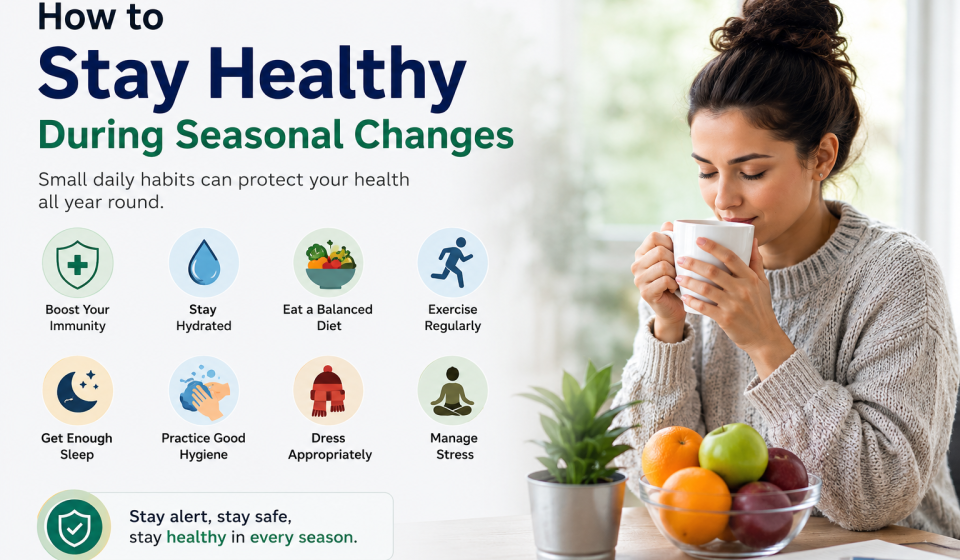

Learn how to stay healthy during seasonal changes with practical tips on nutrition, hydration, immunity, exercise, sleep, and preventing common seasonal illnesses.
Seasonal changes bring beautiful transformations in nature, but they can also affect your health. As temperatures, humidity, and weather patterns change, your body needs time to adapt. During these transitions, many people experience common health problems such as colds, flu, allergies, dehydration, respiratory infections, digestive issues, and skin problems. Children, older adults, pregnant women, and people with weakened immune systems are especially vulnerable.
The good news is that many seasonal illnesses can be prevented by adopting healthy habits and taking preventive measures. A balanced diet, regular exercise, adequate hydration, quality sleep, proper hygiene, and timely vaccinations can strengthen your immune system and help your body cope with changing weather conditions.
This article explains practical ways to stay healthy during seasonal changes, common health risks associated with different seasons, and simple lifestyle habits that support year-round wellness.
Why Seasonal Changes Affect Your Health
The human body continuously adjusts to environmental changes. Shifts in temperature, humidity, and air quality can influence the immune system, respiratory tract, skin, and overall health.
Seasonal changes may lead to:
- Increased viral and bacterial infections
- Seasonal allergies
- Asthma flare-ups
- Dehydration
- Dry skin
- Joint discomfort
- Changes in mood and energy levels
Understanding these changes helps you prepare your body and reduce the risk of seasonal illnesses.
Strengthen Your Immune System
A strong immune system is your body’s first line of defense against infections.
You can naturally support your immunity by:
- Eating a balanced diet
- Staying physically active
- Sleeping 7–9 hours each night
- Drinking enough water
- Managing stress effectively
- Avoiding smoking and excessive alcohol consumption
Healthy daily habits improve your body’s ability to fight viruses and bacteria throughout the year.
Eat a Nutrient-Rich Diet
Nutrition plays a key role in maintaining good health during seasonal transitions. Eating a variety of fresh, wholesome foods provides essential vitamins and minerals that support immune function.
Include foods such as:
- Fresh fruits
- Green leafy vegetables
- Whole grains
- Lean proteins
- Fish
- Eggs
- Nuts and seeds
- Legumes
- Low-fat dairy products
Foods rich in Vitamin C, Vitamin D, Zinc, and antioxidants help strengthen immunity and promote faster recovery from infections.
Stay Hydrated
Many people drink less water during cooler months because they feel less thirsty. However, proper hydration is important in every season.
Drinking enough fluids helps:
- Maintain body temperature
- Improve digestion
- Support kidney function
- Keep the skin healthy
- Reduce fatigue
- Strengthen immune function
Choose:
- Water
- Coconut water
- Herbal teas
- Fresh soups
- Fresh fruit with high water content
Limit sugary drinks and excessive caffeine, which may contribute to dehydration.
Get Enough Quality Sleep
Sleep allows the body to repair itself and strengthens the immune system.
Adults should aim for:
- 7–9 hours of sleep each night
Good sleep habits include:
- Maintaining a consistent bedtime
- Avoiding screens before sleep
- Keeping the bedroom quiet and comfortable
- Limiting caffeine in the evening
Poor sleep can increase susceptibility to infections and reduce energy levels.
Exercise Regularly
Regular physical activity helps improve circulation, strengthens immunity, and supports mental health.
Aim for at least 150 minutes of moderate exercise each week.
Suitable activities include:
- Walking
- Cycling
- Swimming
- Yoga
- Stretching
- Strength training
Even during colder or rainy seasons, indoor workouts can help you stay active.
Practice Good Hand Hygiene
Many seasonal infections spread through contaminated hands and surfaces.
Protect yourself by:
- Washing hands with soap and water for at least 20 seconds
- Using alcohol-based hand sanitizer when soap is unavailable
- Avoiding touching your face with unwashed hands
- Covering your mouth and nose while coughing or sneezing
Simple hygiene practices significantly reduce the spread of infectious diseases.
Dress According to the Weather
Wearing appropriate clothing helps your body adapt to changing temperatures.
During cold weather:
- Wear layered clothing
- Cover your head and hands
- Keep your feet warm
During hot weather:
- Choose lightweight, breathable fabrics
- Wear light-colored clothing
- Use hats and sunglasses outdoors
Proper clothing reduces the risk of heat-related illnesses and cold-related health problems.
Protect Yourself from Seasonal Allergies
Pollen, dust, mold, and environmental allergens often increase during certain seasons.
To reduce allergy symptoms:
- Keep windows closed during high pollen days
- Shower after spending time outdoors
- Wash bedding regularly
- Use air purifiers if needed
- Follow your doctor’s recommendations for allergy medications
If allergy symptoms become severe or persistent, seek medical advice.
Prevent Respiratory Infections
Colds, influenza, and other respiratory illnesses become more common during seasonal transitions.
Reduce your risk by:
- Avoiding close contact with sick individuals
- Wearing a mask in crowded places when appropriate
- Maintaining good ventilation indoors
- Keeping commonly touched surfaces clean
- Staying home when feeling unwell to prevent spreading infection
Vaccination against seasonal influenza may also be recommended for people at higher risk.
Take Care of Your Skin
Seasonal weather changes can affect skin health.
Dry weather may cause:
- Dry skin
- Cracked lips
- Itching
- Irritation
Protect your skin by:
- Applying moisturizer daily
- Using sunscreen throughout the year
- Avoiding excessively hot showers
- Drinking enough water
Healthy skin acts as a protective barrier against infections and environmental damage.
Support Your Mental Well-Being
Changes in weather and reduced daylight can affect mood and energy levels.
Maintain emotional well-being by:
- Spending time outdoors when possible
- Exercising regularly
- Staying socially connected
- Practicing relaxation techniques
- Seeking support if you experience persistent sadness or anxiety
Mental health is an essential part of overall wellness during every season.
Manage Chronic Health Conditions
People with chronic diseases should be especially careful during seasonal changes.
Conditions that may worsen include:
- Asthma
- Chronic obstructive pulmonary disease (COPD)
- Heart disease
- Diabetes
- Arthritis
Regular follow-up appointments, medication adherence, and healthy lifestyle habits help prevent complications.
Keep Vaccinations Up to Date
Vaccinations protect against several seasonal infectious diseases and help reduce the severity of illness.
Your healthcare provider may recommend vaccines based on:
- Age
- Medical history
- Occupation
- Travel plans
- Existing health conditions
Staying current with recommended vaccinations is an important part of preventive healthcare.
Schedule Regular Health Checkups
Routine medical examinations help identify health concerns before they become serious.
Annual health checkups can:
- Monitor blood pressure
- Screen for diabetes
- Check cholesterol levels
- Assess overall health
- Review medications
- Provide personalized preventive advice
Regular checkups help ensure your body is prepared to handle seasonal health challenges.
When Should You See a Doctor?
Seek medical attention if you experience:
- High fever lasting several days
- Difficulty breathing
- Persistent cough
- Severe dehydration
- Chest pain
- Worsening allergy symptoms
- Symptoms that do not improve with home care
Early medical evaluation can prevent complications and support faster recovery.
Sources
https://www.who.int
https://www.cdc.gov
https://www.nih.gov
https://medlineplus.gov
Conclusion
Seasonal changes are a natural part of life, but they can place additional demands on your body. Fortunately, adopting healthy habits can greatly reduce the risk of seasonal illnesses and help you maintain your overall well-being throughout the year. Eating a nutritious diet, staying hydrated, exercising regularly, getting adequate sleep, practicing good hygiene, and keeping vaccinations up to date all contribute to a stronger immune system and better health.
Listening to your body and seeking medical advice when symptoms persist are equally important. By making preventive healthcare a priority and following healthy lifestyle practices, you can enjoy every season while protecting yourself and your family from common health problems.
FAQs
1. Why do people get sick more often during seasonal changes?
Seasonal changes can affect the immune system, while fluctuations in temperature, humidity, and increased circulation of viruses and allergens make infections and allergies more common.
2. How can I naturally boost my immunity during seasonal changes?
A balanced diet, regular exercise, adequate sleep, hydration, stress management, and avoiding smoking and excessive alcohol can help strengthen your immune system.
3. What foods are best for staying healthy during seasonal changes?
Fresh fruits, vegetables, whole grains, lean proteins, nuts, seeds, legumes, and foods rich in Vitamin C, Vitamin D, and Zinc help support immune health.
4. Can seasonal changes worsen chronic illnesses?
Yes. Conditions such as asthma, allergies, diabetes, heart disease, arthritis, and COPD may become more difficult to manage during seasonal transitions, making regular medical care important.
5. When should I visit a doctor during seasonal illness?
You should seek medical attention if you have persistent high fever, difficulty breathing, severe dehydration, chest pain, prolonged cough, or symptoms that worsen or do not improve after several days.