
Discover healthy snacking tips that support energy, weight management, and overall wellness. Learn how to choose nutritious snacks without guilt and build healthier eating habits.
Snacking often gets a bad reputation, but when done wisely, it can be an important part of a healthy and balanced diet. Healthy snacks provide essential nutrients, help maintain steady energy levels, prevent excessive hunger between meals, and support overall well-being. The key is choosing nutrient-rich foods rather than highly processed snacks that are high in added sugars, unhealthy fats, and excess sodium.
Many people associate snacking with weight gain, but healthy snacking does not have to be a source of guilt. In fact, planned, nutritious snacks can help control appetite, improve concentration, support physical activity, and contribute to meeting daily nutritional needs. Instead of avoiding snacks altogether, focus on making smart food choices and practicing mindful eating.
This article explores the benefits of healthy snacking, nutritious snack ideas, portion control strategies, and practical tips for enjoying snacks without compromising your health goals.
What Is Healthy Snacking?
Healthy snacking means choosing foods that provide nutritional value while satisfying hunger between meals.
Nutritious snacks typically contain:
- Protein
- Dietary fiber
- Healthy fats
- Vitamins
- Minerals
- Complex carbohydrates
These nutrients help keep you full longer and provide sustained energy throughout the day.
Benefits of Healthy Snacking
When incorporated into a balanced diet, healthy snacks offer several advantages.
Benefits include:
- Maintains steady energy levels
- Helps control hunger
- Supports healthy weight management
- Prevents overeating during meals
- Improves concentration
- Helps meet daily nutritional needs
- Supports physical activity
- Promotes better blood sugar balance
Healthy snacks should complement meals rather than replace them.
Choose Whole Foods Whenever Possible
Whole foods are naturally rich in nutrients and contain fewer added ingredients than processed snacks.
Healthy whole-food options include:
- Fresh fruits
- Vegetables
- Nuts
- Seeds
- Yogurt
- Whole grains
- Beans
- Boiled eggs
Whole foods provide a wide range of vitamins, minerals, and antioxidants.
Snack on Fresh Fruits
Fruits are naturally sweet and packed with nutrients.
Healthy choices include:
- Apples
- Bananas
- Oranges
- Grapes
- Berries
- Pears
- Kiwi
- Papaya
Fruits provide fiber, vitamin C, antioxidants, and natural energy.
Add Vegetables to Your Snacks
Vegetables make excellent low-calorie, nutrient-rich snacks.
Try:
- Carrot sticks
- Cucumber slices
- Bell peppers
- Cherry tomatoes
- Celery sticks
- Broccoli florets
Pair vegetables with hummus or yogurt-based dips for additional nutrition.
Include Protein in Snacks
Protein helps increase satiety and supports muscle maintenance.
Healthy protein-rich snacks include:
- Boiled eggs
- Greek yogurt
- Cottage cheese
- Roasted chickpeas
- Lentil snacks
- Tofu cubes
- Grilled chicken strips
Combining protein with fiber-rich foods helps you stay satisfied longer.
Enjoy Nuts and Seeds in Moderation
Nuts and seeds provide healthy fats, protein, fiber, and important minerals.
Nutritious options include:
- Almonds
- Walnuts
- Pistachios
- Chia seeds
- Pumpkin seeds
- Sunflower seeds
Because they are calorie-dense, moderate portion sizes are recommended.
Choose Whole-Grain Snacks
Whole grains provide long-lasting energy and dietary fiber.
Healthy options include:
- Oatmeal
- Whole-grain crackers
- Air-popped popcorn
- Whole-wheat toast
- Brown rice cakes
Whole grains help maintain fullness and support digestive health.
Yogurt for Gut Health
Plain yogurt is a nutritious snack that provides:
- Protein
- Calcium
- Probiotics
- Vitamin B12
Choose unsweetened yogurt and add fresh fruit or seeds for extra flavor and nutrition.
Stay Hydrated
Sometimes thirst is mistaken for hunger.
Drinking enough water throughout the day can help:
- Prevent unnecessary snacking
- Maintain energy
- Support digestion
- Improve concentration
Keep a reusable water bottle nearby and drink water regularly.
Practice Portion Control
Healthy foods can still contribute to excess calorie intake if portions become too large.
Helpful tips include:
- Use small bowls or plates.
- Avoid eating directly from large packages.
- Pre-portion snacks before eating.
- Eat slowly and mindfully.
Balanced portions support healthy eating habits.
Avoid Highly Processed Snacks
Many packaged snacks are high in added sugar, unhealthy fats, and sodium.
Limit:
- Potato chips
- Candy
- Sugary cookies
- Sweet pastries
- Sugar-sweetened beverages
- Highly processed snack foods
Choosing minimally processed foods supports better overall health.
Read Nutrition Labels
Food labels help you make informed choices.
Look for foods that are:
- Lower in added sugar
- Lower in sodium
- Higher in fiber
- Rich in protein
- Made with whole-food ingredients
Understanding labels encourages healthier purchasing decisions.
Plan Snacks in Advance
Planning ahead helps reduce unhealthy impulse eating.
Simple planning ideas include:
- Pack fruit for work.
- Prepare vegetables in advance.
- Carry unsalted nuts.
- Keep yogurt available in the refrigerator.
- Store healthy snacks in easy-to-reach places.
Preparation makes healthier choices more convenient.
Eat Mindfully
Mindful eating encourages awareness of hunger and fullness.
Practice mindful snacking by:
- Eating without distractions
- Chewing slowly
- Enjoying flavors and textures
- Recognizing true hunger
- Stopping when comfortably satisfied
Mindful eating reduces unnecessary overeating.
Healthy Snack Ideas
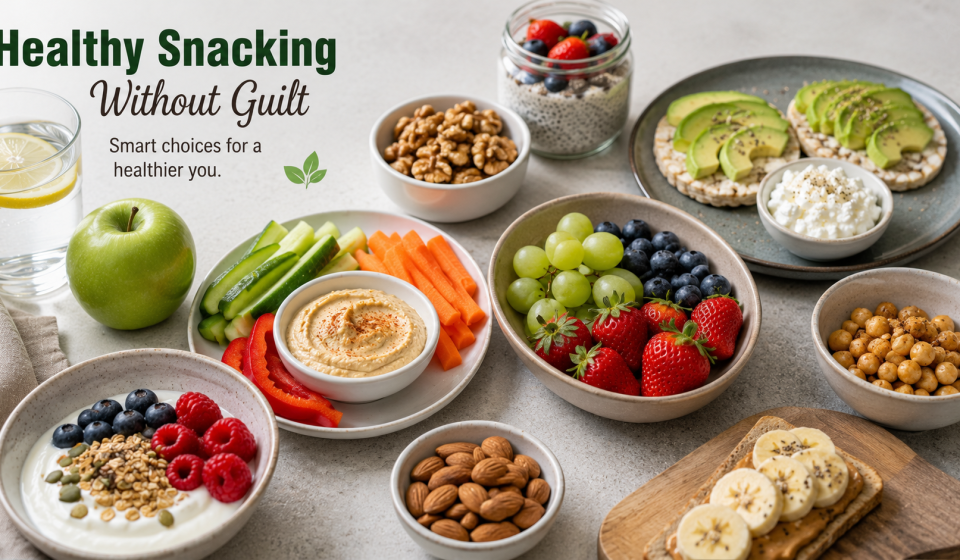
Simple snack combinations include:
- Apple slices with peanut butter
- Greek yogurt with berries
- Carrot sticks with hummus
- Whole-grain crackers with cheese
- Mixed nuts and seeds
- Fresh fruit salad
- Boiled eggs with vegetables
- Air-popped popcorn
- Cottage cheese with cucumber
- Homemade smoothies
These snacks provide balanced nutrition and sustained energy.
Healthy Snacking for Weight Management
Healthy snacks can support weight management by preventing excessive hunger and reducing overeating during meals.
Focus on:
- Balanced portions
- High-fiber foods
- Protein-rich snacks
- Healthy fats
- Whole foods
Snacking should fit within your overall daily nutritional needs.
Common Snacking Mistakes
Avoid these common habits:
- Eating out of boredom
- Skipping meals and overeating later
- Frequent sugary snacks
- Eating while watching television
- Drinking sugary beverages
- Choosing convenience foods regularly
Recognizing these habits helps improve long-term eating patterns.
Pair Healthy Snacking with a Healthy Lifestyle
Healthy eating works best alongside other wellness habits.
Support overall health by:
- Exercising regularly
- Sleeping 7–9 hours nightly
- Managing stress
- Drinking enough water
- Limiting tobacco and alcohol
- Scheduling routine health checkups
Healthy habits work together to improve overall well-being.
When Should You Seek Professional Advice?
Consult a healthcare professional or registered dietitian if you have:
- Diabetes
- Food allergies
- Digestive disorders
- Kidney disease
- Heart disease
- Nutritional deficiencies
- Questions about weight management
Professional guidance helps create a personalized nutrition plan.
Tips for Guilt-Free Healthy Snacking
Simple daily habits make healthy snacking easier.
- Choose whole foods whenever possible.
- Include protein and fiber.
- Control portion sizes.
- Stay hydrated.
- Prepare snacks in advance.
- Avoid skipping meals.
- Read nutrition labels.
- Eat mindfully.
- Limit processed foods.
- Enjoy treats occasionally as part of a balanced diet.
Sources
https://www.who.in
https://www.cdc.gov
https://www.heart.org
https://www.nih.gov
Conclusion
Healthy snacking can be a valuable part of a balanced lifestyle when nutritious foods are chosen in appropriate portions. Fresh fruits, vegetables, whole grains, yogurt, nuts, seeds, and protein-rich snacks provide sustained energy, support digestion, help manage hunger, and contribute to overall health. Rather than feeling guilty about eating between meals, focus on making mindful choices that nourish your body and fit within your daily nutritional needs.
Building healthy snacking habits, staying active, drinking enough water, and maintaining a balanced diet all contribute to long-term wellness. Small, consistent improvements in snack choices can make a meaningful difference in supporting energy, weight management, and overall health.
FAQs
1. Is snacking healthy?
Yes. Healthy snacking can help maintain energy, reduce hunger between meals, improve concentration, and support overall nutrition when nutritious foods are chosen.
2. What are some healthy snack options?
Healthy snacks include fresh fruits, vegetables with hummus, plain yogurt, nuts, seeds, boiled eggs, whole-grain crackers, cottage cheese, and air-popped popcorn.
3. Can healthy snacking help with weight management?
Yes. Nutritious snacks that contain protein and fiber can help control hunger and reduce the likelihood of overeating during meals, supporting healthy weight management.
4. How often should I snack?
Snack needs vary depending on age, activity level, and overall dietary intake. Many people benefit from one or two healthy snacks between meals if they feel genuinely hungry.
5. How can I avoid unhealthy snacking?
Plan nutritious snacks in advance, keep healthy foods readily available, stay hydrated, practice portion control, eat mindfully, and avoid eating out of boredom or stress.