
Learn how to control cholesterol with the help of your clinic. Discover cholesterol tests, lifestyle changes, medications, diet tips, and preventive healthcare strategies for better heart health.
Cholesterol is a waxy substance found in your blood that plays an important role in building healthy cells and producing hormones. However, when cholesterol levels become too high, it can increase the risk of serious health conditions such as heart disease, stroke, and blocked arteries.
Many people are unaware that they have high cholesterol because it often does not cause noticeable symptoms. This is why regular health check-ups at your clinic are essential. Healthcare clinics play a vital role in helping patients monitor, manage, and reduce cholesterol levels through screenings, personalized treatment plans, lifestyle counseling, and ongoing support.
Whether you have recently been diagnosed with high cholesterol or want to prevent future heart problems, your clinic can provide the guidance and care needed to keep your cholesterol under control.
Understanding Cholesterol
Before discussing how clinics help manage cholesterol, it is important to understand the different types of cholesterol.
LDL Cholesterol (Bad Cholesterol)
Low-density lipoprotein (LDL) cholesterol is often called “bad cholesterol” because it can build up in the walls of arteries. Over time, these deposits can narrow blood vessels and increase the risk of heart attacks and strokes.
HDL Cholesterol (Good Cholesterol)
High-density lipoprotein (HDL) cholesterol is known as “good cholesterol” because it helps remove excess cholesterol from the bloodstream and transports it to the liver for disposal.
Triglycerides
Triglycerides are another type of fat in the blood. High triglyceride levels combined with high LDL cholesterol can significantly increase cardiovascular risks.
Why High Cholesterol Is Dangerous
High cholesterol can silently damage blood vessels for years before symptoms appear. Excess cholesterol can lead to:
- Coronary artery disease
- Heart attacks
- Stroke
- Peripheral artery disease
- High blood pressure
- Reduced blood flow to organs
For example, a person may feel perfectly healthy but still have dangerously high cholesterol levels. This is why preventive healthcare and regular clinic visits are so important.
The Role of Your Clinic in Cholesterol Management
Modern healthcare clinics provide comprehensive support for cholesterol control. Instead of simply prescribing medication, clinics focus on long-term heart health through prevention, education, and monitoring.
Regular Cholesterol Screening
One of the most important services clinics provide is cholesterol testing.
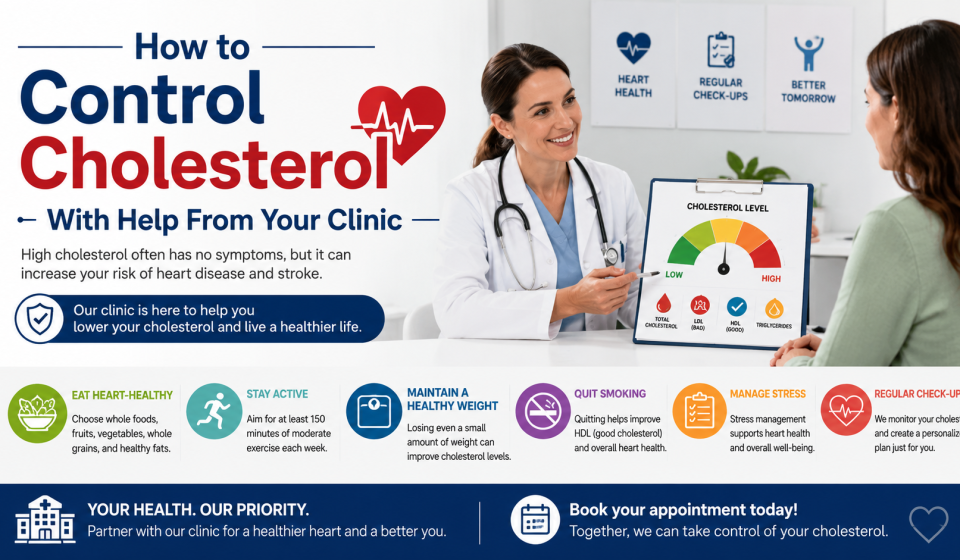
A lipid profile test measures:
- Total cholesterol
- LDL cholesterol
- HDL cholesterol
- Triglycerides
Doctors may recommend cholesterol screening more frequently if you have:
- Diabetes
- High blood pressure
- Obesity
- Family history of heart disease
- Smoking habits
- Sedentary lifestyle
Early detection allows healthcare providers to intervene before serious complications occur.
Personalized Risk Assessment
Every patient has different health risks. During clinic visits, healthcare professionals evaluate several factors, including:
- Age
- Weight
- Family history
- Blood pressure
- Existing medical conditions
- Smoking status
- Physical activity levels
Based on these factors, your doctor creates a personalized cholesterol management plan.
For example, a 35-year-old office worker with mildly elevated cholesterol may only require dietary changes and exercise, while a 60-year-old patient with diabetes may need medication alongside lifestyle modifications.
Dietary Guidance From Healthcare Professionals
Diet is one of the most effective tools for controlling cholesterol.
Many clinics offer nutritional counseling to help patients make healthier food choices.
Foods That Help Lower Cholesterol
Patients are often encouraged to include:
- Oats and whole grains
- Fruits and vegetables
- Nuts and seeds
- Beans and lentils
- Fatty fish rich in omega-3
- Olive oil
- Low-fat dairy products
Foods to Limit
Healthcare providers often recommend reducing:
- Fried foods
- Processed snacks
- Fast food
- Sugary beverages
- Excess red meat
- Foods high in trans fats
A clinic dietitian can create a meal plan that suits your health needs and cultural food preferences.
Exercise Recommendations for Better Cholesterol Control
Physical activity plays a major role in improving cholesterol levels.
Regular exercise can:
- Increase HDL cholesterol
- Lower LDL cholesterol
- Reduce triglycerides
- Support weight loss
- Improve heart health
Clinics often recommend:
Walking
A simple 30-minute brisk walk five days a week can significantly improve cardiovascular health.
Cycling
Cycling helps burn calories and strengthen the heart.
Swimming
Swimming provides a full-body workout that is easy on the joints.
Strength Training
Resistance exercises can improve metabolism and support healthy cholesterol levels.
Healthcare professionals can recommend exercises based on your age, fitness level, and medical history.
Weight Management Support
Excess body weight often contributes to high cholesterol levels.
Many clinics provide weight management programs that include:
- Diet planning
- Exercise guidance
- Behavioral counseling
- Progress monitoring
Even a modest weight loss of 5% to 10% of body weight can improve cholesterol numbers and reduce cardiovascular risks.
For example, if someone weighs 80 kilograms, losing just 4 to 8 kilograms may significantly improve cholesterol levels.
Medication Management
Sometimes lifestyle changes alone are not enough.
When cholesterol levels remain high despite healthy habits, doctors may prescribe medications such as statins.
These medications help:
- Lower LDL cholesterol
- Reduce plaque buildup
- Lower the risk of heart attacks and strokes
Common cholesterol-lowering medications include:
- Statins
- Ezetimibe
- PCSK9 inhibitors
- Bile acid sequestrants
It is important to take medications exactly as prescribed and attend follow-up appointments to monitor effectiveness and side effects.
Monitoring Progress Through Follow-Up Visits
Controlling cholesterol is an ongoing process.
Regular clinic visits allow healthcare providers to:
- Review cholesterol test results
- Adjust treatment plans
- Monitor medication effectiveness
- Provide lifestyle counseling
- Identify potential complications
Many patients see significant improvements within a few months when they follow their doctor’s recommendations consistently.
Managing Other Conditions That Affect Cholesterol
Several medical conditions can contribute to unhealthy cholesterol levels.
Healthcare clinics help manage related conditions such as:
Diabetes
High blood sugar levels can damage blood vessels and increase cardiovascular risk.
High Blood Pressure
High blood pressure combined with high cholesterol significantly raises the risk of heart disease.
Thyroid Disorders
An underactive thyroid can contribute to elevated cholesterol levels.
Obesity
Weight management programs help reduce multiple cardiovascular risk factors simultaneously.
Treating these conditions alongside cholesterol management improves overall health outcomes.
Lifestyle Habits That Support Healthy Cholesterol
Clinics often encourage patients to adopt heart-healthy habits, including:
Quit Smoking
Smoking lowers HDL cholesterol and damages blood vessels.
Limit Alcohol Intake
Excessive alcohol can increase triglyceride levels.
Manage Stress
Chronic stress may contribute to unhealthy eating habits and cardiovascular problems.
Get Quality Sleep
Poor sleep can affect metabolism and increase the risk of heart disease.
Healthcare providers may offer practical strategies for improving these lifestyle factors.
Benefits of Seeking Help From a Clinic
Working with healthcare professionals offers several advantages:
- Accurate cholesterol testing
- Personalized treatment plans
- Professional dietary guidance
- Medication management
- Regular monitoring
- Prevention of heart disease
- Long-term support and motivation
Rather than relying on internet advice alone, patients benefit from evidence-based medical recommendations tailored to their individual needs.
Preventing High Cholesterol Before It Starts
Prevention is always better than treatment.
Healthcare clinics encourage preventive measures such as:
- Annual health check-ups
- Healthy eating habits
- Regular exercise
- Weight management
- Smoking cessation
- Stress reduction
These preventive strategies can help maintain healthy cholesterol levels and reduce future healthcare costs.
Sources
https://sl1nk.com/cbfqlok
https://sl1nk.com/beaicwg
Conclusion
High cholesterol is a common but manageable health condition. Because it often develops without symptoms, regular cholesterol screenings and preventive healthcare are essential. Clinics play a critical role in helping patients control cholesterol through testing, personalized treatment plans, nutritional counseling, exercise recommendations, medication management, and ongoing monitoring.
By working closely with healthcare professionals and making healthy lifestyle choices, individuals can significantly reduce their risk of heart disease, stroke, and other cardiovascular complications. Taking action today can lead to better heart health and improved quality of life for years to come.
FAQs
1. How often should I have my cholesterol checked?
Most adults should have their cholesterol checked every 4 to 6 years. People with risk factors such as diabetes, obesity, or heart disease may need more frequent testing.
2. Can high cholesterol be controlled without medication?
Yes. Many people can lower cholesterol through healthy eating, regular exercise, weight loss, and lifestyle changes. However, some individuals may still require medication.
3. What foods are best for lowering cholesterol?
Foods such as oats, fruits, vegetables, beans, nuts, whole grains, and fatty fish can help improve cholesterol levels.
4. Does exercise really help reduce cholesterol?
Yes. Regular physical activity can lower LDL cholesterol, increase HDL cholesterol, and improve overall heart health.
5. Why are clinic follow-up visits important for cholesterol management?
Follow-up visits allow healthcare providers to monitor progress, adjust treatment plans, review test results, and ensure medications are working effectively.