
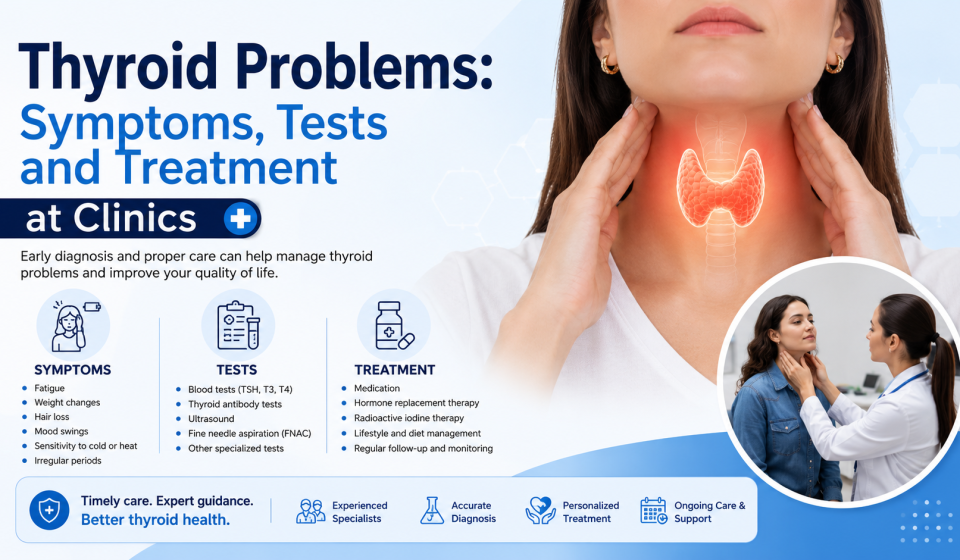

Learn about thyroid problems, their common symptoms, diagnostic tests, and treatment options available at clinics. Discover how early diagnosis and proper medical care can help manage thyroid disorders effectively.
The thyroid gland may be small, but it plays a major role in keeping the body healthy. Located at the front of the neck, this butterfly-shaped gland produces hormones that control metabolism, energy levels, body temperature, heart rate, and many other important functions. When the thyroid does not work properly, it can affect almost every organ in the body.
Thyroid disorders are becoming increasingly common in India. Many people experience symptoms such as fatigue, weight changes, mood swings, or hair loss without realizing that their thyroid could be the cause. The good news is that most thyroid conditions can be diagnosed and managed effectively through timely medical care.
In this article, we will discuss the symptoms of thyroid problems, the tests used for diagnosis, and the treatment options available at clinics.
Understanding Thyroid Problems
The thyroid gland produces two important hormones:
- Thyroxine (T4)
- Triiodothyronine (T3)
These hormones help regulate the body’s metabolism. When the thyroid produces too much or too little hormone, various health problems can occur.
The two most common thyroid disorders are:
Hypothyroidism
Hypothyroidism occurs when the thyroid gland does not produce enough hormones. This condition slows down many body functions.
Hyperthyroidism
Hyperthyroidism occurs when the thyroid gland produces excessive hormones. This speeds up many body processes.
Other thyroid-related conditions include:
- Thyroid nodules
- Goiter (enlarged thyroid gland)
- Thyroiditis (inflammation of the thyroid)
- Thyroid cancer
Common Symptoms of Thyroid Problems
Thyroid symptoms often develop gradually and may be mistaken for stress, aging, or other health conditions.
Symptoms of Hypothyroidism
People with an underactive thyroid may experience:
- Constant tiredness
- Weight gain despite normal eating habits
- Sensitivity to cold
- Dry skin
- Hair thinning or hair loss
- Constipation
- Depression or low mood
- Slow heart rate
- Muscle weakness
- Puffy face
- Memory problems
- Irregular menstrual cycles in women
For example, a person may notice that they feel exhausted throughout the day even after getting adequate sleep. They may also gain weight despite maintaining their usual diet.
Symptoms of Hyperthyroidism
People with an overactive thyroid may experience:
- Unexplained weight loss
- Rapid heartbeat
- Excessive sweating
- Increased appetite
- Nervousness or anxiety
- Irritability
- Tremors in the hands
- Difficulty sleeping
- Frequent bowel movements
- Heat intolerance
- Muscle weakness
Some individuals may feel constantly restless and experience palpitations even while sitting quietly.
Risk Factors for Thyroid Disorders
Certain factors can increase the risk of developing thyroid problems.
Family History
A family history of thyroid disease increases the likelihood of developing similar conditions.
Gender
Women are more likely than men to experience thyroid disorders.
Age
Thyroid conditions can occur at any age but become more common as people get older.
Autoimmune Diseases
Conditions such as:
- Hashimoto’s thyroiditis
- Graves’ disease
- Type 1 diabetes
- Rheumatoid arthritis
can increase the risk of thyroid dysfunction.
Pregnancy and Childbirth
Hormonal changes during pregnancy and after delivery can sometimes affect thyroid function.
Iodine Imbalance
Both iodine deficiency and excessive iodine intake can contribute to thyroid disorders.
When Should You Visit a Clinic?
Many people ignore thyroid symptoms for months or even years. It is advisable to visit a clinic if you experience:
- Persistent fatigue
- Sudden weight gain or weight loss
- Unexplained mood changes
- Hair loss
- Menstrual irregularities
- Neck swelling
- Rapid or irregular heartbeat
- Difficulty concentrating
Early diagnosis can prevent complications and improve quality of life.
How Clinics Diagnose Thyroid Problems
Modern clinics use a combination of medical history, physical examination, and laboratory tests to diagnose thyroid disorders.
Medical Consultation
The doctor will ask about:
- Symptoms
- Family medical history
- Current medications
- Lifestyle habits
- Previous thyroid issues
A detailed discussion helps identify possible thyroid-related concerns.
Physical Examination
During the examination, the doctor may check:
- Neck swelling
- Thyroid enlargement
- Heart rate
- Blood pressure
- Skin condition
- Reflexes
This provides valuable clues about thyroid function.
Common Thyroid Tests
TSH Test (Thyroid Stimulating Hormone)
The TSH test is the most commonly used screening test.
TSH is produced by the pituitary gland and controls thyroid hormone production.
- High TSH often suggests hypothyroidism.
- Low TSH often suggests hyperthyroidism.
Free T3 and Free T4 Tests
These blood tests measure the actual thyroid hormone levels in the bloodstream.
They help confirm the diagnosis and assess the severity of the condition.
Thyroid Antibody Tests
These tests help identify autoimmune thyroid diseases such as:
- Hashimoto’s thyroiditis
- Graves’ disease
Thyroid Ultrasound
An ultrasound uses sound waves to create images of the thyroid gland.
It can help detect:
- Thyroid nodules
- Cysts
- Enlargement
- Structural abnormalities
Thyroid Scan
A thyroid scan may be recommended when doctors need detailed information about thyroid activity and nodules.
Fine Needle Aspiration (FNA)
If a thyroid nodule appears suspicious, a small sample may be collected using a thin needle for laboratory examination.
This procedure helps rule out thyroid cancer.
Treatment Options Available at Clinics
Treatment depends on the specific thyroid disorder and its severity.
Treatment for Hypothyroidism
The standard treatment is thyroid hormone replacement therapy.
Levothyroxine
Levothyroxine replaces the hormone that the thyroid gland cannot produce adequately.
Benefits include:
- Improved energy levels
- Better metabolism
- Reduced fatigue
- Improved mood
- Better concentration
Patients usually require regular blood tests to ensure the dosage remains appropriate.
Treatment for Hyperthyroidism
Several treatment options may be recommended.
Anti-Thyroid Medications
These medicines reduce thyroid hormone production.
Examples include:
- Methimazole
- Propylthiouracil (PTU)
Beta Blockers
These medications help control symptoms such as:
- Rapid heartbeat
- Tremors
- Anxiety
Radioactive Iodine Therapy
This treatment gradually reduces thyroid activity by targeting overactive thyroid tissue.
Surgery
In some cases, partial or complete removal of the thyroid gland may be necessary.
Surgery may be recommended for:
- Large goiters
- Cancer suspicion
- Severe hyperthyroidism
- Large thyroid nodules
Lifestyle Tips for Managing Thyroid Problems
Medical treatment is important, but lifestyle habits also play a significant role.
Eat a Balanced Diet
Focus on:
- Fruits
- Vegetables
- Whole grains
- Lean proteins
- Healthy fats
Maintain Adequate Iodine Intake
Iodized salt usually provides sufficient iodine for most people.
However, excessive supplementation should be avoided unless advised by a doctor.
Exercise Regularly
Regular physical activity can help:
- Improve energy levels
- Support weight management
- Enhance mood
- Improve overall health
Take Medications Correctly
Thyroid medicines should be taken exactly as prescribed.
Skipping doses may affect hormone levels and symptom control.
Attend Follow-Up Visits
Regular clinic visits help doctors:
- Monitor hormone levels
- Adjust medication doses
- Detect complications early
Possible Complications if Left Untreated
Ignoring thyroid disorders can lead to serious health problems.
Untreated Hypothyroidism
May cause:
- High cholesterol
- Heart disease
- Infertility
- Depression
- Myxedema (rare but severe)
Untreated Hyperthyroidism
May result in:
- Heart rhythm disorders
- Osteoporosis
- Muscle weakness
- Thyroid storm (medical emergency)
Timely treatment significantly reduces these risks.
Importance of Early Diagnosis
Many thyroid conditions are manageable when detected early. Routine health check-ups and thyroid testing can help identify problems before complications develop.
For example, a working professional experiencing fatigue and weight gain may assume it is due to a busy schedule. However, a simple thyroid blood test could reveal hypothyroidism, allowing treatment to begin promptly.
Similarly, someone suffering from anxiety, palpitations, and weight loss may discover that hyperthyroidism is the underlying cause.
Early diagnosis allows patients to receive appropriate treatment, improve their symptoms, and maintain a healthy lifestyle.
Sources
https://sl1nk.com/0qpn9rx
https://sl1nk.com/e6nvt2a
Conclusion
Thyroid disorders are common but often overlooked health conditions that can affect energy levels, weight, mood, heart health, and overall well-being. Symptoms such as fatigue, unexplained weight changes, hair loss, anxiety, or neck swelling should not be ignored. Modern clinics offer comprehensive diagnostic services including TSH testing, thyroid hormone analysis, ultrasound examinations, and specialized evaluations when needed. With early diagnosis, proper medication, regular monitoring, and healthy lifestyle habits, most thyroid conditions can be effectively managed. Seeking medical advice at the right time can help prevent complications and improve long-term health outcomes.
FAQs
1. What are the first signs of thyroid problems?
Common early signs include fatigue, unexplained weight changes, hair loss, mood swings, sensitivity to cold or heat, and changes in heart rate.
2. Which test is most commonly used to check thyroid function?
The TSH (Thyroid Stimulating Hormone) blood test is the most commonly used screening test for thyroid disorders.
3. Can thyroid problems be cured completely?
Some thyroid conditions can be managed effectively with treatment, while others require long-term monitoring and medication.
4. How often should thyroid levels be checked?
The frequency depends on the condition and treatment plan, but many patients require testing every few months initially and annually once stable.
5. Can thyroid disorders affect weight?
Yes. Hypothyroidism often causes weight gain, while hyperthyroidism commonly leads to weight loss.