
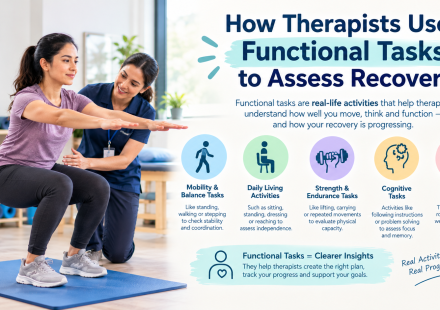
How Therapists Use Functional Tasks to Assess Recovery: Understanding Progress Through Everyday Movement

Learn how therapists use functional tasks to assess recovery, track movement, balance, strength, mobility, independence, and progress during rehabilitation. Recovery during rehabilitation is not measured only by muscle strength, flexibility, or how well…
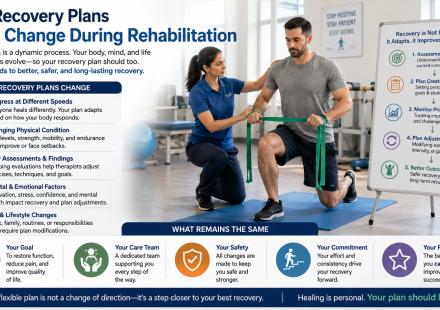
Why Recovery Plans Often Change During Rehabilitation: Understanding the Importance of Flexible Recovery Goals
Learn why recovery plans often change during rehabilitation, how progress, symptoms, treatment response, and individual needs influence rehabilitation goals and timelines. Rehabilitation is a gradual process designed to help people improve movement,…
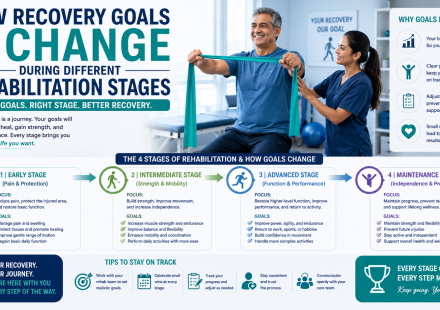
How Recovery Goals Change During Different Rehabilitation Stages: A Complete Guide to Progress, Independence, and Long-Term Recovery
Learn how rehabilitation goals change from early recovery to long-term independence, including mobility, strength, daily activities, confidence, work, and quality of life. Understanding how recovery goals change can make the rehabilitation process easier…
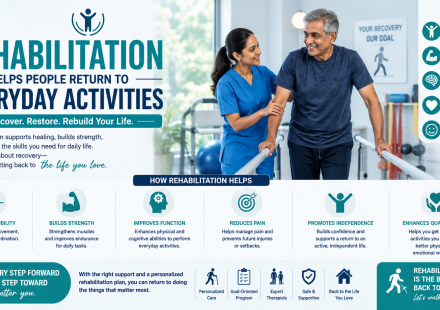
How Rehabilitation Helps People Return to Everyday Activities: A Complete Guide to Recovery, Independence, and Better Quality of Life
Learn how rehabilitation helps people regain strength, mobility, independence, and confidence after injury, illness, surgery, or disability and return safely to everyday activities.Returning to everyday activities can mean different things for different…