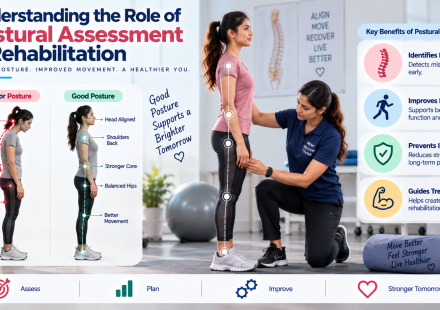
Understanding the Role of Postural Assessment in Rehabilitation

Learn why postural assessment is important in rehabilitation, how professionals evaluate posture, what tools are used, and how posture assessment can support movement, treatment planning, and functional recovery. Posture influences how the body positions…
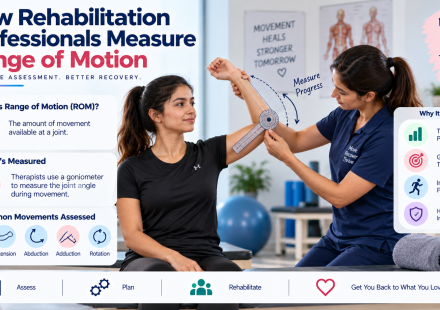
How Rehabilitation Professionals Measure Range of Motion
Learn how rehabilitation professionals measure range of motion using goniometers, inclinometers, observation, and digital tools. Discover active and passive ROM, assessment steps, accuracy, and its role in recovery. Range of motion, commonly called ROM,…
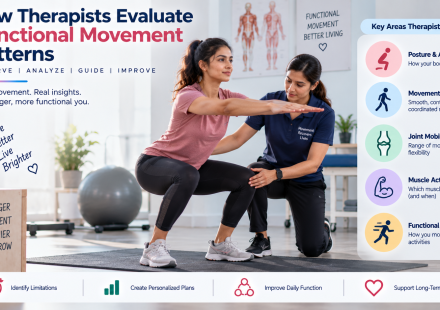
How Therapists Evaluate Functional Movement Patterns: A Complete Guide to Movement Assessment in Rehabilitation
Learn how therapists evaluate functional movement patterns, including posture, mobility, strength, balance, coordination, gait, and movement strategies, to create personalized rehabilitation plans. Human movement is more than the ability to move a single…
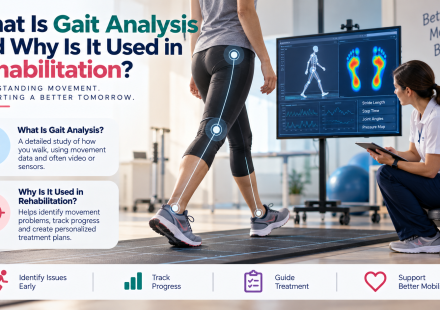
What Is Gait Analysis and Why Is It Used in Rehabilitation? A Complete Guide to Walking Assessment and Recovery
Learn what gait analysis is, how walking patterns are assessed, what gait parameters are measured, and why gait analysis is important for rehabilitation, physical therapy, balance, mobility, and recovery. Walking is one of the most important movements…
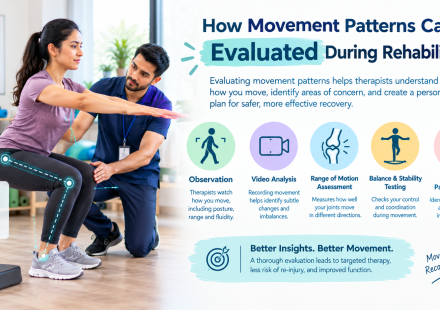
How Movement Patterns Are Evaluated During Rehabilitation: A Complete Guide to Functional Movement Assessment
Learn how movement patterns are evaluated during rehabilitation, including posture, balance, gait, coordination, strength, mobility, and functional tasks used to understand recovery and guide treatment. Movement is an important part of everyday life,…