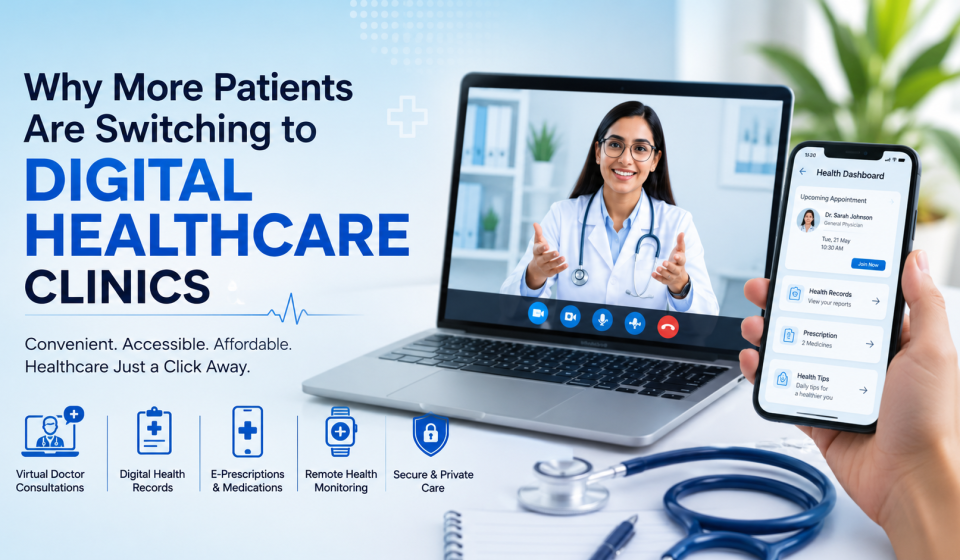

Healthcare is changing faster than ever, and one of the biggest shifts is the rise of digital healthcare clinics. Today, patients no longer want to wait for hours in crowded waiting rooms, travel long distances for simple consultations, or struggle to manage their medical records manually. Instead, they are choosing digital healthcare clinics that offer faster access, online consultations, electronic prescriptions, remote monitoring, and personalized support.
What Are Digital Healthcare Clinics?
Digital healthcare clinics are medical service platforms that provide healthcare through online and technology-based systems. Instead of visiting a physical clinic for every small health concern, patients can connect with doctors through video calls, chat support, mobile apps, or web portals.
These clinics may offer services such as online doctor consultations, digital prescriptions, lab test booking, health record management, follow-up care, chronic disease monitoring, mental health support, and wellness advice. Some digital clinics are fully online, while others work together with physical healthcare centers to provide both virtual and in-person care.
The main goal of digital healthcare clinics is to make medical care easier to access, especially for people with busy schedules, mobility issues, or limited healthcare options nearby.
Convenience Is the Biggest Reason Patients Are Switching
One of the top reasons patients are moving toward digital healthcare clinics is convenience. Traditional clinic visits often require travel, waiting time, appointment delays, and time away from work or family. Digital clinics reduce many of these challenges.
With online healthcare platforms, patients can book appointments from their phones, speak to doctors from home, receive prescriptions digitally, and schedule follow-ups without visiting the clinic repeatedly. This is especially helpful for routine consultations, minor illnesses, medication reviews, lifestyle advice, and ongoing health monitoring.
For many patients, saving time is just as important as receiving quality care. Digital clinics allow healthcare to fit into daily life instead of forcing patients to adjust their entire schedule around clinic visits.
Faster Access to Doctors and Medical Advice
In many places, getting a doctor’s appointment can take days or even weeks. Digital healthcare clinics help solve this problem by offering faster access to medical professionals. Patients can often connect with doctors through same-day or next-day appointments.
This quick access is useful for common health concerns such as cold and flu symptoms, skin problems, allergies, digestive issues, mental health concerns, medication questions, and follow-up consultations. Instead of delaying care, patients can get timely advice and prevent small problems from becoming bigger health issues.
Digital clinics also help reduce unnecessary emergency room visits because patients can receive guidance quickly and understand whether they need urgent care, a specialist visit, or simple home treatment.
Better Care for Chronic Health Conditions
Patients with long-term health conditions such as diabetes, hypertension, asthma, thyroid disorders, and heart-related issues often need regular monitoring. Digital healthcare clinics make this easier through remote care tools.
Patients can share health data such as blood pressure readings, sugar levels, symptoms, medication updates, and lifestyle habits through apps or connected devices. Doctors can review this information and adjust treatment plans when needed.
This type of continuous care is more effective than waiting months between physical appointments. It helps doctors detect warning signs early and helps patients stay more involved in managing their health.
Digital Health Records Make Treatment Easier
Another major benefit of digital healthcare clinics is easy access to medical records. In traditional healthcare, patients may lose paper prescriptions, forget previous test results, or struggle to explain their medical history to a new doctor.
Digital clinics solve this problem by storing health records electronically. Patients can access prescriptions, lab reports, consultation notes, medication history, and treatment plans in one place.
This improves communication between patients and doctors. It also helps avoid repeated tests, medication mistakes, and confusion during follow-up visits. When doctors have complete medical information, they can make better and faster decisions.
Affordable Healthcare Options for Patients
Healthcare costs are a major concern for many families. Digital healthcare clinics can help reduce some expenses by lowering travel costs, reducing missed work hours, and offering affordable online consultations.
For basic health concerns, patients may not need to visit a large hospital or specialist immediately. A digital consultation can provide initial guidance at a lower cost. If further care is needed, the doctor can recommend lab tests, specialist appointments, or in-person visits.
This makes healthcare more cost-effective and accessible, especially for students, working professionals, elderly patients, and people living in remote areas.
Improved Privacy and Comfort
Some patients feel uncomfortable discussing personal health issues in crowded clinics or busy hospital environments. Digital healthcare clinics offer a more private and comfortable experience.
Patients can speak with doctors from home, which may make it easier to discuss sensitive topics such as mental health, sexual health, skin conditions, lifestyle issues, or chronic illness concerns.
This comfort can improve honesty between patients and doctors. When patients communicate openly, doctors can provide better advice and more accurate treatment.
Digital Clinics Support Preventive Healthcare
Digital healthcare clinics are not only useful when someone is sick. They also support preventive healthcare. Many platforms provide health reminders, vaccination updates, wellness plans, diet guidance, exercise support, and regular checkup alerts.
Preventive care is important because it helps detect health risks early. Digital tools can remind patients to monitor blood pressure, take medicines on time, book annual tests, or follow up with doctors.
This proactive approach helps patients stay healthier and reduces the chances of serious medical problems in the future.
Telemedicine Is Making Healthcare More Accessible
Telemedicine is one of the strongest features of digital healthcare clinics. It allows patients to consult doctors through video or audio calls without being physically present.
This is especially valuable for people in rural areas, elderly patients, people with disabilities, parents with young children, and individuals who cannot easily travel. Telemedicine also helps patients get second opinions without visiting multiple hospitals.
By removing distance barriers, digital clinics are making healthcare more inclusive and accessible for more people.
Personalized Care Through Technology
Modern digital healthcare clinics use technology to create more personalized patient experiences. Based on health history, symptoms, lifestyle habits, and test results, doctors can provide care plans that suit each patient’s needs.
Some platforms also use artificial intelligence, health tracking tools, and data analysis to identify risks and suggest better treatment options. While doctors remain central to care, technology helps them make more informed decisions.
Personalized care improves patient satisfaction because people feel heard, understood, and supported throughout their healthcare journey.
Better Follow-Up and Patient Engagement
Follow-up care is often ignored in traditional healthcare because patients forget appointments or avoid repeat clinic visits. Digital clinics make follow-ups easier through reminders, messages, online check-ins, and virtual appointments.
Patients can ask questions after consultations, update doctors about their progress, and receive guidance without unnecessary travel. This improves treatment success and builds stronger doctor-patient relationships.
When patients stay engaged, they are more likely to follow medical advice, take medicines correctly, and manage their health responsibly.
Are Digital Healthcare Clinics Safe?
Digital healthcare clinics can be safe and effective when they follow proper medical standards, use qualified doctors, protect patient data, and guide patients correctly. However, digital care is not suitable for every medical situation.
Emergency symptoms such as chest pain, severe breathing problems, major injuries, stroke signs, heavy bleeding, or sudden unconsciousness require immediate in-person emergency care. Digital clinics are best for non-emergency consultations, follow-ups, chronic condition support, preventive care, and general medical advice.
Patients should choose trusted digital healthcare platforms with licensed professionals and secure systems.
The Future of Digital Healthcare Clinics
The future of healthcare will likely combine digital and physical care. Patients will use online platforms for routine consultations, reports, follow-ups, and monitoring, while physical clinics and hospitals will handle examinations, procedures, surgeries, and emergency care.
This hybrid model gives patients the best of both worlds: convenience from digital tools and hands-on care when needed. As technology improves, digital healthcare clinics will become even more advanced, personalized, and connected.
Source
https://l1nq.com/pgz8o1k
https://l1nq.com/b1dyrqa
Conclusion
More patients are switching to digital healthcare clinics because they offer convenience, faster access, affordability, privacy, better follow-up care, and improved health management. These clinics are changing the patient experience by making healthcare easier to access from home.
While digital clinics cannot replace emergency care or all in-person medical services, they are becoming an important part of modern healthcare. For routine consultations, chronic disease support, preventive care, and follow-ups, digital healthcare clinics provide a smart and patient-friendly solution.
As healthcare continues to evolve, digital clinics will play a major role in creating a more connected, efficient, and accessible healthcare system.
FAQs
1. What is a digital healthcare clinic?
A digital healthcare clinic is an online medical care platform where patients can consult doctors, receive prescriptions, manage health records, and access healthcare services through mobile apps, websites, or video calls.
2. Why are patients choosing digital healthcare clinics?
Patients are choosing digital clinics because they save time, reduce travel, provide faster doctor access, offer affordable consultations, and make follow-up care easier.
3. Are digital healthcare clinics safe?
Yes, digital healthcare clinics can be safe when they use licensed doctors, secure technology, and proper medical guidelines. However, emergencies still require immediate in-person care.
4. Can digital clinics treat serious health problems?
Digital clinics can help with advice, monitoring, and follow-up care, but serious or emergency conditions usually need physical examination, hospital care, or specialist treatment.
5. What services do digital healthcare clinics offer?
They may offer online consultations, e-prescriptions, lab test booking, medical record storage, chronic disease monitoring, mental health support, preventive care, and follow-up appointments.