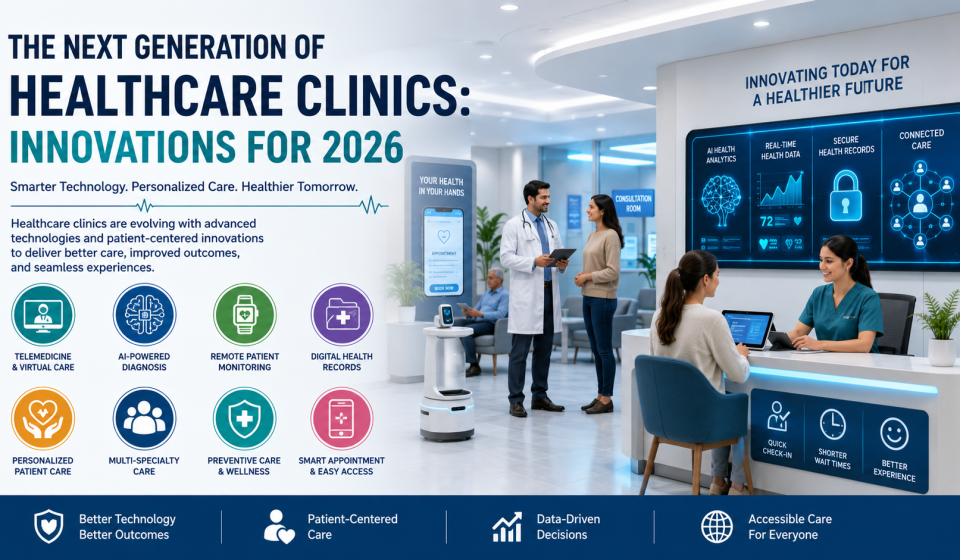

Healthcare clinics are changing quickly in 2026. Patients no longer want only basic medical treatment; they want faster access, personalized care, digital convenience, preventive support, and better communication with doctors. The next generation of healthcare clinics is designed to meet these expectations by combining medical expertise with modern technology.
Smart Clinics with Digital Technology
One of the biggest innovations in healthcare clinics is the rise of smart clinic technology. Smart clinics use digital systems to improve appointments, medical records, diagnosis, billing, prescriptions, and follow-up care.
Patients can book appointments online, receive reminders, access reports digitally, and consult doctors through telehealth platforms. This reduces waiting time and makes healthcare more convenient.
Digital technology also helps clinic staff manage patient data more efficiently. Doctors can quickly view medical history, test results, allergies, and past treatments, which improves accuracy and decision-making.
Artificial Intelligence in Patient Care
Artificial intelligence is becoming an important part of modern clinics. AI can support doctors by analyzing patient data, identifying health risks, improving diagnosis, and reducing administrative work.
AI-powered tools may help detect warning signs in lab reports, scans, and patient records. They can also assist in preparing clinical notes, appointment summaries, and treatment reminders.
However, AI does not replace doctors. Instead, it works as a support system that helps medical professionals save time and focus more on patients. In 2026, clinics that use AI responsibly can provide faster and more organized care.
Telemedicine and Virtual Consultations
Telemedicine has become one of the most useful healthcare innovations. It allows patients to consult doctors through video calls, phone calls, or secure online platforms.
This is especially helpful for people living in remote areas, busy professionals, elderly patients, and those who need follow-up consultations. Patients can receive medical advice without traveling to the clinic every time.
In 2026, many clinics are using hybrid healthcare models. This means patients can choose between in-person visits and virtual consultations depending on their medical needs.
Remote Patient Monitoring
Remote patient monitoring is another major innovation in healthcare clinics. With wearable devices and home monitoring tools, doctors can track important health data such as blood pressure, blood sugar, heart rate, oxygen levels, and sleep patterns.
This is very helpful for patients with chronic diseases like diabetes, hypertension, asthma, and heart conditions. Doctors can monitor changes early and adjust treatment before the condition becomes serious.
Remote monitoring also encourages patients to take a more active role in their own health.
Personalized Healthcare Services
The next generation of clinics focuses on personalized care. Instead of giving the same treatment approach to everyone, doctors are using patient history, lifestyle, age, risk factors, and health goals to create customized care plans.
Personalized care helps improve treatment results because every patient has different needs. For example, two patients with diabetes may need different diet plans, medicines, exercise routines, and monitoring schedules.
In 2026, clinics are becoming more patient-centered by focusing on individual health journeys.
Preventive Healthcare and Early Detection
Modern healthcare clinics are placing more attention on preventive care. Preventive healthcare means identifying health risks before they become serious diseases.
Clinics now offer regular health checkups, screening tests, vaccinations, lifestyle counseling, nutrition advice, and wellness programs. These services help detect conditions such as diabetes, high blood pressure, heart disease, and cancer at an early stage.
Early detection can reduce treatment costs, prevent complications, and improve quality of life.
Integrated Multi-Specialty Care
Many next-generation clinics are moving toward multi-specialty care. This means different specialists work together in one clinic or connected healthcare network.
Patients may have access to general physicians, pediatricians, gynecologists, cardiologists, dermatologists, dentists, physiotherapists, and dietitians in one place.
This saves time and improves coordination between doctors. When specialists work together, patients receive more complete and accurate care.
Digital Health Records
Digital health records are changing the way clinics manage patient information. Instead of relying on paper files, clinics store medical records securely in digital systems.
This allows doctors to access patient history quickly and avoid repeated tests. It also helps patients keep track of prescriptions, reports, diagnosis details, and follow-up instructions.
Digital records improve communication between healthcare providers and reduce errors caused by missing or incomplete information.
Faster Appointment and Queue Management
Long waiting times are one of the biggest problems in traditional clinics. In 2026, modern clinics are using digital appointment systems and queue management tools to solve this issue.
Patients can book slots online, receive estimated waiting times, and get reminders before their appointment. Some clinics also offer self-check-in kiosks or mobile check-in options.
This improves patient satisfaction and helps clinics manage daily operations more efficiently.
Advanced Diagnostic Services
Next-generation clinics are also improving diagnostic services. Many clinics now provide basic lab tests, imaging, ECG, ultrasound, and health screening services within the same facility.
This makes diagnosis faster and more convenient. Patients do not need to visit multiple locations for tests and consultations.
Quick diagnosis helps doctors begin treatment earlier, which can improve health outcomes.
Patient Education and Health Awareness
Modern clinics are not only treating diseases; they are also educating patients. Patient education helps people understand their health conditions, medicines, lifestyle changes, and follow-up needs.
Clinics may use digital brochures, videos, mobile apps, health workshops, and consultation summaries to guide patients.
When patients understand their condition clearly, they are more likely to follow treatment plans and make better health decisions.
Focus on Mental Health and Wellness
The next generation of healthcare clinics is also giving more importance to mental health. Stress, anxiety, depression, sleep problems, and burnout are common health concerns today.
Modern clinics are adding counseling, stress management, wellness coaching, and mental health screening services. This creates a more complete approach to healthcare.
Physical health and mental health are connected, so clinics that support both can provide better overall care.
Better Communication Between Doctors and Patients
Good communication is a key part of quality healthcare. In 2026, clinics are using digital tools to improve communication with patients.
Patients can receive follow-up messages, test result updates, medicine reminders, and health tips through apps, SMS, email, or patient portals.
Clear communication reduces confusion and helps patients feel more confident about their treatment.
Eco-Friendly and Patient-Friendly Clinic Design
Modern clinics are also focusing on better design. Clean interiors, comfortable waiting areas, natural lighting, digital check-in, accessible facilities, and calm environments improve the patient experience.
Some clinics are also adopting eco-friendly practices such as paperless records, energy-efficient lighting, and waste management systems.
A well-designed clinic can reduce patient stress and create a more welcoming healthcare environment.
Source
https://sl1nk.com/018zmy7
https://l1nq.com/avu9bbi
Conclusion
The next generation of healthcare clinics in 2026 is focused on convenience, technology, personalization, prevention, and better patient experiences. Innovations such as AI, telemedicine, remote monitoring, digital records, smart appointment systems, and integrated specialist care are transforming the way clinics operate.
These changes are helping patients receive faster, safer, and more effective healthcare. Clinics are no longer only treatment centers; they are becoming complete health and wellness partners.
As technology continues to grow, healthcare clinics will become even more connected, accessible, and patient-centered. The future of clinics is smart, digital, preventive, and focused on improving long-term health for every patient.
FAQs
1. What is the next generation of healthcare clinics?
The next generation of healthcare clinics refers to modern clinics that use digital technology, AI, telemedicine, remote monitoring, and patient-centered care to improve healthcare services.
2. How is AI used in healthcare clinics?
AI helps doctors analyze patient data, manage records, identify health risks, prepare notes, and improve diagnosis support.
3. Why is telemedicine important in 2026?
Telemedicine allows patients to consult doctors remotely, saving time and improving access to healthcare.
4. What is remote patient monitoring?
Remote patient monitoring uses wearable devices or home tools to track health data such as blood pressure, sugar levels, heart rate, and oxygen levels.
5. Are smart clinics better than traditional clinics?
Smart clinics can offer faster appointments, digital records, better communication, and more convenient care compared to traditional clinics.