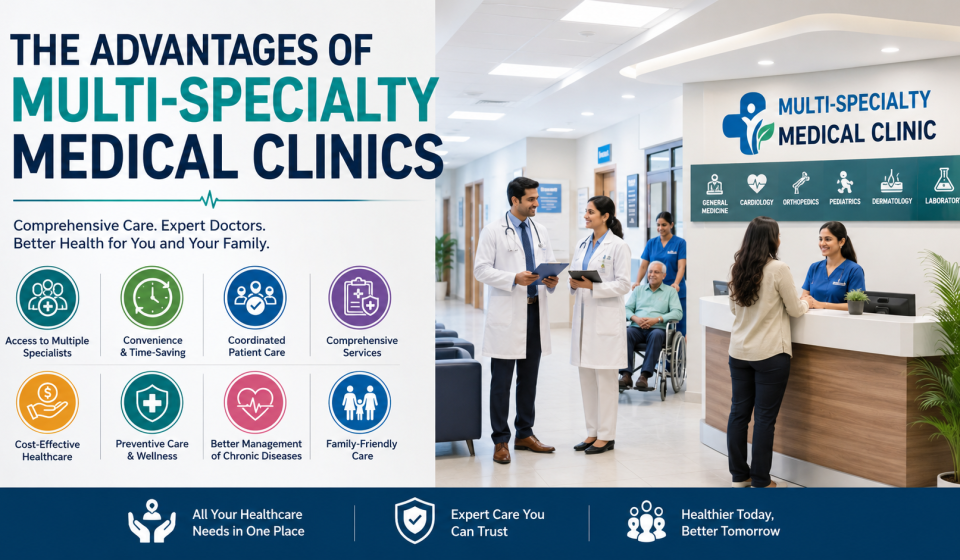

Healthcare needs are becoming more complex than ever before. Patients today often require care from more than one medical specialist, especially when dealing with chronic diseases, lifestyle-related health problems, aging concerns, or preventive care. This is where multi-specialty medical clinics play an important role. A multi-specialty medical clinic brings different healthcare professionals, diagnostic services, and treatment options together under one roof.
What Is a Multi-Specialty Medical Clinic?
A multi-specialty medical clinic is a healthcare facility where doctors from multiple medical departments provide consultation, diagnosis, treatment, and preventive care. These clinics may include general physicians, specialist doctors, nurses, lab technicians, therapists, and other healthcare professionals.
The main goal of a multi-specialty clinic is to provide comprehensive medical care in one place. Instead of visiting different clinics for different health problems, patients can receive various healthcare services from the same facility. For example, a patient with diabetes may need a general physician, dietitian, eye specialist, cardiologist, and laboratory tests. A multi-specialty clinic can manage all these needs efficiently.
Convenience for Patients
One of the biggest advantages of multi-specialty medical clinics is convenience. Patients do not have to travel to multiple locations for consultations, tests, and follow-ups. Everything is available in one place, making the healthcare journey easier and smoother.
This is especially helpful for elderly patients, working professionals, parents with children, and people with chronic diseases. A single visit can include consultation with a doctor, diagnostic tests, medicine guidance, and referral to another specialist if needed. This saves both time and energy.
Convenience also improves patient satisfaction. When healthcare services are easy to access, people are more likely to visit the clinic regularly and take preventive care seriously.
Access to Multiple Specialists Under One Roof
Multi-specialty clinics provide access to different medical experts in the same facility. This is very useful because many health conditions require input from more than one specialist. For example, a patient with high blood pressure may also need heart care, kidney monitoring, lifestyle counseling, and regular lab tests.
When specialists are available in one clinic, patients can receive complete care without delay. Doctors can also refer patients internally, making the treatment process faster and more organized. This helps in early diagnosis and better treatment planning.
Having multiple specialists under one roof also reduces confusion for patients. They do not need to search for different doctors separately, which can be stressful and time-consuming.
Better Coordination Between Doctors
Another major advantage of multi-specialty medical clinics is improved coordination between healthcare providers. In traditional healthcare settings, patients often visit different doctors at different places. This can lead to communication gaps, repeated tests, and incomplete medical information.
In a multi-specialty clinic, doctors can work together as a team. They can share patient records, discuss complex cases, and create a combined treatment plan. This improves the quality of care and reduces the risk of medical errors.
For patients with chronic conditions such as diabetes, heart disease, arthritis, asthma, or kidney problems, coordinated care is extremely important. It ensures that every aspect of the patient’s health is properly monitored.
Faster Diagnosis and Treatment
Multi-specialty clinics often have diagnostic services such as blood tests, X-rays, ECG, ultrasound, and other basic investigations. This helps doctors diagnose diseases faster and start treatment without unnecessary delays.
When consultation and testing are available in the same place, patients do not have to wait for long periods or visit separate diagnostic centers. Quick diagnosis is especially important in conditions where early treatment can prevent complications.
For example, if a patient visits with chest discomfort, the clinic may provide immediate consultation, ECG, blood tests, and specialist referral. This quick response can make a big difference in patient outcomes.
Cost-Effective Healthcare
Multi-specialty medical clinics can also be cost-effective for patients. Since many services are available in one facility, patients may save money on travel, repeated consultations, and unnecessary testing. Better coordination between doctors also helps avoid duplicate tests and treatments.
Preventive care services available at these clinics can also reduce long-term healthcare costs. Regular checkups, early diagnosis, vaccination, screening tests, and lifestyle counseling can help prevent serious diseases or detect them at an early stage.
When diseases are treated early, patients often need less expensive treatment compared to advanced-stage conditions. This makes multi-specialty clinics valuable for both short-term and long-term healthcare planning.
Improved Preventive Care
Preventive care is one of the most important parts of modern healthcare. Multi-specialty clinics support preventive health by offering regular checkups, health screenings, vaccination programs, lifestyle advice, and disease monitoring.
Many people visit doctors only when they become sick. However, regular preventive care helps identify risk factors before they become serious health problems. For example, routine blood pressure checks, diabetes screening, cholesterol testing, and cancer screening can help detect diseases early.
Multi-specialty clinics make preventive care easier because patients can consult different healthcare experts in one place. This encourages people to take better care of their health.
Better Management of Chronic Diseases
Chronic diseases such as diabetes, hypertension, asthma, thyroid disorders, heart disease, and arthritis require continuous monitoring and long-term treatment. Multi-specialty clinics are very helpful for managing such conditions because they provide regular follow-ups, specialist care, lab testing, and lifestyle guidance.
For example, a diabetic patient may need a physician, dietitian, eye doctor, foot care specialist, and laboratory support. A multi-specialty clinic can connect all these services together, making disease management more effective.
This type of care helps patients avoid complications, improve quality of life, and stay more informed about their health condition.
Family-Friendly Healthcare Services
Multi-specialty clinics are also beneficial for families. A single clinic can provide care for children, adults, women, and elderly family members. Parents can take their children for pediatric care, consult a general physician for themselves, and schedule health checkups for senior family members at the same location.
This family-centered approach builds trust between patients and the clinic. Over time, doctors become familiar with the family’s health history, lifestyle, and medical needs. This helps provide more personalized and effective care.
For busy families, having all healthcare services in one clinic makes medical care more organized and less stressful.
Advanced Facilities and Modern Technology
Many multi-specialty medical clinics use modern healthcare technology to improve patient care. These may include electronic medical records, online appointment booking, digital prescriptions, telemedicine services, diagnostic equipment, and patient management systems.
Technology helps clinics provide faster, safer, and more accurate services. Electronic health records allow doctors to access patient history quickly. Online appointments reduce waiting time. Telemedicine helps patients consult doctors remotely when in-person visits are not possible.
Modern technology also improves communication between patients and healthcare providers, making the overall healthcare experience more efficient.
Personalized Patient Care
Multi-specialty clinics are designed to provide patient-centered care. Since different doctors and healthcare professionals work together, they can understand the patient’s complete health condition instead of focusing on only one symptom.
Personalized care means treatment is planned according to the patient’s age, medical history, lifestyle, risk factors, and health goals. This approach improves trust, comfort, and treatment results.
Patients also feel more supported when they know that a team of healthcare professionals is working together for their well-being.
Reduced Waiting Time and Easy Follow-Up
In many healthcare systems, patients face long waiting times and difficulty getting follow-up appointments. Multi-specialty clinics help reduce this problem by offering organized appointment systems and multiple services in the same place.
Follow-up care also becomes easier. Patients can return to the same clinic for test results, treatment updates, medication changes, and specialist consultations. This continuity of care improves patient confidence and helps doctors track progress more effectively.
Easy follow-up is especially important after surgery, during chronic disease treatment, and for elderly patients who need regular medical attention.
Emergency Support and Quick Referrals
While multi-specialty clinics may not replace full hospitals for major emergencies, many clinics provide basic emergency support and quick referrals. If a patient needs urgent specialist attention or hospital care, the clinic can guide them quickly.
Having multiple doctors in one place allows faster evaluation of symptoms. For example, a patient with severe pain, breathing difficulty, or sudden weakness can be examined quickly and referred to the right specialist or hospital if required.
This early medical response can help prevent serious complications.
Why Patients Prefer Multi-Specialty Clinics
Patients prefer multi-specialty medical clinics because they offer comfort, trust, convenience, and complete care. Instead of managing multiple appointments at different locations, patients can receive most of their healthcare services in one organized facility.
These clinics are especially useful for people who value time, quality care, and professional medical guidance. They also support better doctor-patient relationships because patients can continue their healthcare journey in the same trusted environment.
As healthcare becomes more patient-focused, multi-specialty clinics are becoming an important part of modern medical care.
Source
https://sl1nk.com/39zbvbu
https://sl1nk.com/0ws5yq0
Conclusion
Multi-specialty medical clinics offer many advantages for patients, families, and healthcare providers. They bring multiple specialists, diagnostic services, preventive care, chronic disease management, and modern technology together under one roof. This makes healthcare more convenient, coordinated, affordable, and effective.
The biggest strength of a multi-specialty clinic is its ability to provide complete care in one place. Patients save time, receive faster diagnosis, avoid unnecessary confusion, and benefit from teamwork between doctors. These clinics are especially valuable for families, elderly patients, working professionals, and people with long-term health conditions.
As healthcare continues to evolve, multi-specialty medical clinics will play an even greater role in improving patient care, supporting preventive health, and making quality healthcare more accessible to everyone.
FAQs
1. What is a multi-specialty medical clinic?
A multi-specialty medical clinic is a healthcare facility where doctors from different medical specialties provide consultation, diagnosis, treatment, and preventive care under one roof.
2. Why should patients choose a multi-specialty clinic?
Patients should choose a multi-specialty clinic because it offers convenience, access to multiple doctors, faster diagnosis, better coordination, and complete healthcare services in one place.
3. Are multi-specialty clinics good for families?
Yes, multi-specialty clinics are very useful for families because they provide healthcare services for children, adults, women, and senior citizens in the same facility.
4. Do multi-specialty clinics help with chronic disease management?
Yes, these clinics are helpful for managing chronic diseases like diabetes, high blood pressure, asthma, thyroid problems, and heart disease because they offer regular monitoring and specialist care.
5. Are multi-specialty clinics cost-effective?
Multi-specialty clinics can be cost-effective because they reduce travel costs, avoid repeated tests, support preventive care, and help detect health problems early.