
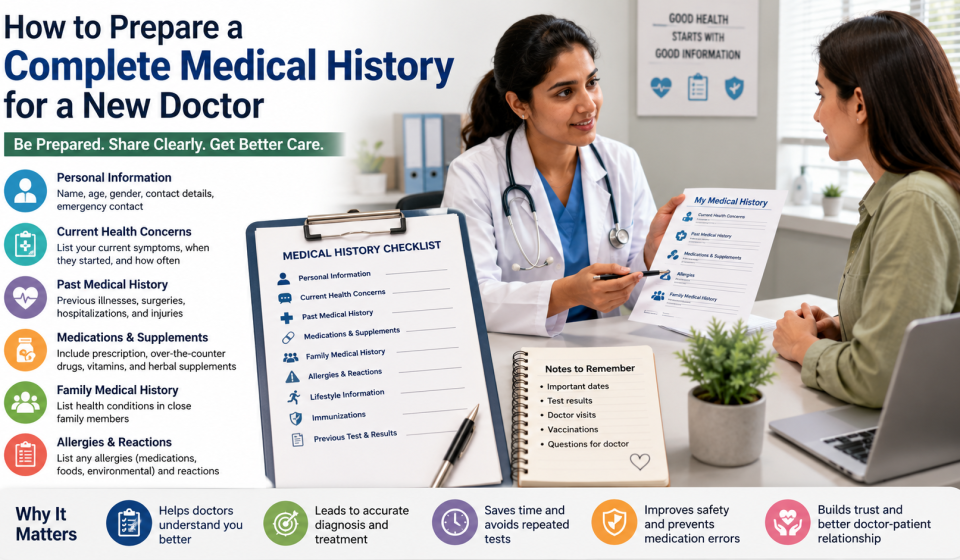

Learn how to prepare a complete medical history for a new doctor, including medications, allergies, past illnesses, surgeries, family history, symptoms, lifestyle habits, and important medical records.
Meeting a new doctor for the first time can sometimes feel overwhelming, especially when you are expected to explain your entire health background in a short appointment. A complete medical history gives your doctor important information about your past and current health, including previous illnesses, surgeries, medications, allergies, family health conditions, symptoms, and lifestyle factors. Preparing this information before the appointment can make the conversation more organized and help ensure that important details are not forgotten.
A well-prepared medical history is also useful when you have seen multiple doctors, moved to a new area, changed healthcare providers, or are consulting a specialist. Keeping your health information organized in one place can make it easier to share accurate details and understand your own healthcare journey. MedlinePlus recommends maintaining information such as major illnesses and surgeries, medications and supplements, allergies, chronic conditions, test results, and family medical history as part of a personal health record.
What Is a Medical History?
A medical history is a record of important information about your health.
It generally includes:
- Previous illnesses
- Current medical conditions
- Surgeries and hospitalizations
- Medications
- Vitamins and supplements
- Allergies
- Previous tests and screenings
- Vaccination information
- Family medical history
- Lifestyle habits
- Current symptoms
- Previous treatments
- Relevant health concerns
Your doctor may use this information along with a physical examination, tests, and other clinical information to understand your health and make appropriate decisions about your care.
Why Should You Prepare Your Medical History?
Preparing your medical history before meeting a new doctor has several advantages.
First, it reduces the chance of forgetting important information during the appointment. Second, it allows the doctor to understand your health background more quickly. Third, accurate information about medications and allergies can support medication safety.
MedlinePlus recommends writing down questions and concerns before an appointment and bringing a complete list of medicines, vitamins, supplements, and herbal products.
A prepared medical history can also make it easier to discuss symptoms, previous treatments, and health goals.
Start With Your Basic Information
Begin your medical history with basic personal information.
You may include:
- Full name
- Date of birth
- Emergency contact
- Current healthcare provider
- Important contact information
- Relevant insurance or patient identification details
Depending on the healthcare system and appointment, the clinic may already have some of this information.
Keeping it updated can still be useful, especially when visiting a new healthcare provider.
Create a List of Current Medical Conditions
Write down any medical conditions you currently have.
Examples may include:
- Diabetes
- High blood pressure
- Asthma
- Thyroid conditions
- High cholesterol
- Arthritis
- Heart conditions
- Kidney conditions
- Digestive disorders
- Other long-term health conditions
Include the approximate date or year when the condition was diagnosed if you know it.
Also mention whether the condition is currently controlled, under treatment, or being monitored.
Record Previous Illnesses
Your doctor may need to know about important illnesses you have experienced in the past.
Include significant conditions such as:
- Serious infections
- Childhood illnesses that remain relevant
- Previous chronic conditions
- Major injuries
- Neurological conditions
- Respiratory illnesses
- Significant digestive problems
- Previous hospital-treated illnesses
You do not necessarily need to remember every minor illness you have ever experienced. Focus on conditions that are medically significant or relevant to your current health.
Include Your Surgical History
Write down previous surgeries and procedures.
For each important surgery, try to include:
- Name of the procedure
- Approximate date
- Reason for the procedure
- Hospital or facility, if known
- Any major complications
- Recovery information
Examples may include:
- Appendix surgery
- Gallbladder surgery
- Orthopedic procedures
- Cesarean delivery
- Heart procedures
- Dental surgeries
- Previous biopsies
If you have hospital discharge papers or operative reports, consider keeping copies with your medical records.
Include Previous Hospitalizations
Hospital stays can provide important information about your health history.
Record:
- Date or year
- Reason for hospitalization
- Diagnosis
- Major treatments
- Procedures performed
- Outcome
Even if you cannot remember every detail, provide whatever information you know.
Your previous healthcare provider or hospital may have records that can fill in missing information.
Prepare a Complete Medication List
One of the most important parts of a medical history is your current medication list.
Write down:
- Medicine name
- Strength or dose
- How often you take it
- Why you take it
- How long you have been taking it
- Any significant side effects
Include prescription medicines as well as medicines purchased without a prescription.
MedlinePlus recommends including over-the-counter medicines, vitamins, supplements, and herbal products when preparing a medication list.
If possible, bringing the actual medication containers can also help healthcare professionals verify the names and doses.
Do Not Forget Vitamins and Supplements
Many people remember prescription medications but forget vitamins and supplements.
Your doctor should know about products such as:
- Multivitamins
- Iron
- Calcium
- Vitamin D
- Herbal supplements
- Protein supplements
- Traditional or alternative remedies
- Over-the-counter products
Some supplements can interact with medicines or affect treatment decisions, so providing a complete list is important.
Clearly List Your Allergies
Allergies should be clearly documented.
Include allergies to:
- Medicines
- Foods
- Latex
- Other substances
Also describe the reaction if you know it.
For example:
Medicine: Penicillin
Reaction: Rash
Do not simply write “allergy” without explaining what happened if you know the details.
MedlinePlus and NHS guidance both emphasize informing healthcare professionals about allergies and adverse reactions.
Record Previous Medication Reactions
Not every medication problem is necessarily an allergy.
You may have experienced:
- Nausea
- Dizziness
- Headache
- Skin reactions
- Sleepiness
- Stomach problems
- Other side effects
Tell your doctor about significant reactions or side effects, particularly if they caused you to stop taking a medication.
Accurate information can help your doctor make safer medication decisions.
Document Your Family Medical History
Family health history can provide useful information about possible health risks.
Try to find out whether close relatives have had conditions such as:
- Heart disease
- Diabetes
- High blood pressure
- Stroke
- Cancer
- Kidney disease
- Certain genetic disorders
Where possible, note the relative affected and approximately when the condition developed.
MedlinePlus explains that family health history can help identify risks for conditions such as heart disease, stroke, and cancer.
Ask Relatives for Missing Information
If you do not know your family medical history, consider asking parents, siblings, grandparents, or other relatives.
Useful information may include:
- Major diseases
- Age when a condition was diagnosed
- Serious surgeries
- Cancer history
- Cause and age of death for deceased relatives
- Known inherited conditions
You do not need to collect every detail immediately. Even basic information can be useful.
Prepare Your Vaccination History
Vaccination records can be important, especially when visiting a new doctor or preparing for travel, pregnancy, school, employment, or certain medical procedures.
Include available information about:
- Routine vaccinations
- Influenza vaccination
- COVID-19 vaccination
- Travel vaccines
- Other recommended vaccines
If you do not have a complete record, ask your previous healthcare provider or relevant health authority whether records are available.
Organize Your Previous Test Results
Collect important medical test reports when available.
These may include:
- Blood tests
- Urine tests
- X-rays
- Ultrasound reports
- CT scans
- MRI reports
- ECG results
- Pathology reports
- Other screening results
You do not necessarily need to bring every test ever performed.
Prioritize results that are recent, abnormal, related to your current concern, or specifically requested by your new doctor.
Write Down Your Current Symptoms
If you are visiting the new doctor because of a health problem, prepare a clear description of your symptoms.
Write down:
- What the symptom is
- When it started
- How often it occurs
- How long it lasts
- What makes it better
- What makes it worse
- Whether it is changing
- Whether other symptoms occur at the same time
For example, instead of writing “headache,” you might note that headaches began two weeks ago, occur several times per week, last several hours, and are more noticeable at a particular time of day.
MedlinePlus recommends recording what symptoms occur, when and where they appear, how long they have been present, and whether they have changed.
Track Changes in Your Health
Think about recent changes in:
- Weight
- Appetite
- Sleep
- Energy
- Exercise
- Mood
- Digestion
- Menstrual or reproductive health, when relevant
- Daily functioning
Changes that seem minor may still be useful to mention if they are new or persistent.
Healthcare providers may ask about changes in sleep, diet, exercise, work, mood, and relationships because lifestyle and life changes can provide useful context when evaluating symptoms.
Include Your Lifestyle Habits
A complete medical history is not only about diseases and medications.
Your doctor may also ask about:
- Physical activity
- Diet
- Sleep
- Tobacco use
- Alcohol use
- Recreational drug use
- Occupation
- Stress
- Daily routine
Be honest when answering these questions.
Healthcare professionals need accurate information to make appropriate decisions, and MedlinePlus notes that lifestyle habits can affect health and treatment.
Include Relevant Mental Health History
Mental health is also an important part of overall health.
If relevant, tell your doctor about:
- Previous diagnoses
- Counseling or therapy
- Psychiatric treatment
- Significant anxiety or depression symptoms
- Previous mental health medications
- Hospitalizations related to mental health
- Major changes in mood
You do not need to feel embarrassed about discussing mental health concerns. Accurate information helps healthcare professionals understand your overall health.
Mention Previous Doctors and Specialists
If you have received care from multiple healthcare professionals, create a simple list.
You may include:
- Primary care doctor
- Specialist
- Dentist
- Physical therapist
- Mental health professional
- Surgeon
- Other relevant providers
Include their names or clinic details if you have them.
This can help your new doctor understand where previous records or reports may be available.
Collect Specialist Reports
If you previously visited a specialist, bring relevant reports when possible.
Examples include:
- Cardiology reports
- Orthopedic reports
- Dermatology reports
- Neurology reports
- Gastroenterology reports
- Gynecology reports
- Oncology reports
The new doctor may not need every document, but relevant reports can provide useful background.
Prepare a List of Questions
Do not rely entirely on memory during the appointment.
Write down your most important questions beforehand.
Examples include:
- What could be causing my symptoms?
- Do I need any tests?
- What do my previous results mean?
- Are my current medicines still appropriate?
- Could any medicines interact?
- What lifestyle changes would you recommend?
- Do I need preventive screenings?
- When should I return for follow-up?
The NHS recommends writing down two or three important questions and taking notes to the appointment.
Keep Your Medical History Organized
You can maintain your medical history in several ways.
Options include:
- A printed health record
- A secure digital document
- A patient portal
- A health-management application
- A personal health notebook
Choose a format that is easy for you to update.
MedlinePlus describes a personal health record as a place to keep information such as medicines, allergies, chronic diseases, test results, surgeries, and family health history.
Create a One-Page Medical Summary
For routine appointments, a one-page summary can be especially useful.
You can organize it like this:
Current Conditions:
List important current diagnoses.
Medications:
Medicine name, dose, frequency.
Allergies:
Allergy and reaction.
Past Surgeries:
Procedure and approximate date.
Major Illnesses:
Condition and year.
Family History:
Important diseases in close relatives.
Recent Tests:
Test name, date, and major result if known.
Current Symptoms:
Main concern and when it started.
Questions for Doctor:
Three to five important questions.
This format can make your information easier to review.
Check Your Information Before the Appointment
Before leaving for the appointment, review your records.
Check that:
- Medication names are correct
- Doses are current
- Allergies are included
- Recent tests are listed
- Surgery dates are approximately correct
- Important symptoms are documented
- Questions are written down
- Relevant reports are available
This final review can prevent avoidable omissions.
Bring Important Documents
Depending on the appointment, consider bringing:
- Medication list
- Medication containers
- Allergy information
- Previous medical reports
- Test results
- Imaging reports
- Referral letter
- Vaccination records
- Insurance information
- Identification documents
The exact requirements depend on the clinic and healthcare system.
What to Do During the Appointment
Once you meet your new doctor, start with your main concern.
Explain why you are visiting and then provide the relevant background information.
Try to answer questions honestly and clearly.
If you do not know an answer, simply say that you do not know.
It is better to say “I am not sure” than to guess.
Do Not Hide Important Information
Some people may hesitate to mention certain lifestyle habits or previous health problems because they are worried about being judged.
However, accurate information is important.
MedlinePlus advises patients to be honest about symptoms and lifestyle habits so healthcare providers can make informed decisions.
If something feels difficult to discuss, remember that healthcare professionals regularly handle sensitive medical information.
Ask for Clarification
If your doctor uses a medical term you do not understand, ask for an explanation.
You can ask:
- What does this mean?
- Is this serious?
- What are my treatment options?
- What should I do next?
- When should I follow up?
- What symptoms should I watch for?
The NHS recommends asking questions when information is unclear and continuing the conversation until you understand the guidance.
Keep Your Medical History Updated
Preparing your medical history should not be a one-time activity.
Update it when:
- You start a new medication
- A medication is stopped
- You develop a new allergy
- You receive a new diagnosis
- You undergo surgery
- You receive important test results
- Your family medical history changes
- You receive new vaccinations
Regular updates make the information more useful for future appointments.
Digital Records Can Make Updating Easier
If your healthcare provider offers a patient portal or electronic health record system, use it when appropriate.
Digital records can make it easier to access information across appointments, although the amount of information available to patients varies between healthcare systems.
Keep your own important health information organized as well so you can provide it when needed.
Take Someone With You if Necessary
If you are anxious about the appointment, have difficulty remembering information, or are helping an older family member, consider taking a trusted person with you if the clinic permits it.
A companion can help:
- Remember questions
- Take notes
- Listen to instructions
- Provide additional history when appropriate
MedlinePlus and NHS guidance both note that having a friend or family member accompany you can be helpful.
Common Mistakes to Avoid
Forgetting Supplements
Include vitamins, herbs, and over-the-counter products.
Guessing Medication Doses
Check the medication label if you are unsure.
Ignoring Allergies
Clearly document both the substance and reaction when known.
Bringing Too Many Unorganized Documents
Prioritize relevant records and organize them clearly.
Forgetting Your Main Questions
Write them down before the appointment.
Hiding Lifestyle Information
Be honest so your doctor has accurate information.
Assuming Old Information Is Still Correct
Review your medication and health information before every important appointment.
A Simple Medical History Checklist
Before seeing a new doctor, review this checklist:
☐ Basic personal information
☐ Emergency contact
☐ Current medical conditions
☐ Previous major illnesses
☐ Surgeries and procedures
☐ Hospitalizations
☐ Current medications
☐ Vitamins and supplements
☐ Medication allergies and reactions
☐ Food or other allergies
☐ Vaccination history
☐ Recent test results
☐ Imaging reports
☐ Family medical history
☐ Current symptoms
☐ Lifestyle information
☐ Relevant mental health history
☐ Previous specialists
☐ Important medical reports
☐ Questions for the doctor
Final Preparation Before Your Visit
The day before your appointment, review your medical history once more.
Keep the most important information easily accessible on your phone, in a folder, or in a notebook.
If the clinic has asked you to complete a medical history form, complete it as accurately as possible.
If you are unsure about a question, ask the clinic or discuss it with your doctor rather than leaving important information out.
A few minutes of preparation can make a new-doctor appointment more productive and less stressful.
Source
MedlinePlus – Make the Most of Your Doctor Visit
MedlinePlus – Personal Health Records
MedlinePlus – Creating a Family Health History
Conclusion
Preparing a complete medical history for a new doctor is one of the simplest ways to make a healthcare appointment more organized and productive. Your medical history provides important background information about previous illnesses, current conditions, surgeries, medications, allergies, family health risks, lifestyle habits, symptoms, and previous treatments.
A complete record does not need to be complicated. A simple document containing your current medications, allergies, major illnesses, surgeries, important test results, family history, and current symptoms can provide a useful starting point. MedlinePlus recommends maintaining a personal health record containing many of these key details.
Medication information deserves particular attention. Make sure your list includes prescription medicines, over-the-counter medicines, vitamins, supplements, and herbal products. Include doses and frequency when possible, and mention any significant side effects or previous reactions. Accurate medication and allergy information can support safer healthcare decisions.
Your family medical history is also valuable because some health conditions can occur more frequently within families. Knowing which close relatives have experienced major conditions and approximately when those conditions developed can help your healthcare provider assess potential risks and decide whether additional prevention or screening may be appropriate.
Finally, remember that preparing your medical history is an ongoing process. Update your information whenever your medications, diagnoses, allergies, test results, or other important health circumstances change. Taking a few minutes to organize your information before an appointment can help you communicate more clearly and make it easier for your new doctor to understand your overall health background.
FAQ
1. What should I include in my medical history for a new doctor?
Include current medical conditions, previous illnesses, surgeries, hospitalizations, medications, supplements, allergies, family history, vaccinations, important test results, symptoms, and relevant lifestyle information.
2. Should I bring my medication bottles to a new doctor?
If possible, bringing medication containers can help confirm medicine names and doses. You can also bring an accurate medication list.
3. Should vitamins and supplements be included?
Yes. Tell your doctor about vitamins, minerals, herbal products, supplements, and over-the-counter medicines you use.
4. Why is family medical history important?
Family history can help identify possible risks for conditions that may occur more frequently among relatives, including certain heart conditions, cancers, diabetes, and other diseases.
5. What if I do not know my family medical history?
Share whatever information you know. You can also ask relatives for additional information and update your records later.
6. Should I include old medical test results?
Include relevant recent or significant test results, particularly those related to your current health concern or requested by your doctor.
7. Should I write down my symptoms before the appointment?
Yes. Record when symptoms started, how often they occur, how long they last, and what makes them better or worse.
8. Should I tell my doctor about lifestyle habits?
Yes. Information about sleep, diet, exercise, tobacco, alcohol, drugs, work, stress, and other relevant habits can help your doctor understand your health more completely.
9. What if I do not remember the exact date of a surgery?
Give an approximate year or explain that you do not remember the exact date. Your doctor may be able to obtain additional records if necessary.
10. Should allergies include the reaction I experienced?
Yes. When possible, record both the substance and the type of reaction you experienced.
11. Can I keep my medical history on my phone?
Yes. A secure digital document or patient portal can be a convenient way to maintain your health information.
12. How often should I update my medical history?
Update it whenever there is an important change, such as a new medication, diagnosis, allergy, surgery, vaccination, or significant test result.
13. Should I bring previous specialist reports?
Bring relevant specialist reports, particularly if they relate to your current symptoms or treatment.
14. What questions should I ask my new doctor?
Ask about your symptoms, possible causes, recommended tests, treatment options, medication side effects, lifestyle changes, follow-up, and warning signs that require further attention.
15. Can someone accompany me to the appointment?
In many situations, a trusted friend or family member can accompany you if the clinic allows it. They can help remember information and questions.
16. What is the easiest way to organize a medical history?
A one-page summary containing conditions, medications, allergies, surgeries, family history, recent tests, symptoms, and questions can be an effective starting point.
17. Should I mention previous medication side effects?
Yes. Tell your doctor about significant side effects or adverse reactions to medicines.
18. What if my medical records are incomplete?
Provide the information you know and ask previous healthcare providers or hospitals whether relevant records can be obtained.
19. Why should I prepare before seeing a new doctor?
Preparation can help you remember important information, communicate your concerns clearly, and make better use of the appointment time.
20. Is a personal health record useful?
Yes. A personal health record can help you keep important information such as medications, allergies, surgeries, test results, chronic conditions, and family history organized and accessible.