
Learn about osteoporosis, its causes, symptoms, risk factors, and prevention. Discover how nutrition, exercise, and healthy lifestyle habits can improve bone health and reduce fracture risk.
Bones provide the framework that supports the body, protects vital organs, stores minerals, and allows movement. Although bones appear solid, they are living tissues that continuously break down and rebuild throughout life. As we age, this natural process slows, and bones may lose density faster than they can rebuild. When bones become weak and brittle, the condition is known as osteoporosis.
Osteoporosis is often called a “silent disease” because it usually develops without noticeable symptoms until a fracture occurs. Millions of people worldwide are affected, particularly older adults and postmenopausal women. However, osteoporosis is not an inevitable part of aging. Healthy lifestyle habits, proper nutrition, regular exercise, and early medical screening can significantly reduce the risk of developing weak bones.
This article explains the causes of osteoporosis, its symptoms, risk factors, prevention strategies, and practical ways to maintain strong, healthy bones throughout life.
What Is Osteoporosis?
Osteoporosis is a condition in which bones become less dense, weaker, and more likely to break.
Healthy bones contain a balance of minerals such as calcium and phosphorus. In osteoporosis, bone tissue gradually deteriorates, making bones porous and fragile.
The most common fracture sites include:
- Hip
- Wrist
- Spine
- Shoulder
Even a minor fall or simple movement can sometimes cause fractures in people with severe osteoporosis.
Why Bone Health Is Important
Strong bones are essential for:
- Supporting body weight
- Protecting internal organs
- Allowing movement
- Storing calcium and other minerals
- Producing blood cells within the bone marrow
Maintaining bone health helps preserve mobility, independence, and overall quality of life.
What Causes Osteoporosis?
Several factors contribute to bone loss over time.
Common causes include:
- Aging
- Hormonal changes
- Low calcium intake
- Vitamin D deficiency
- Physical inactivity
- Smoking
- Excessive alcohol consumption
- Long-term use of corticosteroid medications
- Certain medical conditions
Often, osteoporosis develops due to a combination of these factors.
Risk Factors for Osteoporosis
Some risk factors cannot be changed, while others can be managed.
Common risk factors include:
- Age over 50 years
- Female sex
- Menopause
- Family history of osteoporosis
- Small body frame
- Low body weight
- Calcium deficiency
- Vitamin D deficiency
- Smoking
- Excessive alcohol use
- Sedentary lifestyle
Knowing your risk factors helps you take preventive action early.
Symptoms of Osteoporosis
In its early stages, osteoporosis usually causes no symptoms.
As bone loss progresses, symptoms may include:
- Frequent bone fractures
- Loss of height
- Stooped posture
- Back pain
- Neck pain
- Reduced mobility
Many people discover they have osteoporosis only after suffering a fracture.
Possible Complications
Untreated osteoporosis can lead to:
- Hip fractures
- Spinal fractures
- Chronic pain
- Reduced mobility
- Loss of independence
- Increased risk of disability
Early diagnosis and prevention greatly reduce these complications.
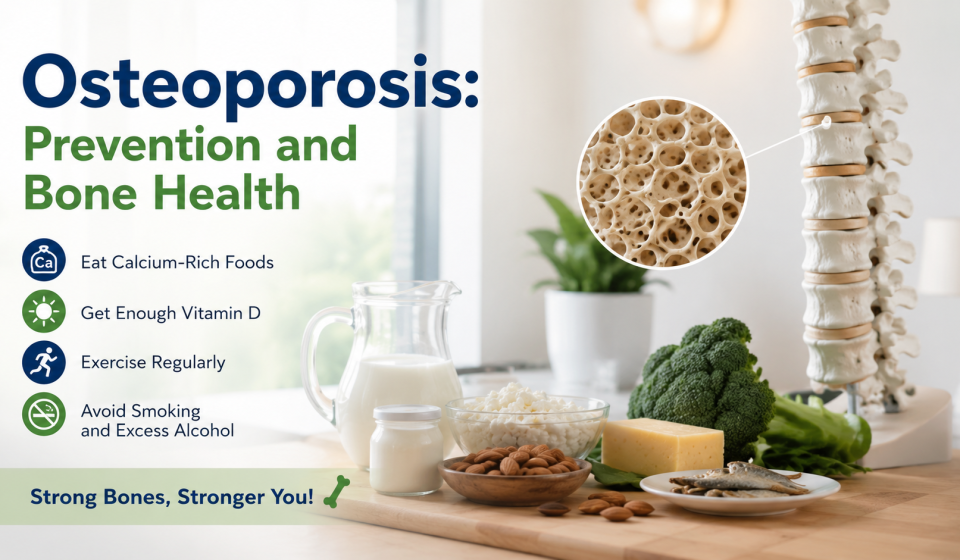
Eat Calcium-Rich Foods
Calcium is the primary mineral responsible for building and maintaining strong bones.
Good dietary sources include:
- Milk
- Yogurt
- Cheese
- Leafy green vegetables
- Tofu
- Almonds
- Fortified plant-based milk
- Sardines
Meeting your daily calcium needs supports lifelong bone health.
Get Enough Vitamin D
Vitamin D helps the body absorb calcium effectively.
Sources of vitamin D include:
- Safe sunlight exposure
- Fatty fish
- Egg yolks
- Fortified dairy products
- Fortified cereals
Your healthcare provider may recommend supplements if your vitamin D levels are low.
Stay Physically Active
Regular exercise helps strengthen bones and muscles.
The most beneficial activities include:
- Walking
- Jogging
- Dancing
- Climbing stairs
- Resistance training
- Weight-bearing exercises
- Balance exercises
Aim for at least 150 minutes of moderate-intensity physical activity each week, along with strength training exercises at least twice weekly.
Build Muscle Strength
Strong muscles help support bones and improve balance.
Strength training may include:
- Resistance bands
- Free weights
- Bodyweight exercises
- Weight machines
Improved muscle strength reduces the risk of falls and fractures.
Maintain a Healthy Body Weight
Being underweight may increase the risk of osteoporosis because lower body weight is associated with reduced bone mass.
Maintaining a healthy weight through balanced nutrition and regular exercise supports stronger bones.
Avoid Smoking
Smoking reduces bone density and interferes with the body’s ability to absorb calcium.
Quitting smoking benefits:
- Bone strength
- Heart health
- Lung health
- Overall well-being
Stopping smoking at any age provides important health benefits.
Limit Alcohol Consumption
Excessive alcohol intake can interfere with bone formation and increase the risk of falls.
Limiting alcohol helps protect bone health and overall wellness.
Prevent Falls
Reducing the risk of falls is especially important for people with osteoporosis.
Helpful strategies include:
- Wearing supportive footwear
- Keeping walkways clear
- Installing handrails where needed
- Using adequate lighting
- Exercising to improve balance and coordination
Preventing falls helps reduce fracture risk.
Get Regular Bone Health Screenings
Your healthcare provider may recommend a bone mineral density test, especially if you have risk factors for osteoporosis.
Screening can help:
- Detect bone loss early
- Estimate fracture risk
- Guide treatment decisions
Early detection improves long-term outcomes.
Manage Chronic Medical Conditions
Certain medical conditions increase the risk of osteoporosis.
Examples include:
- Rheumatoid arthritis
- Hyperthyroidism
- Chronic kidney disease
- Digestive disorders affecting nutrient absorption
Managing these conditions can help protect bone health.
Healthy Daily Habits for Strong Bones
Simple habits that support bone health include:
- Eat calcium-rich foods every day.
- Get enough vitamin D.
- Exercise regularly.
- Maintain a healthy body weight.
- Avoid smoking.
- Limit alcohol intake.
- Practice good posture.
- Prevent falls.
- Attend regular health checkups.
Small lifestyle changes can make a significant difference over time.
When Should You Consult a Healthcare Professional?
Speak with your healthcare provider if you:
- Are over 50 years of age
- Have experienced a fracture after a minor fall
- Notice a decrease in height
- Have persistent back pain
- Have a family history of osteoporosis
- Take long-term steroid medications
- Have concerns about your bone health
Early evaluation allows timely diagnosis and appropriate management.
Can Osteoporosis Be Prevented?
Although aging cannot be stopped, many cases of osteoporosis can be prevented or delayed.
Healthy habits such as consuming adequate calcium and vitamin D, exercising regularly, avoiding smoking, limiting alcohol, and maintaining a healthy lifestyle significantly reduce the risk of developing osteoporosis.
Building strong bones during childhood and maintaining healthy habits throughout adulthood provide lifelong benefits.
Sources
https://www.who.int
https://www.nih.gov
https://www.niams.nih.gov
https://www.mayoclinic.org
https://www.nhs.uk
Conclusion
Osteoporosis is a common condition that weakens bones and increases the risk of fractures, particularly among older adults and postmenopausal women. Because bone loss often occurs without symptoms, preventive care is essential.
A nutritious diet rich in calcium and vitamin D, regular weight-bearing exercise, strength training, avoiding smoking, limiting alcohol, maintaining a healthy weight, and attending routine health screenings all contribute to stronger bones and better overall health. By taking proactive steps today, you can protect your bones, maintain mobility, and reduce the risk of fractures as you age.
FAQs
1. What is osteoporosis?
Osteoporosis is a condition in which bones become weak, porous, and more likely to fracture due to reduced bone density.
2. Who is at the highest risk of osteoporosis?
Older adults, postmenopausal women, people with a family history of osteoporosis, individuals with low body weight, and those with calcium or vitamin D deficiency have a higher risk.
3. How can I prevent osteoporosis?
You can help prevent osteoporosis by eating calcium-rich foods, getting enough vitamin D, exercising regularly, avoiding smoking, limiting alcohol, maintaining a healthy weight, and attending regular health checkups.
4. What foods are good for bone health?
Milk, yogurt, cheese, leafy green vegetables, tofu, almonds, sardines, and vitamin D-rich foods such as fatty fish and fortified dairy products support healthy bones.
5. Does osteoporosis always cause symptoms?
No. Osteoporosis often develops without symptoms until a fracture occurs, making routine screening important for people at increased risk.