
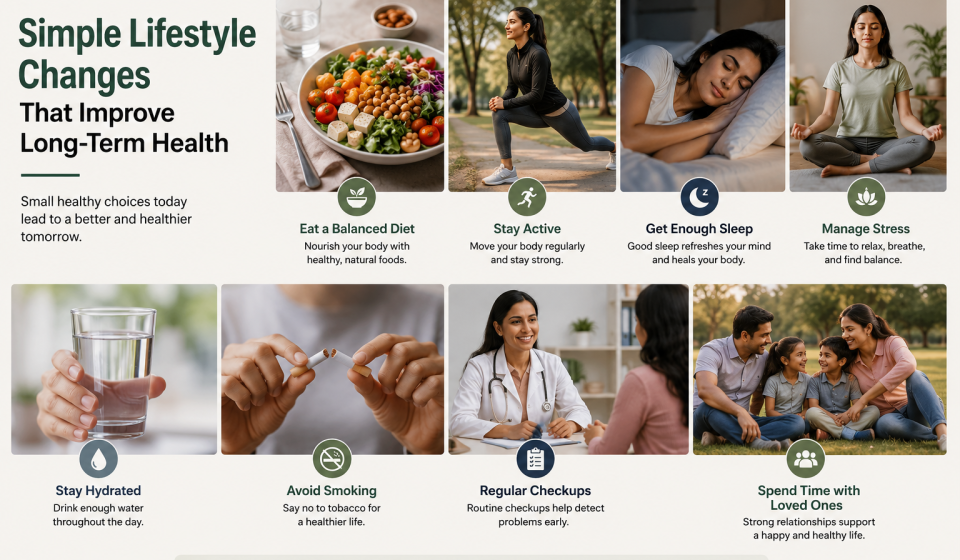

Discover simple lifestyle changes that improve long-term health. Learn practical daily habits that support heart health, immunity, mental well-being, and disease prevention.
Achieving good health doesn’t require dramatic changes or expensive wellness programs. In fact, some of the most powerful improvements come from small, consistent lifestyle habits practiced every day. Simple choices like eating nutritious meals, staying active, getting enough sleep, managing stress, and attending regular health checkups can have a lasting impact on your overall well-being.
Many chronic conditions, including heart disease, type 2 diabetes, obesity, and high blood pressure, are strongly influenced by lifestyle factors. The encouraging news is that adopting healthier habits can significantly lower your risk of these diseases while improving your energy, mood, and quality of life.
Long-term health is built through consistency rather than perfection. By making gradual, sustainable lifestyle changes, you can protect your health today and reduce the likelihood of future medical problems. This article explores practical lifestyle habits that support lifelong wellness and help you lead a healthier life.
Why Small Lifestyle Changes Matter
Healthy habits may seem simple, but when practiced consistently, they create lasting health benefits.
Positive lifestyle changes can help:
- Lower the risk of chronic diseases
- Improve heart health
- Strengthen the immune system
- Maintain a healthy weight
- Improve mental well-being
- Increase energy levels
- Support healthy aging
- Enhance overall quality of life
Small daily improvements often lead to significant long-term results.
Eat a Balanced and Nutritious Diet
A healthy diet provides the body with essential nutrients needed for proper functioning.
Focus on eating:
- Fresh fruits
- Green leafy vegetables
- Whole grains
- Lean proteins
- Fish
- Legumes
- Nuts and seeds
- Low-fat dairy products
- Healthy fats such as olive oil and avocados
A nutrient-rich diet helps reduce inflammation, supports heart health, and lowers the risk of chronic diseases.
Reduce Processed Foods
Highly processed foods are often high in:
- Added sugars
- Sodium
- Saturated fats
- Artificial preservatives
Replacing processed meals with fresh, home-cooked foods improves nutrition and supports long-term health.
Stay Physically Active
Regular exercise is one of the most effective ways to improve overall health.
Physical activity helps:
- Strengthen the heart
- Improve blood circulation
- Maintain healthy weight
- Increase muscle strength
- Improve flexibility
- Enhance mental health
- Reduce stress
Health experts recommend at least 150 minutes of moderate-intensity exercise each week.
Activities may include:
- Walking
- Cycling
- Swimming
- Yoga
- Strength training
- Dancing
Even a 30-minute walk most days of the week can provide substantial health benefits.
Maintain a Healthy Weight
Excess body weight increases the risk of many chronic diseases.
Maintaining a healthy weight helps reduce the risk of:
- Type 2 diabetes
- Heart disease
- Stroke
- High blood pressure
- Sleep apnea
- Joint problems
Healthy weight management depends on balanced nutrition, regular exercise, and consistent healthy habits rather than restrictive dieting.
Stay Hydrated
Water is essential for nearly every body function.
Proper hydration supports:
- Digestion
- Kidney function
- Body temperature regulation
- Healthy skin
- Joint lubrication
- Energy levels
- Brain function
Aim to drink water regularly throughout the day, adjusting your intake based on activity level and climate.
Prioritize Quality Sleep
Sleep allows your body to repair tissues, strengthen immunity, and support brain function.
Adults should aim for:
- 7–9 hours of quality sleep every night
Improve sleep quality by:
- Maintaining a consistent bedtime
- Avoiding electronic screens before sleep
- Limiting caffeine in the evening
- Creating a quiet and comfortable sleep environment
Poor sleep is associated with obesity, diabetes, heart disease, weakened immunity, and reduced concentration.
Manage Stress Effectively
Long-term stress can negatively affect both physical and mental health.
Chronic stress may contribute to:
- High blood pressure
- Anxiety
- Depression
- Digestive disorders
- Heart disease
- Sleep problems
Healthy stress management techniques include:
- Meditation
- Deep breathing exercises
- Yoga
- Spending time outdoors
- Reading
- Listening to music
- Talking with family or friends
Managing stress supports better emotional balance and overall wellness.
Avoid Smoking and Limit Alcohol
Smoking damages nearly every organ in the body and greatly increases the risk of serious illnesses.
Smoking is associated with:
- Lung cancer
- Heart disease
- Stroke
- Chronic lung disease
If you consume alcohol, do so in moderation according to your healthcare provider’s recommendations.
Quitting smoking and reducing alcohol intake are among the most beneficial lifestyle changes you can make.
Schedule Regular Health Checkups
Preventive healthcare is essential for maintaining long-term health.
Routine health checkups help:
- Detect diseases early
- Monitor blood pressure
- Check cholesterol levels
- Screen for diabetes
- Assess overall health
- Identify risk factors
- Provide personalized medical advice
Annual medical examinations allow healthcare providers to detect health concerns before symptoms develop.
Keep Vaccinations Up to Date
Vaccinations protect against many infectious diseases throughout adulthood.
Depending on your age and health status, your doctor may recommend vaccines for:
- Influenza
- COVID-19
- Tetanus
- Hepatitis
- Pneumonia
- Shingles
- Human papillomavirus (HPV)
Staying current with vaccinations protects both individuals and communities.
Practice Good Hygiene
Daily hygiene habits reduce the spread of infections and support overall health.
Healthy hygiene practices include:
- Washing hands regularly
- Brushing teeth twice daily
- Flossing every day
- Bathing regularly
- Covering coughs and sneezes
- Keeping frequently touched surfaces clean
These simple habits help prevent common illnesses.
Spend More Time Outdoors
Time spent outdoors benefits both physical and mental health.
Outdoor activities can:
- Increase physical activity
- Improve mood
- Reduce stress
- Support Vitamin D production
- Improve sleep quality
Remember to wear sunscreen and protective clothing during prolonged sun exposure.
Build Strong Social Connections
Healthy relationships contribute to emotional well-being and better overall health.
Strong social support can:
- Reduce stress
- Improve mental health
- Encourage healthy habits
- Increase life satisfaction
- Provide emotional support during difficult times
Maintaining meaningful relationships is an important part of a healthy lifestyle.
Listen to Your Body
Pay attention to changes in your health rather than ignoring persistent symptoms.
Consult a healthcare provider if you experience:
- Persistent fatigue
- Unexplained weight loss
- Chest pain
- Difficulty breathing
- Frequent headaches
- Persistent digestive problems
- Changes in vision
- Ongoing joint pain
Early medical evaluation often leads to more effective treatment and better health outcomes.
Healthy Habits That Make a Difference
Improving long-term health doesn’t require perfection. Start with manageable goals and gradually build healthier routines.
Simple habits include:
- Choosing water instead of sugary drinks
- Walking after meals
- Eating more vegetables
- Taking regular movement breaks from sitting
- Preparing healthy meals at home
- Sleeping on time
- Practicing gratitude and mindfulness
- Scheduling annual health checkups
Small actions performed consistently often create the greatest long-term benefits.
sources
https://www.who.int
https://www.cdc.gov
https://www.nih.gov
https://www.heart.org
Conclusion
Long-term health is shaped by the choices you make every day. Simple lifestyle changes such as eating nutritious foods, exercising regularly, getting enough sleep, staying hydrated, managing stress, avoiding tobacco, and attending routine health checkups can significantly improve your physical and mental well-being. These healthy habits not only reduce the risk of chronic diseases but also increase energy, improve mood, and enhance overall quality of life.
The journey toward better health begins with small, sustainable steps. Rather than trying to change everything at once, focus on making one healthy choice at a time. Over the years, these consistent efforts can lead to lasting improvements and help you enjoy a healthier, more active future.
FAQs
1. What are the simplest lifestyle changes that improve long-term health?
Eating a balanced diet, exercising regularly, staying hydrated, getting quality sleep, managing stress, avoiding smoking, limiting alcohol, and scheduling annual health checkups are among the most effective lifestyle changes.
2. How much exercise is recommended for adults?
Most adults should aim for at least 150 minutes of moderate-intensity physical activity each week, along with muscle-strengthening exercises on two or more days.
3. Why are small daily habits important for long-term health?
Small habits become sustainable over time and can significantly reduce the risk of chronic diseases while improving heart health, immunity, mental well-being, and overall quality of life.
4. Can lifestyle changes help prevent chronic diseases?
Yes. Healthy lifestyle choices can lower the risk of conditions such as heart disease, type 2 diabetes, obesity, high blood pressure, and certain cancers.
5. Why are regular health checkups important even if I feel healthy?
Many health conditions develop without obvious symptoms. Routine health checkups help detect diseases early, allowing timely treatment and better long-term outcomes.