
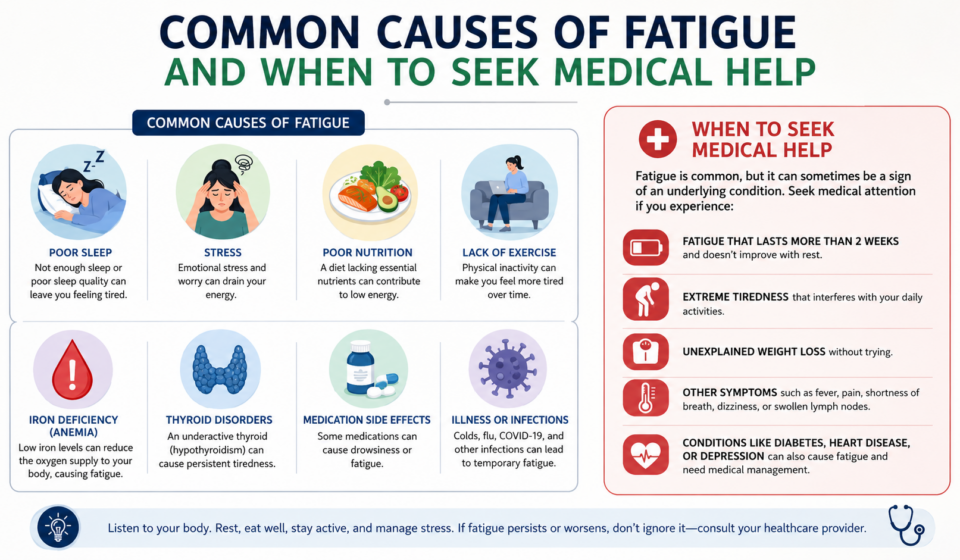

Feeling tired after a busy day is normal. But when tiredness becomes constant, affects your daily routine, or does not improve even after rest, it may be more than simple exhaustion. This condition is often called fatigue. Fatigue can make you feel physically weak, mentally drained, sleepy, unmotivated, and unable to focus.
Many people ignore fatigue because they think it is caused by work pressure, stress, lack of sleep, or a busy lifestyle. While these are common reasons, persistent fatigue can also be a sign of an underlying health problem that needs medical attention. At Restorix Clinic, we believe that early diagnosis and timely care can help patients recover energy, improve health, and prevent serious complications.
This article explains the common causes of fatigue, symptoms to watch for, and when you should seek medical help.
What Is Fatigue?
Fatigue is a feeling of extreme tiredness or lack of energy that does not always go away with sleep or rest. It is different from normal tiredness. Normal tiredness usually improves after proper sleep, food, hydration, or relaxation. Fatigue may continue for days, weeks, or even months.
Fatigue can affect both the body and mind. You may feel weak, slow, sleepy, irritated, forgetful, or unable to complete daily tasks. In some cases, fatigue may be linked to lifestyle habits. In other cases, it may be caused by medical conditions such as anemia, thyroid disease, diabetes, infections, heart problems, sleep disorders, or mental health concerns.
Common Causes of Fatigue
1. Lack of Quality Sleep
Poor sleep is one of the most common causes of fatigue. Even if you spend 7 to 8 hours in bed, your body may not get proper rest if your sleep quality is poor. Common reasons include late-night screen use, irregular sleep timing, stress, noise, caffeine intake, and sleep disorders.
People with poor sleep often wake up feeling tired, have headaches in the morning, feel sleepy during the day, and struggle to concentrate. Long-term sleep problems can also affect immunity, mood, weight, and overall health.
2. Stress and Mental Exhaustion
Stress can drain your energy quickly. Work pressure, financial worries, family responsibilities, emotional tension, and overthinking can keep your mind active even when your body needs rest.
Chronic stress increases mental fatigue and may also cause body aches, headaches, poor appetite, sleep issues, irritability, and anxiety. If stress is not managed, it can affect your physical health and reduce your ability to function normally.
3. Poor Diet and Nutritional Deficiency
Your body needs proper nutrition to produce energy. A diet low in essential vitamins, minerals, protein, and healthy carbohydrates can lead to fatigue. Skipping meals, eating too much junk food, or following an unbalanced diet may cause weakness and low stamina.
Common deficiencies linked with fatigue include iron, vitamin B12, vitamin D, folate, and magnesium. These deficiencies may cause symptoms such as dizziness, weakness, pale skin, muscle pain, tingling, low mood, and reduced concentration.
4. Dehydration
Even mild dehydration can make you feel tired. Water helps maintain blood circulation, body temperature, digestion, and energy levels. When your body does not get enough fluids, you may feel weak, dizzy, sleepy, or have headaches.
People who work outdoors, exercise heavily, sweat a lot, or drink too much tea, coffee, or sugary drinks may be more likely to become dehydrated. Drinking enough water throughout the day is a simple but important step for preventing fatigue.
5. Anemia
Anemia is a common medical cause of fatigue. It happens when the body does not have enough healthy red blood cells or hemoglobin to carry oxygen properly. Without enough oxygen, the body feels weak and tired.
Symptoms of anemia may include constant tiredness, shortness of breath, dizziness, fast heartbeat, pale skin, cold hands and feet, and difficulty concentrating. Women with heavy periods, pregnant women, vegetarians, and people with poor nutrition may be at higher risk.
6. Thyroid Problems
The thyroid gland controls metabolism and energy levels. If the thyroid is underactive, known as hypothyroidism, the body slows down and fatigue becomes common. Other symptoms may include weight gain, dry skin, hair fall, constipation, cold sensitivity, low mood, and slow heartbeat.
If thyroid problems are not treated, they can affect cholesterol levels, heart health, fertility, and overall wellbeing. A simple blood test can help detect thyroid imbalance.
7. Diabetes and Blood Sugar Imbalance
Fatigue can be an early sign of diabetes or unstable blood sugar levels. When the body cannot use glucose properly for energy, you may feel tired even after eating.
Other symptoms of diabetes may include frequent urination, excessive thirst, increased hunger, blurry vision, slow wound healing, and unexplained weight changes. Early testing is important because diabetes can be managed better when detected on time.
8. Sleep Apnea
Sleep apnea is a condition where breathing repeatedly stops or becomes shallow during sleep. This reduces oxygen levels and disturbs deep sleep. Many people with sleep apnea do not realize they have it.
Common signs include loud snoring, waking up gasping, morning headaches, dry mouth, daytime sleepiness, and poor concentration. Sleep apnea is more common in people who are overweight, but it can affect others too. If untreated, it may increase the risk of high blood pressure, heart disease, and daytime accidents.
9. Infections and Post-Illness Weakness
Fatigue is common during and after infections. Viral fever, flu, dengue, COVID-19, typhoid, urinary infections, and other illnesses can leave the body weak for days or weeks.
Sometimes fatigue continues even after the fever or infection has improved. This may happen because the immune system is still recovering. However, if fatigue is severe, long-lasting, or associated with fever, weight loss, night sweats, or breathing difficulty, medical evaluation is important.
10. Heart and Lung Conditions
Fatigue may also be related to heart or lung problems. When the heart or lungs cannot supply enough oxygen-rich blood to the body, even simple activities may feel difficult.
Warning signs include tiredness with mild activity, chest pain, shortness of breath, swelling in the legs, irregular heartbeat, wheezing, or dizziness. These symptoms should not be ignored and need prompt medical attention.
11. Depression and Anxiety
Mental health conditions can also cause fatigue. Depression may make a person feel low, unmotivated, sleepy, emotionally heavy, and physically drained. Anxiety can cause restlessness, poor sleep, muscle tension, and mental exhaustion.
Fatigue linked to mental health is real and should not be ignored. With proper care, counseling, lifestyle support, and treatment, patients can recover and feel better.
12. Medication Side Effects
Some medicines can cause tiredness as a side effect. These may include allergy medicines, sleeping pills, blood pressure medicines, painkillers, antidepressants, and certain cold medicines.
Never stop prescribed medicine without consulting a doctor. If you feel tired after starting a new medicine, speak with your healthcare provider. Your doctor may adjust the dose or suggest an alternative.
When Is Fatigue Not Normal?
Fatigue should not be ignored if it is persistent, unexplained, or interfering with daily life. You should seek medical help if:
- Fatigue lasts more than two weeks despite rest
- You feel tired even after proper sleep
- Fatigue is getting worse over time
- You have unexplained weight loss
- You have fever, night sweats, or body pain
- You feel shortness of breath or chest discomfort
- You feel dizzy or faint
- You have rapid heartbeat
- You experience extreme weakness
- You have mood changes, sadness, or anxiety
- You cannot perform daily work normally
Early consultation can help identify the cause and prevent complications.
When to Seek Immediate Medical Help
Visit a doctor urgently or seek emergency care if fatigue is associated with chest pain, severe breathing difficulty, fainting, confusion, sudden weakness on one side of the body, severe headache, black stools, heavy bleeding, or very fast heartbeat.
These symptoms may indicate serious medical conditions and require immediate attention.
How Doctors Diagnose Fatigue
At Restorix Clinic, diagnosis starts with understanding your symptoms, lifestyle, sleep habits, diet, medical history, and medicines. A doctor may ask how long you have been feeling tired, whether fatigue is constant or comes and goes, and whether you have other symptoms.
Depending on your condition, tests may include blood count, thyroid profile, blood sugar test, vitamin levels, liver and kidney function tests, urine test, infection screening, and other investigations. The goal is to find the root cause instead of only treating the symptom.
Treatment Options for Fatigue
Treatment depends on the cause. If fatigue is due to poor sleep, stress, dehydration, or diet, lifestyle changes may help. If it is due to anemia, thyroid disease, diabetes, infection, or another medical issue, proper treatment is needed.
Common treatment approaches may include nutritional correction, iron or vitamin supplements, sleep improvement, stress management, exercise guidance, treatment of infection, diabetes control, thyroid treatment, or referral to a specialist if required.
Lifestyle Tips to Improve Energy Levels
You can reduce everyday fatigue by following simple habits:
Eat a balanced diet with fruits, vegetables, whole grains, protein, and healthy fats. Drink enough water. Maintain a regular sleep routine. Avoid too much caffeine late in the day. Exercise regularly, even if it is a daily walk. Manage stress through breathing exercises, meditation, hobbies, or counseling. Avoid smoking and limit alcohol. Take short breaks during long work hours.
These habits may improve energy, but if fatigue continues, medical evaluation is still important.
Why Choose Restorix Clinic for Fatigue Evaluation?
Restorix Clinic provides patient-focused care for people experiencing fatigue, weakness, low energy, and general health concerns. Our approach focuses on understanding the complete picture, identifying possible causes, and guiding patients with proper diagnosis and treatment.
Whether your fatigue is due to lifestyle, nutritional deficiency, hormonal imbalance, infection, stress, or chronic disease, timely medical care can help you feel better and regain your daily strength.
Conclusion
Fatigue is common, but constant fatigue should not be ignored. It may be caused by poor sleep, stress, dehydration, anemia, thyroid problems, diabetes, infections, sleep apnea, heart conditions, mental health issues, or medication side effects.
If you are feeling tired all the time, do not assume it is normal. Listen to your body. If fatigue lasts more than two weeks, affects your work, or comes with other symptoms, visit Restorix Clinic for proper medical evaluation. Early diagnosis and treatment can help restore your energy and protect your long-term health.
FAQs
1. What is the most common cause of fatigue?
The most common causes include lack of sleep, stress, poor diet, dehydration, and lack of physical activity. However, persistent fatigue may be linked to medical conditions.
2. When should I see a doctor for fatigue?
You should see a doctor if fatigue lasts more than two weeks, does not improve with rest, affects your daily life, or comes with symptoms like fever, weight loss, dizziness, chest pain, or shortness of breath.
3. Can vitamin deficiency cause fatigue?
Yes. Low levels of iron, vitamin B12, vitamin D, and folate can cause tiredness, weakness, dizziness, and poor concentration.
4. Is fatigue a sign of diabetes?
Fatigue can be a symptom of diabetes, especially when combined with frequent urination, excessive thirst, blurry vision, or unexplained weight changes.
5. Can stress cause extreme tiredness?
Yes. Long-term stress can cause mental and physical exhaustion, poor sleep, headaches, body pain, and low energy.
6. How can Restorix Clinic help with fatigue?
Restorix Clinic can evaluate your symptoms, recommend necessary tests, identify the underlying cause, and provide treatment or lifestyle guidance based on your health condition.