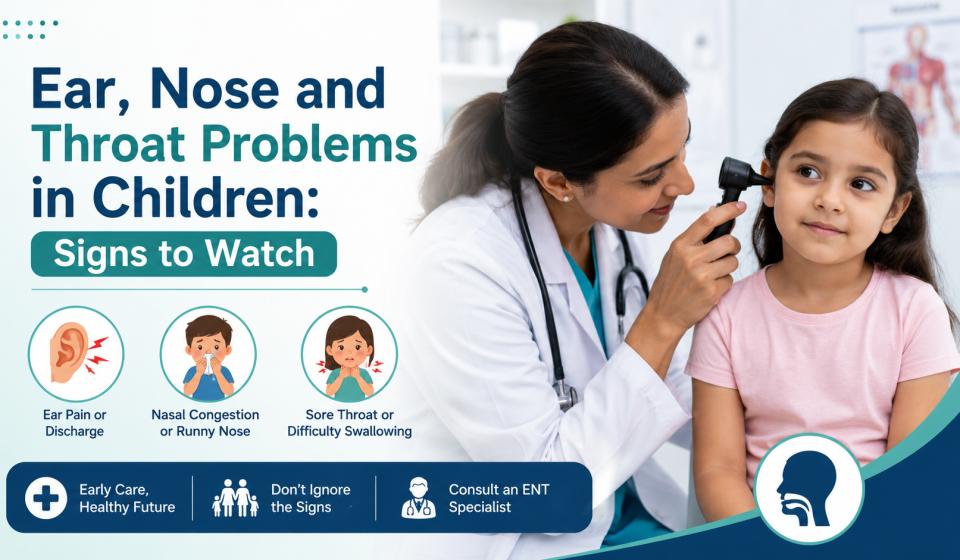

Learn about common ear, nose, and throat (ENT) problems in children, their warning signs, causes, treatment options, and when to seek medical attention. A complete guide for parents to protect their child’s health.
Children often experience ear, nose, and throat (ENT) problems as they grow because their immune systems are still developing. From frequent ear infections and sore throats to allergies and breathing difficulties, ENT conditions can significantly affect a child’s health, comfort, sleep, learning, and overall development. While many ENT issues are common and easily treatable, some symptoms should never be ignored.
As a parent, understanding the early warning signs of ENT problems can help you seek timely medical care and prevent complications. For example, a child who frequently complains of ear pain or has persistent nasal congestion may be experiencing an underlying condition that requires professional evaluation.
This comprehensive guide explains the most common ear, nose, and throat problems in children, the symptoms parents should watch for, possible causes, treatment options, preventive measures, and when to consult a doctor.
Why Are Children More Prone to ENT Problems?
Children are more vulnerable to ENT disorders because their immune systems are still maturing. Their anatomy also plays an important role. For instance, the Eustachian tubes in children are shorter and more horizontal than those in adults, making it easier for infections to spread to the middle ear.
Other factors that increase the risk include:
- Frequent exposure to viruses at schools and daycare centers
- Seasonal allergies
- Environmental pollution
- Exposure to cigarette smoke
- Family history of allergies or ENT conditions
- Developing immune systems
- Poor hygiene practices
Most children experience several upper respiratory infections each year, many of which affect the ears, nose, or throat.
Common Ear Problems in Children
1. Ear Infections (Otitis Media)
Ear infections are among the most common childhood illnesses. They often occur after a cold or upper respiratory infection when fluid becomes trapped behind the eardrum.
Signs to Watch:
- Ear pain or discomfort
- Pulling or tugging at the ears
- Fever
- Difficulty sleeping
- Irritability
- Trouble hearing
- Fluid drainage from the ear
- Loss of appetite
Young children may not always be able to explain their pain. Instead, they may become unusually fussy or have trouble sleeping.
Risk Factors:
- Age below five years
- Bottle feeding while lying down
- Exposure to tobacco smoke
- Frequent respiratory infections
- Family history of ear infections
Treatment:
Doctors may recommend:
- Pain-relieving medications
- Antibiotics if necessary
- Observation for mild infections
- Ear tubes for recurrent infections
2. Hearing Problems
Hearing difficulties can affect a child’s speech development, academic performance, and social interactions.
Warning Signs:
- Delayed speech development
- Not responding to sounds
- Frequently asking others to repeat themselves
- Turning up television volume excessively
- Poor school performance
- Difficulty following instructions
Early detection is crucial because untreated hearing problems may impact long-term development.
3. Swimmer’s Ear
Swimmer’s ear is an infection of the outer ear canal often caused by moisture trapped inside the ear.
Symptoms Include:
- Ear pain
- Itching
- Redness
- Swelling
- Pain while touching the ear
- Fluid discharge
Children who swim regularly may be more susceptible to this condition.
Common Nose Problems in Children
1. Allergic Rhinitis
Allergic rhinitis, commonly called nasal allergy, affects millions of children worldwide.
Symptoms:
- Frequent sneezing
- Runny nose
- Nasal congestion
- Itchy nose
- Watery eyes
- Mouth breathing
- Fatigue
Common triggers include:
- Dust mites
- Pollen
- Pet dander
- Mold
- Environmental pollutants
If allergies remain untreated, they can interfere with sleep, concentration, and school performance.
2. Sinus Infections
Sinusitis occurs when the sinuses become inflamed due to infection or allergies.
Signs to Watch:
- Nasal congestion lasting more than 10 days
- Thick yellow or green mucus
- Facial pain or pressure
- Headache
- Fever
- Persistent cough
- Bad breath
Children with repeated sinus infections may require further evaluation by an ENT specialist.
3. Enlarged Adenoids
Adenoids are tissues located behind the nasal cavity. When enlarged, they can block normal airflow.
Common Symptoms:
- Chronic nasal congestion
- Mouth breathing
- Snoring
- Sleep disturbances
- Frequent ear infections
- Nasal voice quality
In some cases, surgical removal may be recommended.
4. Nosebleeds
Occasional nosebleeds are common in children and are usually harmless.
Possible Causes:
- Dry air
- Nose picking
- Allergies
- Minor injuries
- Viral infections
Seek Medical Attention If:
- Bleeding lasts longer than 20 minutes
- Nosebleeds occur frequently
- Significant blood loss occurs
- The child experiences dizziness
Common Throat Problems in Children
1. Tonsillitis
Tonsillitis occurs when the tonsils become infected or inflamed.
Symptoms Include:
- Sore throat
- Difficulty swallowing
- Fever
- Swollen tonsils
- White patches on the tonsils
- Bad breath
- Swollen neck glands
Some children experience recurrent tonsillitis, which may eventually require tonsil removal surgery.
2. Strep Throat
Strep throat is a bacterial infection caused by Group A Streptococcus bacteria.
Warning Signs:
- Sudden severe sore throat
- High fever
- Painful swallowing
- Swollen lymph nodes
- Red throat
- White patches
Unlike common viral sore throats, strep throat usually requires antibiotic treatment.
3. Sleep Apnea
Sleep apnea occurs when breathing repeatedly stops and starts during sleep.
Symptoms to Watch:
- Loud snoring
- Pauses in breathing during sleep
- Restless sleep
- Daytime sleepiness
- Behavioral problems
- Difficulty concentrating
Enlarged tonsils and adenoids are common causes of sleep apnea in children.
4. Voice Disorders
Children can develop voice problems due to infections, excessive shouting, or vocal cord conditions.
Symptoms Include:
- Hoarseness lasting more than two weeks
- Weak voice
- Voice fatigue
- Difficulty speaking loudly
Persistent voice changes should always be evaluated.
Warning Signs Parents Should Never Ignore
Although many ENT conditions are mild, some symptoms require immediate medical attention.
Seek urgent medical care if your child experiences:
- Difficulty breathing
- Severe ear pain
- High fever that does not improve
- Persistent hearing loss
- Swelling around the neck
- Difficulty swallowing liquids
- Repeated vomiting with ear pain
- Blood coming from the ear
- Loud snoring with breathing pauses
- Severe dehydration
Prompt treatment can prevent serious complications.
How ENT Problems Affect a Child’s Development
Many parents underestimate how ENT disorders affect children’s growth and development.
Speech Development
Hearing loss caused by repeated ear infections can delay speech and language skills.
Academic Performance
Children with hearing difficulties may struggle to follow classroom instructions and perform poorly in school.
Sleep Quality
Conditions like enlarged adenoids and sleep apnea disrupt sleep, affecting concentration, memory, and behavior.
Emotional Health
Persistent ENT problems can lead to irritability, anxiety, and reduced social interaction.
Early diagnosis and treatment can significantly improve a child’s quality of life.
Diagnosis of ENT Problems in Children
Doctors may use several methods to diagnose ENT conditions:
- Physical examination
- Otoscope examination of the ears
- Hearing tests
- Nasal endoscopy
- Throat examination
- Allergy testing
- Imaging studies when necessary
- Sleep studies for suspected sleep apnea
Parents should provide detailed information about symptoms, duration, and frequency.
Treatment Options
Treatment depends on the specific condition and severity.
Common treatments include:
Medications
- Antibiotics
- Antihistamines
- Pain relievers
- Nasal sprays
- Decongestants
Lifestyle Changes
- Avoiding allergens
- Improving indoor air quality
- Maintaining good hygiene
- Proper hydration
Surgical Treatments
- Ear tube insertion
- Tonsillectomy
- Adenoidectomy
- Sinus procedures
Most children respond well to treatment when diagnosed early.
Prevention Tips for Parents
Although not all ENT conditions can be prevented, several measures can reduce the risk:
- Encourage regular hand washing
- Keep vaccinations up to date
- Avoid exposure to cigarette smoke
- Maintain good indoor air quality
- Treat allergies promptly
- Ensure proper nutrition
- Promote adequate sleep
- Limit exposure to sick individuals
- Teach children not to insert objects into their ears or nose
Preventive care plays an important role in maintaining children’s ENT health.
Real-Life Example
Consider six-year-old Aarav, who frequently snored and often appeared tired during the day. His parents initially assumed he was simply a poor sleeper. However, after consulting an ENT specialist, they discovered that enlarged adenoids were causing obstructive sleep apnea. Following appropriate treatment, Aarav’s sleep quality, school performance, and overall behavior improved significantly.
This example highlights the importance of recognizing early warning signs and seeking professional medical advice.
Sources
https://sl1nk.com/72v7yu6
https://sl1nk.com/n86qp0c
Conclusion
Ear, nose, and throat problems are extremely common in children, but parents should never ignore persistent symptoms. Frequent ear infections, hearing difficulties, chronic nasal congestion, repeated sore throats, snoring, and breathing problems may indicate underlying conditions that require medical attention.
Early diagnosis and treatment not only relieve symptoms but also help protect a child’s hearing, speech development, sleep quality, academic performance, and overall well-being. By staying alert to warning signs and seeking timely care, parents can ensure their children receive the support they need for healthy growth and development.
Frequently Asked Questions (FAQs)
1. How often do children get ear infections?
Most children experience at least one ear infection before the age of three, and some may have recurrent infections requiring specialist evaluation.
2. When should I worry about my child’s snoring?
Occasional snoring is common, but frequent loud snoring, breathing pauses, or daytime fatigue should be evaluated by a doctor.
3. Can allergies cause ear problems in children?
Yes. Allergies can contribute to ear fluid buildup, recurrent ear infections, and hearing problems.
4. Are enlarged tonsils always removed?
No. Surgery is only recommended when enlarged tonsils cause repeated infections, breathing problems, or sleep disturbances.
5. When should I take my child to an ENT specialist?
You should consult an ENT specialist if symptoms persist, recur frequently, affect hearing or breathing, or interfere with your child’s daily activities.