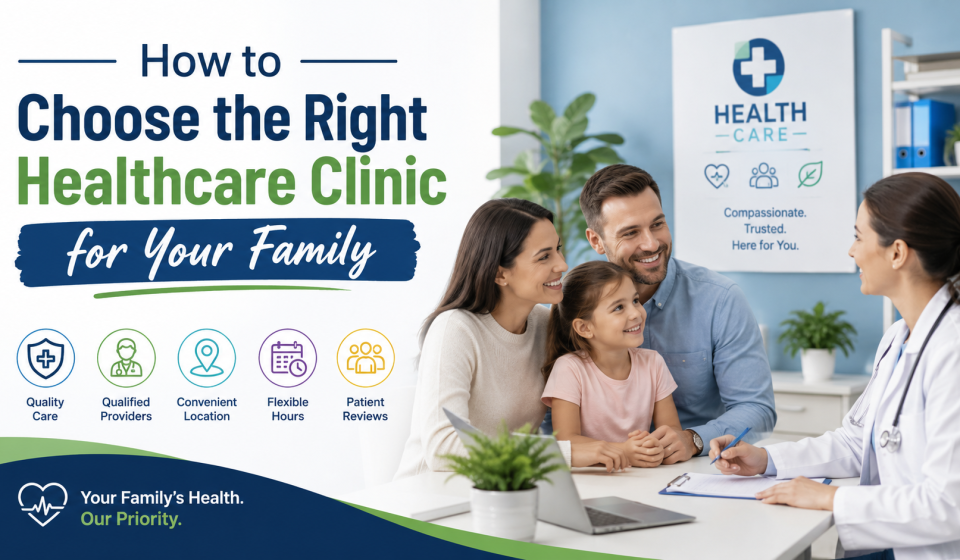

Learn how to choose the right healthcare clinic for your family with expert tips on services, doctors, location, costs, technology, and patient care. Make informed healthcare decisions for better family well-being.
A healthcare clinic is often the first point of contact when medical issues arise. Whether your child develops a fever, an elderly parent requires chronic disease management, or you need preventive screenings, your clinic becomes a trusted healthcare partner.
Selecting the right clinic offers several benefits:
- Better continuity of care
- Faster diagnosis and treatment
- Improved patient satisfaction
- Easier access to preventive healthcare
- Reduced healthcare costs over time
- Stronger doctor-patient relationships
A trusted clinic can help detect health issues early and provide timely interventions before conditions become serious.
Understand Your Family’s Healthcare Needs
Before comparing clinics, evaluate the healthcare requirements of your family.
Consider factors such as:
Children’s Healthcare Needs
Families with young children may need:
- Pediatric care
- Vaccination services
- Growth monitoring
- School health check-ups
Women’s Healthcare Services
Women may require:
- Gynecological consultations
- Prenatal and postnatal care
- Family planning services
- Routine screenings
Elderly Care Requirements
Older family members often need:
- Chronic disease management
- Blood pressure monitoring
- Diabetes care
- Physiotherapy services
General Healthcare Needs
Every family should have access to:
- Routine check-ups
- Diagnostic services
- Preventive screenings
- Minor illness treatment
Understanding these needs helps narrow down clinics that provide the most relevant services.
Check the Qualifications and Experience of Doctors
The quality of healthcare largely depends on the expertise of medical professionals.
When evaluating a clinic, consider:
Medical Credentials
Ensure doctors have:
- Proper medical licenses
- Recognized qualifications
- Relevant certifications
Experience
Experienced physicians are often better equipped to:
- Diagnose complex conditions
- Handle emergencies
- Recommend appropriate treatments
Specialization
A multi-specialty clinic may provide access to:
- General physicians
- Pediatricians
- Gynecologists
- Dermatologists
- Orthopedic specialists
Having multiple specialists under one roof can save time and improve coordination of care.
Evaluate the Clinic’s Reputation
A clinic’s reputation often reflects the quality of care it provides.
Read Online Reviews
Look for patient feedback regarding:
- Doctor behavior
- Treatment quality
- Waiting times
- Staff professionalism
Ask for Recommendations
Friends, family members, and neighbors can provide valuable insights based on their personal experiences.
Check Patient Satisfaction
Consistently positive reviews may indicate:
- Reliable healthcare services
- Friendly staff
- Effective communication
However, avoid relying solely on online ratings. Consider multiple sources before making a decision.
Consider Location and Accessibility
Healthcare needs can arise unexpectedly. Choosing a conveniently located clinic is essential.
Travel Distance
A nearby clinic offers:
- Faster access during emergencies
- Reduced travel stress
- Better appointment compliance
Parking Availability
Adequate parking facilities can significantly improve convenience, especially for elderly patients.
Public Transportation Access
If family members rely on public transportation, choose a clinic that is easily accessible.
Accessibility Features
The clinic should accommodate patients with disabilities through:
- Wheelchair access
- Elevators
- Accessible restrooms
Examine Available Healthcare Services
Not all clinics offer the same range of services.
Look for clinics that provide:
Preventive Healthcare
Services may include:
- Health screenings
- Vaccinations
- Wellness programs
Diagnostic Services
On-site diagnostics can save time and improve efficiency.
Examples include:
- Blood tests
- X-rays
- Ultrasounds
- ECG services
Chronic Disease Management
Families dealing with conditions such as diabetes, hypertension, or asthma should prioritize clinics that offer long-term disease management programs.
Minor Emergency Care
Some clinics provide treatment for:
- Minor injuries
- Infections
- Allergic reactions
This can help avoid unnecessary visits to emergency departments.
Assess the Quality of Facilities
Modern healthcare facilities contribute to safer and more effective treatment.
Cleanliness and Hygiene
Observe whether the clinic maintains:
- Clean waiting areas
- Sanitized equipment
- Proper infection control measures
Medical Equipment
Advanced diagnostic tools can improve:
- Diagnostic accuracy
- Treatment planning
- Patient outcomes
Comfortable Environment
A welcoming atmosphere helps reduce anxiety and improves patient satisfaction.
Check Appointment Availability
Long waiting times can create frustration and delay treatment.
Consider:
Appointment Scheduling
Choose clinics that offer:
- Online booking
- Phone scheduling
- Flexible appointment slots
Same-Day Appointments
Availability of urgent appointments is particularly important for families with children and elderly members.
Waiting Time
Clinics that efficiently manage patient flow typically provide a better experience.
Review Health Insurance Compatibility
Healthcare costs can become expensive over time.
Insurance Coverage
Verify whether the clinic accepts your health insurance plan.
Cashless Services
Many clinics offer direct insurance billing, reducing out-of-pocket expenses.
Transparent Pricing
Reliable clinics provide:
- Clear consultation fees
- Diagnostic test costs
- Treatment charges
Transparency helps avoid unexpected financial burdens.
Evaluate Communication and Patient Care
Good communication is a cornerstone of quality healthcare.
Doctor-Patient Interaction
Doctors should:
- Listen carefully
- Explain diagnoses clearly
- Answer questions patiently
Staff Behavior
Receptionists, nurses, and support staff should demonstrate:
- Professionalism
- Courtesy
- Empathy
Follow-Up Care
A quality clinic often provides:
- Follow-up reminders
- Test result discussions
- Ongoing patient support
Look for Modern Healthcare Technology
Technology can enhance healthcare delivery and patient convenience.
Electronic Health Records
Digital records offer:
- Better care coordination
- Faster access to medical history
- Reduced paperwork
Telemedicine Services
Virtual consultations are beneficial for:
- Minor health concerns
- Follow-up visits
- Busy families
Online Portals
Patient portals may allow:
- Appointment scheduling
- Access to test results
- Secure communication with providers
Assess Emergency Preparedness
Although clinics are not hospitals, they should be prepared to handle urgent situations.
Check whether the clinic has:
- Emergency response protocols
- Basic life-support equipment
- Trained medical staff
Quick responses during emergencies can be life-saving.
Visit the Clinic Before Making a Decision
A personal visit can provide valuable information that may not be available online.
Observe:
- Cleanliness
- Staff interactions
- Waiting area conditions
- Overall atmosphere
Ask questions about:
- Available services
- Doctor availability
- Insurance acceptance
- Emergency procedures
This firsthand experience can help you make a more informed choice.
Warning Signs to Watch For
Be cautious if you notice:
- Poor hygiene standards
- Extremely long waiting times
- Lack of transparency in pricing
- Unprofessional staff behavior
- Frequent patient complaints
- Outdated medical equipment
These issues may indicate lower standards of care.
Long-Term Benefits of Choosing the Right Clinic
Selecting the right healthcare clinic can lead to:
- Better preventive care
- Improved health outcomes
- Reduced medical complications
- Strong doctor-patient relationships
- Greater convenience for the entire family
A trusted clinic becomes a valuable healthcare partner that supports your family through every stage of life.
Sources
https://l1nq.com/1j7isno
https://l1nq.com/5ar2v3w
Conclusion
Choosing the right healthcare clinic for your family is one of the most important healthcare decisions you can make. While factors such as location and cost are important, they should not be the only considerations. Evaluating doctor qualifications, available services, clinic reputation, technology, hygiene standards, accessibility, and patient care can help you find a clinic that truly meets your family’s needs.
A quality healthcare clinic provides more than treatment—it offers preventive care, long-term health support, and peace of mind. By taking the time to research and compare your options, you can ensure that your loved ones receive safe, effective, and compassionate healthcare whenever they need it.
Frequently Asked Questions (FAQs)
1. What should I look for when choosing a healthcare clinic for my family?
You should consider doctor qualifications, clinic reputation, available services, location, cleanliness, insurance acceptance, and patient reviews before making a decision.
2. Is it better to choose a multi-specialty clinic?
Yes. Multi-specialty clinics offer access to different healthcare professionals under one roof, making it easier to coordinate care for the entire family.
3. How important are online patient reviews?
Online reviews can provide useful insights into patient experiences, but they should be considered alongside recommendations from trusted sources and personal visits.
4. Should a healthcare clinic offer telemedicine services?
Telemedicine is beneficial because it provides convenient access to healthcare for minor illnesses, follow-up consultations, and patients with limited mobility.
5. Why is preventive healthcare important in a family clinic?
Preventive healthcare helps detect health issues early, reduces the risk of serious illnesses, and promotes long-term wellness for all family members.