
Preventive care is one of the most important parts of modern healthcare. Instead of waiting until a disease becomes serious, preventive care focuses on detecting health problems early, reducing risks, and helping people maintain long-term wellness. Healthcare clinics play a major role in providing preventive services because they are often the first place patients visit for checkups, screenings, vaccinations, and health advice.
What Is Preventive Care?
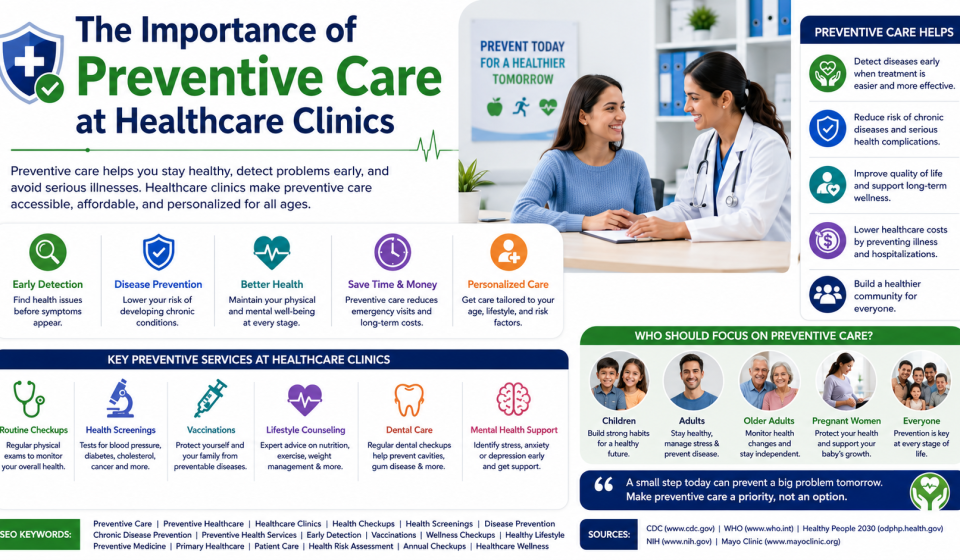
Preventive care means healthcare services that help prevent illness or detect diseases early. It includes routine checkups, health screenings, immunizations, lifestyle counseling, dental cleanings, and risk assessments.
The main goal of preventive care is to protect health before serious problems develop. For example, a blood pressure check can detect hypertension early, a blood test can reveal diabetes risk, and cancer screening can identify disease at an earlier stage when treatment may be more effective.
Why Healthcare Clinics Are Important for Preventive Care
Healthcare clinics are accessible, community-based, and patient-friendly. They provide regular care close to where people live and work. WHO describes primary healthcare as care that supports health promotion, disease prevention, treatment, rehabilitation, and more throughout a person’s life.
Clinics make preventive care easier because patients can visit for regular checkups, discuss symptoms, receive health education, and build long-term relationships with doctors. This continuous care helps doctors understand each patient’s health history and identify risks earlier.
Early Detection of Diseases
Many serious diseases begin silently. Conditions like diabetes, high blood pressure, kidney disease, heart disease, and some cancers may not show symptoms in the early stages. Preventive care helps detect these conditions before they become severe.
Screening tests are designed to find diseases early, when they may be easier to treat. The CDC highlights screenings as a key part of preventive care. Regular clinic visits give patients a better chance of receiving timely diagnosis and treatment.
Reducing the Risk of Chronic Diseases
Chronic diseases are long-term health conditions that often require ongoing treatment. Many chronic diseases are linked to lifestyle factors such as diet, physical inactivity, smoking, stress, and poor sleep.
Healthcare clinics can help patients reduce these risks through counseling, regular monitoring, and early treatment. Preventive services can help prevent chronic diseases or catch them early through regular visits to doctors and dentists.
Importance of Regular Health Checkups
Regular health checkups are the foundation of preventive care. During a checkup, doctors can measure blood pressure, weight, blood sugar, cholesterol, and other important health indicators. They may also ask about lifestyle, family history, sleep, stress, and symptoms.
These checkups help doctors understand whether a patient is at risk for future illness. Even if a person feels healthy, regular checkups can reveal hidden problems. This is why preventive visits should be part of every person’s healthcare routine.
Vaccinations and Immunizations
Vaccinations are another important part of preventive care. They protect individuals and communities from infectious diseases. Clinics often provide vaccines for children, adults, older adults, and high-risk patients.
Vaccines help reduce the spread of preventable diseases and protect vulnerable people, including babies, elderly individuals, and those with weak immune systems. Preventive vaccination programs are one of the most effective ways clinics support public health.
Health Screenings at Clinics
Healthcare clinics offer many types of screenings depending on age, gender, medical history, and risk factors. Common screenings may include blood pressure checks, diabetes tests, cholesterol tests, cancer screenings, eye exams, dental checkups, and mental health assessments.
These screenings help doctors detect warning signs early. Patients should ask their healthcare provider which screenings are suitable for their age and health condition.
Preventive Care for Children
Preventive care is very important for children. Regular clinic visits help track growth, development, vaccinations, nutrition, vision, hearing, and general health. Doctors can also guide parents about diet, sleep, hygiene, and safety.
Early childhood preventive care helps detect developmental delays, nutritional problems, allergies, and infections. It supports healthy growth and helps children build a strong foundation for lifelong wellness.
Preventive Care for Adults
Adults often ignore preventive care because of busy schedules. However, regular clinic visits are necessary to monitor blood pressure, weight, sugar levels, cholesterol, and stress. Adults may also need screenings based on family history or lifestyle habits.
Preventive care helps adults avoid serious health problems and maintain productivity. It also helps doctors provide guidance on exercise, diet, sleep, mental health, and stress management.
Preventive Care for Older Adults
Older adults need regular preventive care because the risk of chronic diseases increases with age. Clinics can help monitor heart health, bone health, memory, vision, hearing, blood pressure, diabetes, and medication safety.
Preventive care helps older adults stay independent and improve quality of life. Regular visits also allow doctors to detect problems early and adjust treatment plans when needed.
Lifestyle Counseling and Health Education
Preventive care is not only about tests and vaccines. It also includes education and counseling. Doctors and clinic staff can guide patients about healthy eating, exercise, weight management, smoking cessation, alcohol use, stress reduction, and sleep habits.
This type of guidance helps patients make better daily choices. Small lifestyle changes can reduce the risk of major diseases over time.
Mental Health and Preventive Care
Mental health is an important part of preventive healthcare. Clinics can help identify early signs of anxiety, depression, stress, sleep problems, and emotional burnout. Early support can prevent mental health problems from becoming more serious.
Preventive care should include open conversations about emotional wellness. Patients should feel comfortable discussing mental health with clinic doctors or counselors.
Cost Benefits of Preventive Care
Preventive care can reduce long-term healthcare costs. Treating advanced disease is often more expensive than detecting and managing a condition early. Regular screenings and checkups can help patients avoid emergency visits, hospital admissions, and complicated treatments.
For clinics and communities, preventive care reduces pressure on healthcare systems by keeping people healthier and lowering disease burden.
Role of Technology in Preventive Care
Modern healthcare clinics use technology to improve preventive services. Digital health records, appointment reminders, telemedicine, mobile health apps, and remote monitoring devices help patients stay connected with doctors.
For example, clinics can send reminders for vaccines, annual checkups, lab tests, and follow-up visits. Patients with diabetes or blood pressure problems can share health readings digitally. This makes preventive care more consistent and convenient.
Building a Long-Term Relationship with Doctors
One of the biggest advantages of visiting healthcare clinics regularly is building trust with doctors. When doctors know a patient’s medical history, family history, lifestyle, and previous reports, they can provide better personalized care.
This long-term relationship helps patients feel more comfortable asking questions and following medical advice. It also improves continuity of care.
Challenges in Preventive Care
Many people do not receive preventive care because of lack of awareness, cost concerns, distance, fear of test results, or busy lifestyles. Healthy People 2030 notes that screenings, dental checkups, and vaccinations are key for health, but barriers can include cost, lack of a primary care provider, distance, and low awareness.
Healthcare clinics can help overcome these challenges by educating patients, offering reminders, improving access, and making preventive services easier to use.
Source
https://l1nq.com/vjkwu4f
https://l1nq.com/omv9ydc
Conclusion
Preventive care at healthcare clinics is essential for long-term health and better quality of life. It helps detect diseases early, reduce chronic disease risks, support vaccination, improve lifestyle habits, and lower healthcare costs. Clinics are important because they provide accessible, regular, and patient-centered care.
Instead of visiting a clinic only when illness becomes serious, patients should make preventive care a routine part of life. Regular checkups, screenings, vaccinations, and health counseling can protect individuals, families, and communities. Preventive care is not just about avoiding disease; it is about building a healthier future.
FAQs
1. What is preventive care?
Preventive care includes checkups, screenings, vaccines, counseling, and health services that help prevent illness or detect diseases early.
2. Why is preventive care important?
Preventive care is important because it helps identify health problems early, reduces disease risk, and supports long-term wellness.
3. How often should I visit a clinic for preventive care?
The frequency depends on your age, health condition, family history, and doctor’s advice. Many people benefit from at least one routine checkup every year.
4. What screenings are included in preventive care?
Common screenings include blood pressure checks, diabetes tests, cholesterol tests, cancer screenings, dental exams, eye exams, and mental health assessments.
5. Can preventive care reduce healthcare costs?
Yes, preventive care can reduce long-term costs by detecting problems early and preventing serious complications.