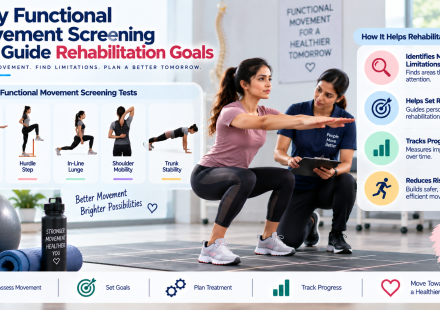
Why Functional Movement Screening Can Guide Rehabilitation Goals

Discover how functional movement screening can guide rehabilitation goals by identifying movement limitations, improving exercise selection, tracking progress, and supporting individualized recovery plans. Functional movement screening can provide…
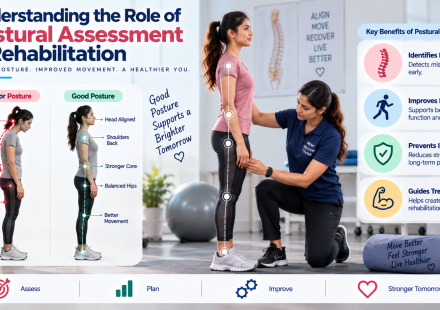
Understanding the Role of Postural Assessment in Rehabilitation
Learn why postural assessment is important in rehabilitation, how professionals evaluate posture, what tools are used, and how posture assessment can support movement, treatment planning, and functional recovery. Posture influences how the body positions…
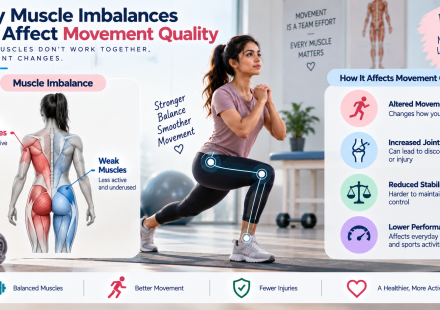
How Muscle Imbalances Affect Movement Quality: Causes, Signs, Effects and Ways to Improve Muscle Balance
Discover how muscle imbalances can affect movement quality, posture, balance, coordination, strength, and everyday mobility. Learn the common causes, warning signs, assessment methods, and practical ways to improve muscle balance. Muscle balance plays an…
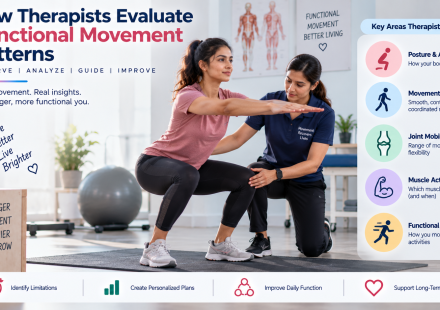
How Therapists Evaluate Functional Movement Patterns: A Complete Guide to Movement Assessment in Rehabilitation
Learn how therapists evaluate functional movement patterns, including posture, mobility, strength, balance, coordination, gait, and movement strategies, to create personalized rehabilitation plans. Human movement is more than the ability to move a single…
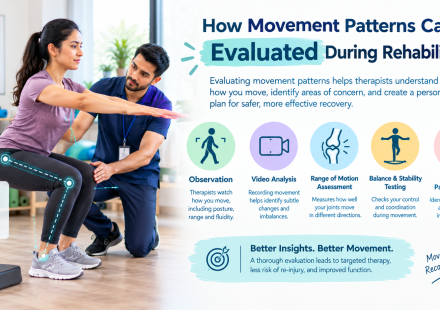
How Movement Patterns Are Evaluated During Rehabilitation: A Complete Guide to Functional Movement Assessment
Learn how movement patterns are evaluated during rehabilitation, including posture, balance, gait, coordination, strength, mobility, and functional tasks used to understand recovery and guide treatment. Movement is an important part of everyday life,…