
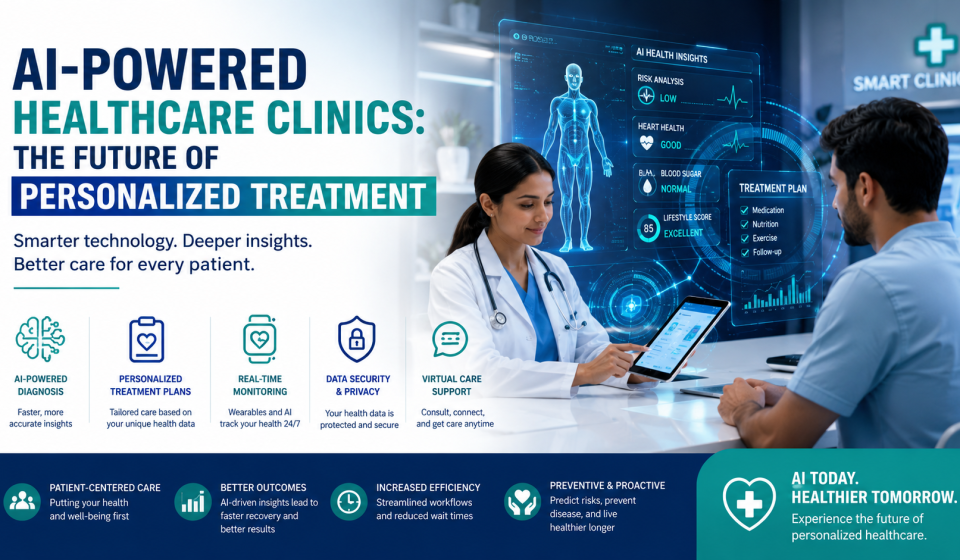

Artificial intelligence is changing the way healthcare clinics diagnose, treat, and support patients. In the past, many clinics followed a general treatment approach where patients with similar symptoms often received similar care. Today, AI-powered healthcare clinics are moving toward personalized treatment, where medical decisions are based on each patient’s health history, lifestyle, test results, risk factors, and long-term wellness goals.
What Are AI-Powered Healthcare Clinics?
AI-powered healthcare clinics use artificial intelligence tools to support doctors, nurses, administrators, and patients. These tools can help analyze medical records, identify health risks, support diagnosis, suggest treatment options, manage appointments, and improve patient communication.
AI does not replace doctors. Instead, it works as a support system that helps healthcare professionals make faster and more informed decisions. A clinic that uses AI can reduce manual work, organize patient data more efficiently, and create a smoother healthcare experience.
Why Personalized Treatment Matters
Personalized treatment means healthcare designed around the individual patient. Every person has different health conditions, family history, lifestyle habits, medication responses, and treatment needs. A one-size-fits-all approach may not always give the best results.
AI can help clinics understand these differences by analyzing large amounts of medical data. This allows doctors to create treatment plans based on the patient’s real condition rather than only general symptoms. The combination of AI and precision medicine is widely seen as a major step toward more individualized healthcare.
AI in Faster and Smarter Diagnosis
One of the most powerful uses of AI in healthcare clinics is diagnosis support. AI systems can help review medical images, lab reports, symptoms, and patient history to detect possible health problems earlier.
For example, AI can support doctors in identifying patterns that may be difficult to notice manually. This can be useful in conditions such as diabetes, heart disease, skin disorders, eye diseases, and certain cancers. Faster diagnosis can lead to earlier treatment, fewer complications, and better health outcomes.
Predictive Analytics for Preventive Care
AI-powered clinics are not only focused on treating illness after it appears. They also help predict health risks before they become serious. Predictive analytics uses patient data to identify possible future health problems.
For example, if a patient has high blood pressure, family history of heart disease, poor sleep, and unhealthy lifestyle habits, AI can help flag that patient as higher risk. The clinic can then recommend lifestyle changes, regular monitoring, or preventive tests.
This approach supports proactive healthcare, where clinics help patients stay healthy instead of only treating them when they become sick.
Better Chronic Disease Management
Chronic diseases such as diabetes, hypertension, asthma, thyroid disorders, and heart disease require regular monitoring. AI-powered clinics can help patients manage these conditions more effectively.
AI tools can track patient progress, remind them about medication, monitor test results, and alert doctors when something needs attention. Wearable devices and remote monitoring systems can also send real-time health data to clinics.
This helps doctors adjust treatment plans when needed and helps patients stay more involved in their own health.
AI and Digital Health Records
Digital health records are an important part of AI-powered clinics. When patient information is stored digitally, doctors can easily access medical history, previous prescriptions, allergies, test reports, and treatment notes.
AI can analyze these records to find patterns, avoid duplicate tests, and support safer medical decisions. For patients, this means less paperwork, faster consultations, and better continuity of care.
Personalized Medication and Treatment Plans
Different patients may respond differently to the same medicine. Some may benefit quickly, while others may experience side effects or limited improvement. AI can help doctors understand which treatment may work best for a particular patient based on available health data.
In the future, AI-powered clinics may use genetic information, lifestyle details, past medical responses, and lab reports to recommend more accurate treatment options. This can make healthcare safer, more efficient, and more patient-focused.
Virtual Care and AI Chat Support
Many modern clinics are using virtual care tools such as online consultation, chat support, and automated health guidance. AI chat systems can help patients with basic questions, appointment booking, symptom checking, and follow-up reminders.
However, patients should understand that AI chat support is not a replacement for professional medical advice. It is useful for guidance, but serious symptoms or emergency conditions should always be handled by qualified healthcare professionals.
Improving Patient Experience
AI-powered healthcare clinics can improve patient experience in many ways. Patients can book appointments online, receive automated reminders, access reports digitally, and get faster responses from clinic staff.
AI can also help reduce waiting times by managing schedules more efficiently. For busy patients, this makes healthcare more convenient and less stressful.
A better patient experience builds trust and encourages people to take regular care of their health.
Role of AI in Remote Patient Monitoring
Remote patient monitoring is becoming more common in modern healthcare. Devices such as smartwatches, blood pressure monitors, glucose sensors, and oxygen monitors can collect health data from patients at home.
AI can analyze this data and alert clinics if there are unusual changes. This is especially helpful for elderly patients, patients with chronic illness, and people recovering after treatment.
Remote monitoring helps clinics stay connected with patients even when they are not physically present.
Data Privacy and Ethical Use of AI
As healthcare clinics use more AI and digital systems, patient privacy becomes very important. Medical data is sensitive, and clinics must protect it with secure systems, clear policies, and responsible use.
AI in healthcare must be transparent, fair, and carefully monitored. Patients should know how their data is used and whether AI tools are involved in their care. Strong governance, compliance, and ethics are essential for building trust in AI-powered healthcare.
Will AI Replace Doctors?
No, AI will not replace doctors. Healthcare depends on human judgment, empathy, clinical experience, and trust. AI can support doctors by providing data-driven insights, but final decisions should remain with qualified healthcare professionals.
The best future for healthcare clinics is not AI versus doctors. It is doctors and AI working together to provide better, faster, and more personalized care.
Benefits of AI-Powered Healthcare Clinics
AI-powered clinics offer many benefits for both patients and healthcare providers. Patients can receive faster diagnosis, personalized treatment, better follow-up care, and easier access to services. Doctors can make more informed decisions, reduce administrative workload, and focus more on patient care.
Clinics can also improve efficiency, reduce errors, and manage patient data more effectively. Overall, AI helps create a smarter and more connected healthcare system.
Challenges of AI in Healthcare Clinics
Although AI has many benefits, it also has challenges. Clinics need proper technology infrastructure, trained staff, data protection systems, and ethical guidelines. AI tools must be accurate, reliable, and regularly reviewed.
There is also a risk of overdependence on technology. Clinics must ensure that AI supports medical care without reducing human connection. Patients still need compassion, communication, and trust from their healthcare providers.
The Future of Personalized Treatment
The future of personalized treatment will be shaped by AI, digital health records, wearable devices, genetic insights, and predictive analytics. Clinics will become more proactive and patient-centered.
Instead of waiting for illness to become serious, AI-powered clinics will help patients understand risks early and take preventive action. Treatment plans will become more customized, follow-ups will become smarter, and patients will have more control over their health journey.
Source
https://l1nq.com/75akc2l
https://sl1nk.com/gjyyfme
Conclusion
AI-powered healthcare clinics are changing the future of personalized treatment. By using artificial intelligence, predictive analytics, digital records, and remote monitoring, clinics can provide faster, smarter, and more individualized care.
For patients, this means better diagnosis, improved chronic disease management, easier access to doctors, and treatment plans designed around personal health needs. For healthcare providers, AI offers tools to improve accuracy, reduce workload, and deliver better patient outcomes.
However, the success of AI in healthcare depends on responsible use. Clinics must protect patient data, maintain human care, and use AI as a support system rather than a replacement for doctors. The future of healthcare is not only digital; it is intelligent, ethical, and deeply patient-centered.
FAQs
1. What is an AI-powered healthcare clinic?
An AI-powered healthcare clinic uses artificial intelligence tools to support diagnosis, treatment planning, patient monitoring, appointment management, and personalized care.
2. How does AI help in personalized treatment?
AI analyzes patient data such as medical history, test results, lifestyle, and risk factors to help doctors create treatment plans that match individual health needs.
3. Can AI diagnose diseases?
AI can support diagnosis by identifying patterns in medical data, lab reports, and images. However, final diagnosis should always be made by a qualified healthcare professional.
4. Is AI safe in healthcare clinics?
AI can be safe when used responsibly with proper medical supervision, strong data privacy systems, and ethical guidelines.
5. Will AI replace doctors in the future?
No, AI will not replace doctors. It will support doctors by improving decision-making, reducing workload, and helping deliver more personalized patient care.