
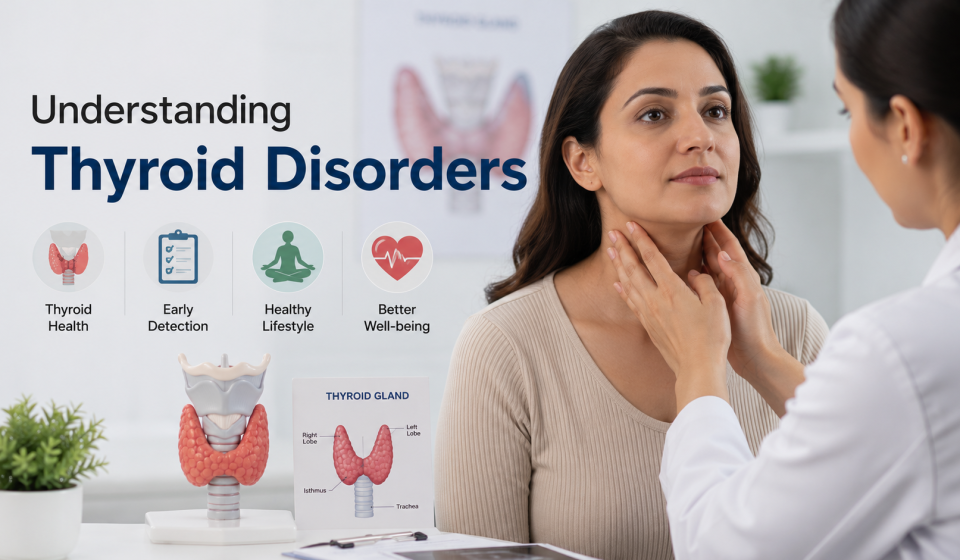

Learn about thyroid disorders, including hypothyroidism and hyperthyroidism, their causes, symptoms, diagnosis, treatment, and lifestyle tips to support thyroid health.
The thyroid is a small, butterfly-shaped gland located at the front of the neck. Although small in size, it plays a vital role in regulating many essential body functions. The thyroid produces hormones that help control metabolism, heart rate, body temperature, energy production, digestion, growth, and brain development.
When the thyroid gland produces either too much or too little hormone, it can lead to a variety of health problems known as thyroid disorders. These conditions are common and can affect people of all ages, although they are more frequently seen in women. Because many thyroid symptoms develop gradually and resemble other health conditions, thyroid disorders are sometimes overlooked or diagnosed late.
The good news is that most thyroid disorders can be effectively managed with early diagnosis, appropriate treatment, and healthy lifestyle habits. This article explains the different types of thyroid disorders, their causes, symptoms, risk factors, diagnosis, prevention strategies, and when to seek medical advice.
What Is the Thyroid Gland?
The thyroid gland is part of the endocrine system, which produces hormones that regulate various body functions.
The thyroid produces two primary hormones:
- Thyroxine (T4)
- Triiodothyronine (T3)
These hormones help regulate:
- Metabolism
- Heart rate
- Body temperature
- Energy production
- Digestion
- Muscle function
- Brain development
The pituitary gland controls thyroid hormone production by releasing thyroid-stimulating hormone (TSH).
Types of Thyroid Disorders
Several conditions can affect the thyroid gland.
The most common include:
- Hypothyroidism (underactive thyroid)
- Hyperthyroidism (overactive thyroid)
- Goiter
- Thyroid nodules
- Thyroiditis
- Thyroid cancer
Each condition has different causes and treatment approaches.
Hypothyroidism
Hypothyroidism occurs when the thyroid gland does not produce enough thyroid hormones.
This slows down many body functions.
Common symptoms include:
- Fatigue
- Weight gain
- Feeling cold
- Dry skin
- Constipation
- Depression
- Slow heart rate
- Puffy face
- Hair thinning
- Memory problems
Symptoms often develop gradually over time.
Hyperthyroidism
Hyperthyroidism occurs when the thyroid gland produces excessive thyroid hormones.
This speeds up body processes.
Common symptoms include:
- Unexplained weight loss
- Rapid heartbeat
- Anxiety
- Tremors
- Increased sweating
- Heat intolerance
- Frequent bowel movements
- Difficulty sleeping
- Nervousness
Prompt diagnosis helps prevent complications.
Goiter
A goiter is an enlargement of the thyroid gland.
It may occur due to:
- Iodine deficiency
- Thyroid hormone imbalance
- Autoimmune disease
- Thyroid nodules
Some goiters cause no symptoms, while larger ones may affect swallowing or breathing.
Thyroid Nodules
Thyroid nodules are lumps that develop within the thyroid gland.
Most nodules are non-cancerous, but some require further evaluation.
Your healthcare provider may recommend:
- Physical examination
- Ultrasound
- Blood tests
- Fine-needle biopsy (if necessary)
Causes of Thyroid Disorders
Several factors may contribute to thyroid disease.
Common causes include:
- Autoimmune diseases
- Family history
- Iodine deficiency
- Certain medications
- Pregnancy
- Radiation therapy
- Thyroid inflammation
- Previous thyroid surgery
Sometimes, the exact cause remains unknown.
Risk Factors
You may have a higher risk of thyroid disorders if you have:
- Family history of thyroid disease
- Female sex
- Age over 60 years
- Autoimmune conditions
- Pregnancy or recent childbirth
- Previous radiation exposure
- Iodine deficiency
Knowing your risk factors encourages early screening.
Common Symptoms of Thyroid Disorders
Although symptoms vary depending on the condition, common signs include:
- Fatigue
- Weight changes
- Mood changes
- Hair loss
- Dry skin
- Difficulty concentrating
- Sleep disturbances
- Changes in heart rate
- Neck swelling
- Temperature sensitivity
Persistent symptoms should be evaluated by a healthcare professional.
How Thyroid Disorders Are Diagnosed
Healthcare providers may recommend:
- Medical history review
- Physical examination
- Blood tests (TSH, T3, and T4)
- Thyroid ultrasound
- Thyroid scan (when appropriate)
Early diagnosis allows timely treatment.
Treatment Options
Treatment depends on the specific thyroid disorder.
Options may include:
- Thyroid hormone replacement medication
- Medications that reduce thyroid hormone production
- Radioactive iodine therapy
- Surgery in selected cases
- Regular monitoring of thyroid hormone levels
Always follow your healthcare provider’s treatment recommendations.
Eat a Balanced Diet
Good nutrition supports overall health and normal thyroid function.
Include foods such as:
- Fruits
- Vegetables
- Whole grains
- Lean proteins
- Fish
- Eggs
- Dairy products
- Nuts and seeds
A varied diet provides important vitamins and minerals.
Get Enough Iodine
Iodine is essential for thyroid hormone production.
Good dietary sources include:
- Iodized salt
- Seafood
- Dairy products
- Eggs
Avoid excessive iodine intake unless advised by a healthcare professional.
Stay Physically Active
Regular exercise helps support:
- Healthy metabolism
- Weight management
- Heart health
- Mood
- Energy levels
Aim for at least 150 minutes of moderate-intensity physical activity each week.
Manage Stress
Long-term stress may affect overall hormonal balance and well-being.
Healthy stress management techniques include:
- Meditation
- Yoga
- Deep breathing
- Walking
- Spending time with family and friends
Reducing stress supports better overall health.
Get Regular Health Checkups
Routine medical examinations help identify thyroid problems before symptoms become severe.
Individuals with risk factors may benefit from periodic thyroid function testing as recommended by their healthcare provider.
Healthy Daily Habits for Thyroid Health
Simple daily habits include:
- Eat balanced meals.
- Stay physically active.
- Sleep 7–9 hours each night.
- Manage stress.
- Take prescribed medications consistently.
- Attend regular health checkups.
- Avoid smoking.
- Maintain a healthy weight.
These habits support overall endocrine health.
When Should You Consult a Healthcare Professional?
Seek medical advice if you experience:
- Persistent fatigue
- Unexplained weight gain or weight loss
- Neck swelling
- Rapid or slow heartbeat
- Difficulty swallowing
- Hair loss
- Depression or anxiety
- Ongoing constipation or diarrhea
Early evaluation can help prevent complications.
Sources
https://www.who.in
thttps://www.nih.gov
https://www.niddk.nih.gov
https://www.thyroid.org
https://www.mayoclinic.org
Conclusion
Thyroid disorders are common but often manageable with early diagnosis and appropriate treatment. Because the thyroid influences nearly every organ system, untreated thyroid disease can affect energy levels, metabolism, heart health, mood, and overall quality of life.
Recognizing symptoms such as unexplained weight changes, fatigue, changes in heart rate, neck swelling, and mood disturbances can lead to earlier diagnosis and better outcomes. Healthy lifestyle habits, regular medical checkups, balanced nutrition, and following your healthcare provider’s recommendations all play important roles in maintaining thyroid health and preventing complications.
FAQs
1. What are the most common thyroid disorders?
The most common thyroid disorders include hypothyroidism, hyperthyroidism, goiter, thyroid nodules, thyroiditis, and thyroid cancer.
2. What are the early signs of thyroid problems?
Early symptoms may include fatigue, unexplained weight changes, hair loss, dry skin, mood changes, changes in heart rate, and temperature sensitivity.
3. Can thyroid disorders be treated?
Yes. Most thyroid disorders can be effectively managed with medication, lifestyle changes, regular monitoring, and, in some cases, surgery or radioactive iodine therapy.
4. Who is at higher risk for thyroid disease?
Women, older adults, people with autoimmune diseases, those with a family history of thyroid disorders, and individuals with iodine deficiency have a higher risk.
5. How is thyroid disease diagnosed?
Diagnosis usually involves a physical examination, medical history, blood tests measuring TSH, T3, and T4 levels, and sometimes imaging studies such as thyroid ultrasound.