
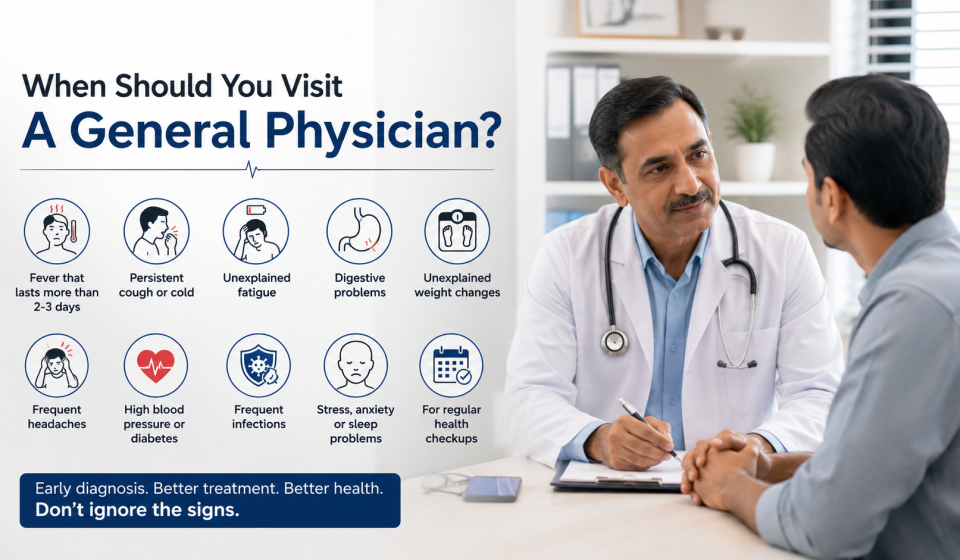

Learn when you should visit a general physician. Discover common symptoms, preventive care benefits, and signs that require timely medical attention.
A general physician is often the first healthcare professional you should consult when you experience new or ongoing health concerns. They are trained to diagnose, treat, and manage a wide range of medical conditions while also providing preventive healthcare and guidance for maintaining overall wellness.
Many people delay visiting a doctor, hoping their symptoms will improve on their own. While minor illnesses may resolve without treatment, persistent or worsening symptoms should never be ignored. Early medical evaluation can help detect diseases before they become serious, improve treatment outcomes, and prevent complications.
Whether you have a fever that won’t go away, unexplained fatigue, digestive issues, or simply need a routine health checkup, a general physician can evaluate your condition and recommend the most appropriate treatment or specialist referral if necessary. This article explains when you should visit a general physician, the conditions they commonly treat, and the importance of seeking timely medical care.
Who Is a General Physician?
A general physician is a medical doctor who specializes in diagnosing, treating, and preventing a broad range of adult health conditions. They serve as the first point of contact for many medical concerns and coordinate your overall healthcare.
General physicians provide:
- Diagnosis and treatment of common illnesses
- Preventive healthcare
- Routine health checkups
- Chronic disease management
- Health education
- Lifestyle counseling
- Specialist referrals when necessary
They focus on treating the whole person rather than a single organ or body system.
Why Visiting a General Physician Is Important
Regular visits to a general physician help maintain good health and ensure that medical conditions are detected early.
Benefits include:
- Early diagnosis of illnesses
- Timely treatment
- Prevention of complications
- Monitoring chronic diseases
- Personalized healthcare advice
- Better long-term health outcomes
- Improved quality of life
Seeking medical care early often leads to faster recovery and more effective treatment.
Visit a General Physician for Persistent Fever
A fever is the body’s natural response to infection. However, if a fever lasts more than two to three days or is accompanied by severe symptoms, it should be evaluated by a doctor.
Seek medical attention if your fever is associated with:
- Persistent cough
- Difficulty breathing
- Severe headache
- Skin rash
- Persistent vomiting
- Confusion
- Extreme weakness
A general physician can identify the underlying cause and recommend appropriate treatment.
Persistent Cough or Cold Symptoms
Most colds improve within a week or two. However, a cough that lasts longer than three weeks should not be ignored.
Possible causes include:
- Viral infections
- Bacterial infections
- Asthma
- Allergies
- Bronchitis
- Pneumonia
- Gastroesophageal reflux disease (GERD)
Your physician may recommend further tests if symptoms persist or worsen.
Unexplained Fatigue
Feeling tired after physical activity is normal, but ongoing fatigue without an obvious reason may indicate an underlying health problem.
Persistent fatigue may be related to:
- Anemia
- Diabetes
- Thyroid disorders
- Heart disease
- Sleep disorders
- Depression
- Vitamin deficiencies
Early evaluation helps identify the cause and begin appropriate treatment.
Frequent Headaches
Occasional headaches are common, but recurring or severe headaches require medical evaluation.
Visit a general physician if headaches:
- Occur frequently
- Become more severe
- Interfere with daily activities
- Are accompanied by vision changes
- Cause dizziness
- Occur after a head injury
Prompt diagnosis helps rule out serious neurological conditions.
Digestive Problems That Don’t Improve
Digestive discomfort lasting several days should not be ignored.
Common symptoms include:
- Abdominal pain
- Persistent diarrhea
- Constipation
- Acid reflux
- Bloating
- Blood in stool
- Nausea or vomiting
A general physician can determine whether lifestyle changes, medications, or further investigations are needed.
Unexplained Weight Changes
Sudden weight gain or weight loss without changes in diet or exercise may indicate a medical condition.
Possible causes include:
- Diabetes
- Thyroid disorders
- Hormonal imbalances
- Digestive disorders
- Chronic infections
- Certain cancers
Medical evaluation helps identify the underlying cause and prevent complications.
High Blood Pressure or Diabetes Monitoring
Individuals diagnosed with hypertension or diabetes should visit their physician regularly.
Routine follow-up appointments help:
- Monitor disease progression
- Review medications
- Adjust treatment plans
- Prevent complications
- Assess lifestyle modifications
Regular monitoring improves disease control and reduces long-term health risks.
Chest Pain or Breathing Difficulties
Chest pain should always be taken seriously.
Seek immediate medical attention if chest discomfort is accompanied by:
- Shortness of breath
- Sweating
- Pain radiating to the jaw or arm
- Dizziness
- Nausea
Although some causes are not heart-related, only a healthcare professional can determine the exact reason.
Frequent Infections
Repeated infections may indicate a weakened immune system or an underlying health condition.
Examples include:
- Frequent throat infections
- Recurrent urinary tract infections
- Repeated respiratory infections
- Skin infections
Your doctor can investigate possible causes and recommend appropriate treatment.
Skin Changes or Persistent Rashes
Visit a physician if you notice:
- New skin growths
- Changing moles
- Persistent rashes
- Non-healing wounds
- Unexplained bruising
Early diagnosis is important for treating skin infections, allergies, and certain skin cancers.
Mental Health Concerns
General physicians also play an important role in supporting mental health.
Consult your doctor if you experience:
- Persistent sadness
- Anxiety
- Difficulty sleeping
- Excessive stress
- Mood changes
- Loss of interest in daily activities
They can provide initial evaluation, treatment, or referral to a mental health specialist when needed.
Annual Health Checkups
You don’t need to be sick to visit a general physician.
Routine annual health checkups help:
- Detect diseases early
- Monitor blood pressure
- Check blood sugar levels
- Assess cholesterol
- Review vaccinations
- Evaluate overall health
Preventive care supports long-term wellness and early disease detection.
Common Conditions Treated by General Physicians
General physicians commonly diagnose and manage:
- Fever
- Cold and flu
- Hypertension
- Diabetes
- Thyroid disorders
- Asthma
- Allergies
- Digestive disorders
- Urinary tract infections
- Skin infections
- Joint pain
- Headaches
- Minor injuries
- Nutritional deficiencies
If specialized care is required, they can refer patients to the appropriate medical specialist.
When Should You Seek Emergency Medical Care?
Some symptoms require immediate emergency treatment rather than a routine physician visit.
Seek emergency medical attention if you experience:
- Severe chest pain
- Difficulty breathing
- Sudden weakness on one side of the body
- Loss of consciousness
- Heavy bleeding
- Seizures
- Severe allergic reactions
- Sudden vision loss
Prompt emergency care can be life-saving.
Tips for Your Visit to a General Physician
To make the most of your appointment:
- Bring previous medical records.
- List your current medications.
- Write down your symptoms.
- Note when symptoms began.
- Share your family medical history.
- Ask questions about your condition and treatment.
Providing accurate information helps your physician make the correct diagnosis.
sources
https://www.who.int
https://www.nih.gov
https://medlineplus.gov
https://www.cdc.gov
Conclusion
A general physician is your first partner in maintaining good health. From treating common illnesses and managing chronic diseases to providing preventive care and routine health checkups, they play a vital role in keeping you healthy throughout every stage of life. Visiting a doctor promptly when symptoms appear can lead to early diagnosis, effective treatment, and better long-term health outcomes.
Don’t wait until a minor health concern becomes a serious medical problem. Whether you have persistent symptoms, need preventive screenings, or simply want to stay on top of your health, regular visits to a general physician are an essential part of a healthy lifestyle. Taking proactive steps today can help protect your health for years to come.
FAQs
1. What conditions does a general physician treat?
A general physician treats common illnesses such as fever, colds, flu, infections, diabetes, hypertension, digestive problems, thyroid disorders, allergies, asthma, and many other general medical conditions.
2. When should I visit a general physician?
You should visit a general physician if you have persistent fever, cough, fatigue, digestive issues, headaches, unexplained weight changes, high blood pressure, diabetes, or any symptoms that continue or worsen over time.
3. Can a general physician perform routine health checkups?
Yes. General physicians provide annual health checkups, preventive screenings, vaccinations, lifestyle counseling, and routine monitoring of your overall health.
4. How often should I see a general physician?
Healthy adults should generally have a routine medical checkup once a year. Individuals with chronic medical conditions may require more frequent follow-up visits based on their doctor’s advice.
5. Can a general physician refer me to a specialist?
Yes. If your condition requires specialized treatment, a general physician can refer you to the appropriate specialist while coordinating your ongoing healthcare.