
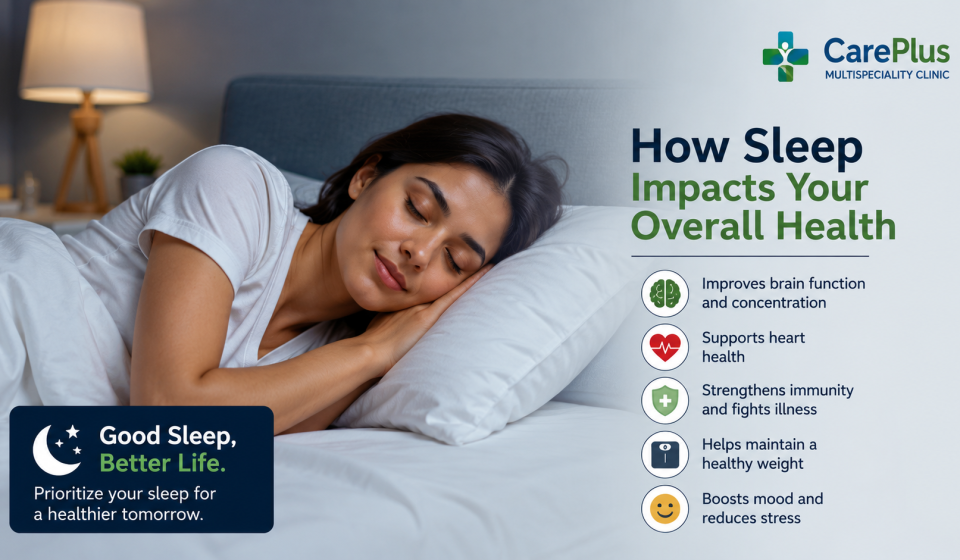

Discover how sleep impacts your overall health. Learn how quality sleep improves brain function, heart health, immunity, mental well-being, weight management, and disease prevention while enhancing your daily quality of life.
Sleep is one of the most important pillars of good health, yet it is often overlooked in today’s busy lifestyle. Many people prioritize work, social commitments, or entertainment over getting enough rest, believing they can function well with only a few hours of sleep. However, sleep is not simply a period of rest—it is an essential biological process during which the body repairs itself, restores energy, strengthens the immune system, and supports healthy brain function.
Poor sleep has become increasingly common due to long working hours, excessive screen time, stress, irregular schedules, and unhealthy lifestyle habits. Chronic sleep deprivation can negatively affect concentration, memory, mood, productivity, and physical health. It also increases the risk of several chronic diseases, including heart disease, diabetes, obesity, and high blood pressure.
Quality sleep benefits people of every age. Children need sleep for healthy growth and development, adults require it to maintain physical and mental performance, and older adults rely on good sleep to support healthy aging and overall well-being. Along with balanced nutrition, regular exercise, hydration, stress management, and preventive healthcare, sufficient sleep plays a crucial role in maintaining lifelong health.
In this article, we explore how sleep impacts overall health, understand why quality sleep matters, and discuss practical ways to improve sleep habits for a healthier lifestyle.
Why Is Sleep Important?
Sleep allows the body and brain to recover from the demands of daily life.
During sleep, the body:
- Repairs damaged tissues
- Produces important hormones
- Strengthens the immune system
- Consolidates memories
- Supports brain development
- Restores physical energy
Without enough sleep, these essential processes cannot function efficiently.
How Much Sleep Do You Need?
Sleep requirements vary depending on age.
General recommendations include:
- Infants: 12–16 hours
- Children: 9–12 hours
- Teenagers: 8–10 hours
- Adults: 7–9 hours
- Older adults: 7–8 hours
Consistently meeting these recommendations supports better overall health and daily performance.
1. Improves Brain Function
Sleep is essential for healthy brain performance.
Quality sleep helps:
- Improve concentration
- Strengthen memory
- Enhance learning ability
- Increase creativity
- Improve decision-making
- Maintain focus throughout the day
People who sleep well generally perform better at work, school, and daily activities.
2. Strengthens the Immune System
The immune system relies on quality sleep to function effectively.
During sleep, the body produces immune cells and protective proteins that help fight infections.
Adequate sleep helps:
- Reduce the risk of illness
- Improve recovery from infections
- Support vaccine effectiveness
- Reduce inflammation
Poor sleep can weaken the body’s natural defense system, making infections more likely.
3. Supports Heart Health
Healthy sleep contributes significantly to cardiovascular health.
Getting enough sleep helps:
- Regulate blood pressure
- Maintain healthy heart rhythm
- Reduce stress hormones
- Improve blood vessel function
- Lower the risk of heart disease and stroke
Chronic sleep deprivation has been linked to an increased risk of hypertension and cardiovascular disease.
4. Helps Maintain a Healthy Weight
Sleep plays an important role in regulating hunger-related hormones.
Poor sleep may:
- Increase appetite
- Trigger cravings for sugary foods
- Reduce metabolism
- Encourage overeating
- Increase the risk of obesity
Adequate sleep supports healthier food choices and better weight management.
5. Improves Mental Health
Sleep and mental health are closely connected.
Quality sleep helps:
- Reduce stress
- Improve mood
- Lower anxiety
- Reduce symptoms of depression
- Improve emotional resilience
Lack of sleep can make it more difficult to cope with daily stress and emotional challenges.
6. Supports Hormone Balance
Many important hormones are regulated during sleep.
Sleep influences:
- Growth hormone production
- Stress hormone (cortisol) levels
- Hunger hormones
- Reproductive hormones
- Blood sugar regulation
Healthy hormone balance supports overall physical and emotional well-being.
7. Improves Physical Performance
Sleep allows muscles to recover after daily activities and exercise.
Athletes and active individuals benefit from quality sleep because it helps:
- Improve endurance
- Increase strength
- Reduce fatigue
- Speed up muscle recovery
- Lower the risk of injuries
Adequate rest is just as important as exercise for maintaining physical fitness.
8. Supports Healthy Metabolism
Sleep affects how the body processes food and regulates blood sugar.
Good sleep helps:
- Improve insulin sensitivity
- Support healthy metabolism
- Maintain stable energy levels
- Reduce the risk of Type 2 diabetes
Poor sleep can interfere with metabolic function and contribute to long-term health problems.
9. Enhances Productivity and Daily Performance
People who get enough quality sleep are generally more productive and alert.
Benefits include:
- Better concentration
- Faster reaction time
- Improved problem-solving skills
- Increased motivation
- Better work performance
Quality sleep allows both the body and mind to function at their best throughout the day.
10. Promotes Healthy Aging
As people grow older, quality sleep becomes increasingly important for maintaining health and independence.
Healthy sleep helps:
- Preserve memory
- Support brain function
- Maintain physical strength
- Improve balance
- Reduce the risk of chronic diseases
Good sleep contributes to a higher quality of life throughout the aging process.
11. Effects of Sleep Deprivation
Not getting enough sleep regularly can affect nearly every part of the body.
Sleep deprivation may lead to:
- Daytime fatigue
- Difficulty concentrating
- Poor memory
- Mood swings
- Reduced productivity
- Increased stress
- Weakened immunity
- Slower reaction time
Over time, chronic sleep deprivation increases the risk of serious health conditions, including heart disease, diabetes, obesity, and depression.
12. Common Sleep Disorders
Some people struggle to get quality sleep because of underlying sleep disorders.
Common sleep disorders include:
- Insomnia
- Sleep apnea
- Restless legs syndrome
- Narcolepsy
- Circadian rhythm sleep disorders
If sleep problems continue for several weeks or interfere with daily activities, it is important to seek medical advice for proper diagnosis and treatment.
13. Develop Healthy Sleep Habits
Good sleep hygiene can significantly improve both sleep quality and overall health.
Healthy sleep habits include:
- Go to bed at the same time every night.
- Wake up at a consistent time every morning.
- Keep your bedroom quiet, dark, and comfortable.
- Avoid heavy meals before bedtime.
- Limit daytime naps.
- Create a relaxing bedtime routine.
Consistency helps regulate the body’s natural sleep-wake cycle.
14. Limit Screen Time Before Bed
Electronic devices emit blue light, which can interfere with the production of melatonin—the hormone responsible for regulating sleep.
To improve sleep quality:
- Avoid mobile phones before bedtime.
- Limit television viewing late at night.
- Reduce computer use at least one hour before sleeping.
- Choose relaxing activities such as reading or meditation instead.
Reducing screen exposure before bed helps the body prepare for restful sleep.
15. Exercise Regularly for Better Sleep
Regular physical activity improves both sleep quality and duration.
Exercise helps:
- Reduce stress
- Improve relaxation
- Increase deep sleep
- Reduce insomnia symptoms
- Improve overall health
Moderate exercise during the day is generally more beneficial than vigorous exercise immediately before bedtime.
16. Avoid Caffeine and Alcohol Before Sleeping
Certain beverages and substances can interfere with normal sleep patterns.
For better sleep:
- Limit coffee during the evening.
- Reduce caffeinated soft drinks.
- Avoid energy drinks before bedtime.
- Limit alcohol consumption, as it may disrupt sleep quality.
Choosing water or herbal tea in the evening may support better rest.
17. Sleep and Preventive Healthcare
Sleep is one of the most important components of preventive healthcare.
Healthy sleep helps:
- Strengthen immunity
- Maintain healthy blood pressure
- Improve blood sugar control
- Support healthy metabolism
- Protect heart health
- Improve emotional well-being
- Enhance cognitive function
Combined with balanced nutrition, regular exercise, hydration, stress management, and routine medical checkups, quality sleep supports lifelong wellness.
Daily Tips for Better Sleep
Simple lifestyle changes can make a significant difference in sleep quality.
Healthy sleep tips include:
- Follow a regular sleep schedule.
- Keep your bedroom cool and comfortable.
- Avoid large meals before bedtime.
- Stay physically active.
- Reduce stress through relaxation techniques.
- Avoid excessive caffeine late in the day.
- Limit screen time before sleeping.
- Get natural sunlight during the day.
Practicing these habits consistently helps improve both sleep quality and overall health.
Sources
https://www.who.int
https://www.cdc.gov
https://www.thensf.org
https://www.nih.gov
Conclusion
Sleep is far more than a time for rest—it is an essential process that allows the body and mind to recover, repair, and prepare for the next day. Quality sleep supports brain function, strengthens the immune system, protects heart health, regulates hormones, improves mental well-being, maintains a healthy weight, and enhances daily performance.
Unfortunately, many people underestimate the importance of sleep and sacrifice it due to busy schedules or unhealthy habits. Over time, insufficient sleep can contribute to serious physical and mental health problems. The good news is that improving sleep habits is often simple and highly effective.
By making sleep a priority and combining it with balanced nutrition, regular exercise, proper hydration, stress management, and preventive healthcare, you can improve your overall health, increase your energy levels, and enjoy a happier, healthier, and more productive life.
FAQs
1. How many hours of sleep do adults need?
Most healthy adults should aim for 7–9 hours of quality sleep each night to support physical health, mental well-being, and overall performance.
2. What happens if I do not get enough sleep?
Lack of sleep can lead to fatigue, poor concentration, mood changes, weakened immunity, increased stress, weight gain, and a higher risk of chronic diseases such as diabetes and heart disease.
3. Can sleep improve mental health?
Yes. Quality sleep helps reduce stress, anxiety, and symptoms of depression while improving mood, emotional resilience, and overall mental well-being.
4. Does exercise help improve sleep?
Yes. Regular physical activity promotes deeper, more restful sleep and helps reduce insomnia, stress, and anxiety.
5. How can I improve my sleep quality naturally?
Maintain a consistent sleep schedule, avoid screens before bedtime, exercise regularly, limit caffeine in the evening, create a relaxing bedtime routine, and keep your bedroom quiet, dark, and comfortable.