
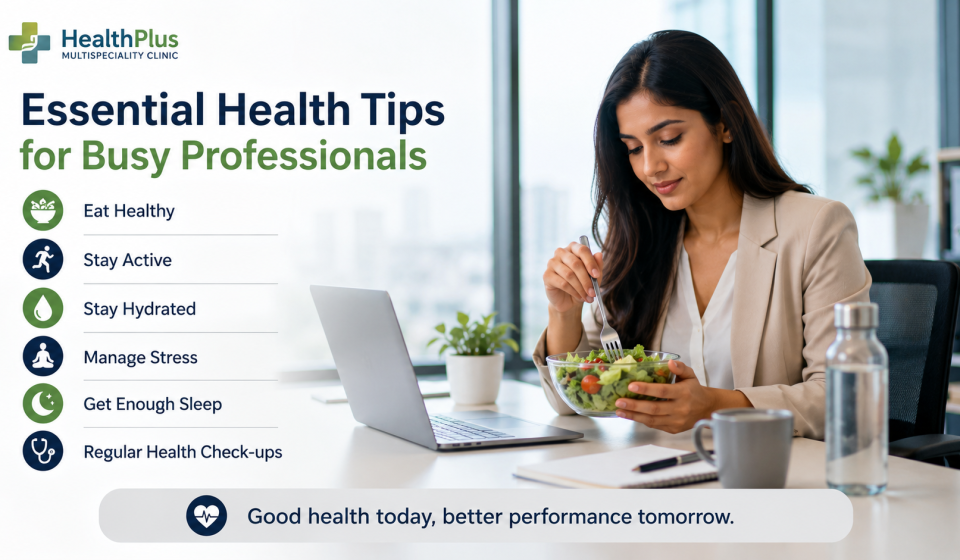

Discover essential health tips for busy professionals. Learn practical ways to maintain a healthy lifestyle through balanced nutrition, regular exercise, stress management, quality sleep, hydration, and preventive healthcare despite a busy schedule.
In today’s fast-paced world, many professionals spend long hours at work, attend endless meetings, manage deadlines, and balance personal responsibilities. While career growth is important, health often becomes a lower priority. Skipping meals, sitting for extended periods, sleeping less, and dealing with constant stress have become common habits among working professionals. Unfortunately, these lifestyle choices can increase the risk of obesity, diabetes, high blood pressure, heart disease, anxiety, and other chronic health conditions.
Maintaining good health does not always require drastic lifestyle changes. Even small daily habits, such as eating nutritious meals, staying physically active, drinking enough water, getting sufficient sleep, and attending routine health checkups, can significantly improve overall well-being. Healthy professionals are generally more energetic, productive, focused, and better equipped to handle workplace challenges.
Preventive healthcare is equally important for busy individuals. Regular health screenings help identify potential health issues before they become serious, allowing timely treatment and reducing future medical complications. Taking care of your physical and mental health is not only beneficial for your career but also for your personal life and long-term quality of life.
In this article, we explore practical health tips that busy professionals can easily incorporate into their daily routines to stay healthy, productive, and maintain a better work-life balance.
Why Health Matters for Busy Professionals
A demanding work schedule often leaves little time for self-care. However, poor health can negatively affect both personal and professional performance.
Maintaining good health helps professionals:
- Improve concentration
- Increase productivity
- Reduce stress
- Prevent chronic diseases
- Improve energy levels
- Strengthen immunity
- Enhance work-life balance
Investing time in health today can prevent serious medical problems in the future.
1. Never Skip Breakfast
Breakfast provides the body with the energy needed to begin the day.
A healthy breakfast may include:
- Whole grains
- Eggs
- Fresh fruits
- Oatmeal
- Yogurt
- Nuts
- Milk
Eating a balanced breakfast improves concentration, stabilizes blood sugar levels, and reduces unhealthy snacking later in the day.
2. Stay Hydrated Throughout the Day
Busy professionals often forget to drink enough water while working.
Proper hydration helps:
- Improve concentration
- Prevent headaches
- Maintain energy
- Support digestion
- Regulate body temperature
- Improve kidney function
Aim to drink adequate water throughout the day, especially if working in air-conditioned environments.
3. Choose Healthy Snacks
Instead of processed snacks, choose nutritious alternatives during work hours.
Healthy snack options include:
- Fresh fruits
- Mixed nuts
- Seeds
- Yogurt
- Roasted chickpeas
- Whole-grain crackers
Healthy snacks help maintain stable energy levels and reduce unhealthy cravings.
4. Avoid Sitting for Long Hours
Prolonged sitting increases the risk of several health problems.
Take short movement breaks every 30 to 60 minutes by:
- Standing up
- Walking around the office
- Stretching
- Using stairs
- Performing light exercises
Regular movement improves circulation, reduces muscle stiffness, and supports heart health.
5. Exercise Regularly
Physical activity is one of the most effective ways to maintain good health despite a busy schedule.
Aim for at least 150 minutes of moderate exercise each week.
Good exercise options include:
- Brisk walking
- Cycling
- Swimming
- Strength training
- Yoga
- Home workouts
Even 20–30 minutes of daily exercise can significantly improve physical and mental health.
6. Manage Workplace Stress
Long working hours and tight deadlines can increase stress levels.
Healthy stress management techniques include:
- Deep breathing exercises
- Meditation
- Mindfulness
- Short breaks during work
- Talking with colleagues or family
- Spending time on hobbies
Managing stress helps improve emotional well-being and workplace performance.
7. Prioritize Quality Sleep
Sleep is essential for both physical recovery and mental performance.
Adults should aim for approximately 7–9 hours of quality sleep each night.
Good sleep habits include:
- Sleeping at the same time daily
- Avoiding caffeine late in the evening
- Limiting screen time before bed
- Creating a comfortable sleep environment
Adequate sleep improves memory, concentration, mood, and immunity.
8. Maintain Good Posture
Poor posture during long working hours can lead to back pain, neck pain, and muscle strain.
Maintain proper posture by:
- Sitting with your back supported
- Keeping feet flat on the floor
- Positioning the computer screen at eye level
- Using an ergonomic chair when possible
Good posture reduces physical discomfort and improves workplace comfort.
9. Schedule Routine Health Checkups
Preventive healthcare should never be neglected, regardless of how busy your schedule is.
Routine health checkups may include:
- Blood pressure measurement
- Blood sugar testing
- Cholesterol screening
- Body weight assessment
- Vision examination
- Dental checkups
- General physical examination
Regular screenings help detect health problems early and support long-term wellness.
10. Reduce Processed and Fast Foods
Busy schedules often lead professionals to rely on fast food and highly processed meals.
Try to choose healthier alternatives whenever possible:
- Fresh vegetables
- Lean proteins
- Whole grains
- Homemade meals
- Healthy salads
- Fresh fruit
A balanced diet supports better energy, concentration, and overall health while reducing the risk of lifestyle-related diseases.
11. Take Care of Your Mental Health
A busy work schedule can affect emotional well-being just as much as physical health. Constant pressure, unrealistic deadlines, and long working hours may increase the risk of stress, anxiety, and burnout.
Simple ways to support your mental health include:
- Practice mindfulness or meditation.
- Take short breaks during work.
- Spend time with family and friends.
- Pursue hobbies outside of work.
- Seek professional support if stress becomes overwhelming.
Good mental health improves focus, decision-making, and overall job satisfaction.
12. Maintain a Healthy Work-Life Balance
Achieving a balance between work and personal life is essential for long-term health.
Some practical ways include:
- Set clear working hours.
- Avoid checking work emails late at night.
- Take regular vacations.
- Spend quality time with loved ones.
- Make time for relaxation and recreation.
A healthy work-life balance reduces stress and improves both physical and emotional well-being.
13. Limit Screen Time Outside Work
Many professionals spend several hours each day in front of computers and continue using smartphones after work.
Excessive screen time may contribute to:
- Eye strain
- Poor sleep quality
- Neck and back pain
- Mental fatigue
- Reduced physical activity
To reduce screen-related health issues:
- Follow the 20-20-20 rule (every 20 minutes, look at something 20 feet away for 20 seconds).
- Reduce unnecessary mobile phone usage.
- Avoid screens at least one hour before bedtime.
- Use proper screen brightness and ergonomic positioning.
14. Avoid Smoking and Limit Alcohol Consumption
Smoking and excessive alcohol consumption significantly increase the risk of serious health conditions.
These include:
- Heart disease
- Stroke
- Lung disease
- Liver disease
- Several types of cancer
- High blood pressure
Quitting smoking and drinking alcohol in moderation can greatly improve long-term health and reduce medical risks.
15. Practice Good Hygiene
Simple hygiene habits help prevent infections and support overall health, especially in busy office environments.
Important habits include:
- Wash hands regularly.
- Use hand sanitizer when necessary.
- Keep your workspace clean.
- Cover your mouth while coughing or sneezing.
- Avoid close contact with people who are sick.
Maintaining good hygiene reduces the spread of seasonal illnesses in the workplace.
16. Stay Active During Business Travel
Professionals who travel frequently often struggle to maintain healthy routines.
Healthy travel habits include:
- Carry healthy snacks.
- Stay hydrated during flights.
- Walk whenever possible.
- Stretch during long journeys.
- Choose healthier meal options.
- Get adequate sleep after travel.
These small habits help minimize fatigue and maintain energy while traveling.
17. Don’t Ignore Warning Signs
Busy professionals sometimes postpone medical care because of work commitments.
Never ignore symptoms such as:
- Chest pain
- Difficulty breathing
- Persistent fatigue
- Frequent headaches
- Unexplained weight loss
- High fever
- Dizziness
- Persistent cough
Seeking medical attention early often prevents more serious health complications.
18. Make Preventive Healthcare a Priority
Preventive healthcare helps detect health problems before symptoms develop.
Important preventive services include:
- Annual health checkups
- Blood pressure monitoring
- Blood sugar testing
- Cholesterol screening
- Vision examinations
- Dental checkups
- Vaccinations
Routine preventive care supports long-term health and helps reduce future healthcare costs.
Healthy Daily Habits Every Professional Should Follow
Developing small daily habits can have a significant impact on long-term health.
Recommended habits include:
- Eat balanced meals.
- Drink enough water.
- Exercise regularly.
- Get sufficient sleep.
- Manage stress effectively.
- Take movement breaks.
- Schedule regular health screenings.
- Maintain good posture.
- Limit processed foods.
- Stay physically and mentally active.
Consistency is more important than perfection when building a healthy lifestyle.
sources
https://www.who.int
https://www.cdc.gov
https://www.nih.gov
https://www.heart.org
Conclusion
Maintaining good health while managing a busy professional life may seem challenging, but small and consistent lifestyle changes can make a significant difference. Eating nutritious meals, staying hydrated, exercising regularly, getting enough sleep, managing stress, maintaining proper posture, and scheduling routine health checkups all contribute to better physical and mental well-being.
Busy professionals often focus heavily on career success while overlooking their own health. However, good health is the foundation of sustained productivity, better decision-making, improved energy levels, and a higher quality of life. Preventive healthcare and healthy daily habits not only reduce the risk of chronic diseases but also help individuals perform at their best both professionally and personally.
By making health a daily priority rather than an afterthought, professionals can enjoy greater career success, improved work-life balance, and long-term wellness.
FAQs
1. Why is maintaining good health important for busy professionals?
Good health improves productivity, concentration, energy levels, stress management, and reduces the risk of chronic diseases, helping professionals perform more effectively at work.
2. How much exercise should busy professionals aim for?
Adults should aim for at least 150 minutes of moderate-intensity physical activity each week, along with muscle-strengthening activities on two or more days per week.
3. How often should professionals schedule health checkups?
Most healthy adults should have a comprehensive health checkup once a year. Individuals with chronic conditions or higher health risks may require more frequent medical evaluations.
4. What are the best healthy snacks for office workers?
Healthy snack options include fresh fruits, mixed nuts, yogurt, roasted chickpeas, seeds, whole-grain crackers, and vegetable sticks with healthy dips.
5. How can busy professionals reduce workplace stress?
Stress can be managed through regular exercise, meditation, deep breathing, taking short breaks, maintaining a healthy work-life balance, getting enough sleep, and seeking professional support when needed.