
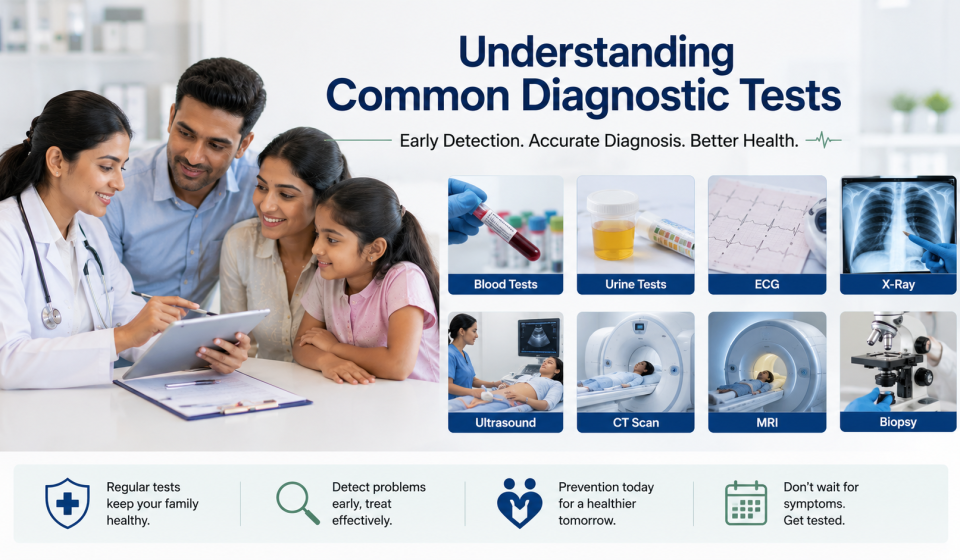

Understand common diagnostic tests and their importance in healthcare. Learn how blood tests, imaging scans, urine tests, ECGs, and other diagnostic procedures help detect diseases early and support accurate medical treatment.
Diagnostic tests play a vital role in modern healthcare by helping doctors identify, confirm, and monitor various medical conditions. While physical examinations and discussions about symptoms provide valuable information, diagnostic tests offer a more detailed understanding of what is happening inside the body. These tests allow healthcare providers to make accurate diagnoses, recommend appropriate treatments, and monitor the effectiveness of ongoing medical care.
Many diseases develop without obvious symptoms during their early stages. Conditions such as diabetes, high cholesterol, kidney disease, thyroid disorders, liver disease, and even certain cancers may remain unnoticed for months or years. Routine diagnostic testing helps detect these problems before they become severe, giving patients a better chance of successful treatment and recovery.
Diagnostic tests are not only used when someone is sick. They are also an important part of preventive healthcare. Regular health screenings, annual checkups, and routine laboratory tests help evaluate overall health and identify risk factors before complications arise. Understanding the purpose of common diagnostic tests can reduce anxiety, encourage timely medical care, and help individuals become more involved in managing their health.
In this guide, we’ll explore the most commonly performed diagnostic tests, why they are important, how they work, and what they reveal about your overall health.
What Are Diagnostic Tests?
Diagnostic tests are medical procedures used to detect diseases, evaluate organ function, identify infections, monitor chronic conditions, and assess overall health. These tests provide healthcare professionals with objective information that supports accurate diagnosis and treatment planning.
Diagnostic tests may include:
- Blood tests
- Urine tests
- Imaging scans
- Heart function tests
- Lung function tests
- Biopsy procedures
- Genetic testing
- Laboratory examinations
The specific tests recommended depend on a person’s symptoms, age, medical history, family history, and overall health status.
Why Diagnostic Tests Are Important
Diagnostic testing offers several important healthcare benefits.
They help:
- Detect diseases early
- Confirm medical diagnoses
- Identify hidden health problems
- Monitor ongoing treatment
- Evaluate organ function
- Reduce the risk of complications
- Support preventive healthcare
Early diagnosis often results in more effective treatment and improved long-term health outcomes.
1. Blood Tests
Blood tests are among the most common diagnostic procedures performed in healthcare. A small blood sample provides valuable information about many body systems.
Common blood tests include:
- Complete Blood Count (CBC)
- Blood glucose test
- Cholesterol profile
- Liver function test
- Kidney function test
- Thyroid function test
- Vitamin level testing
- Electrolyte panel
Blood tests help detect infections, anemia, diabetes, high cholesterol, nutritional deficiencies, liver disease, kidney disorders, and many other conditions.
2. Complete Blood Count (CBC)
A Complete Blood Count is one of the most frequently ordered laboratory tests.
It measures:
- Red blood cells
- White blood cells
- Hemoglobin
- Hematocrit
- Platelets
Doctors use CBC results to diagnose conditions such as anemia, infections, inflammation, blood disorders, and immune system problems.
3. Blood Sugar Test
Blood glucose testing measures the amount of sugar present in the bloodstream.
Healthcare providers commonly recommend:
- Fasting Blood Sugar (FBS)
- Random Blood Sugar (RBS)
- HbA1c test
These tests help diagnose diabetes, prediabetes, and monitor blood sugar control in individuals already living with diabetes.
4. Lipid Profile
A lipid profile evaluates different types of fats present in the blood.
It measures:
- Total cholesterol
- LDL cholesterol
- HDL cholesterol
- Triglycerides
Abnormal cholesterol levels increase the risk of heart disease and stroke. Routine lipid testing helps guide lifestyle changes and treatment decisions.
5. Urine Tests
Urine analysis provides important information about kidney function and overall health.
A routine urine test may identify:
- Urinary tract infections
- Kidney disease
- Diabetes
- Dehydration
- Protein in urine
- Blood in urine
Urine testing is simple, painless, and widely used during routine health examinations.
6. Liver Function Tests (LFT)
The liver performs many essential functions including digestion, detoxification, and metabolism.
Liver function tests evaluate enzymes and proteins such as:
- ALT
- AST
- Bilirubin
- Albumin
- Alkaline phosphatase
These tests help diagnose liver infections, fatty liver disease, hepatitis, medication-related liver damage, and other liver disorders.
7. Kidney Function Tests (KFT)
Healthy kidneys remove waste products from the bloodstream and maintain fluid balance.
Kidney function tests commonly measure:
- Creatinine
- Blood Urea Nitrogen (BUN)
- Estimated Glomerular Filtration Rate (eGFR)
- Electrolytes
These tests help detect kidney disease before symptoms become noticeable.
8. Electrocardiogram (ECG)
An Electrocardiogram, commonly called an ECG or EKG, records the heart’s electrical activity.
Doctors recommend ECG testing to evaluate:
- Irregular heartbeat
- Chest pain
- Heart attack
- Heart rhythm disorders
- Heart enlargement
The test is quick, painless, and provides valuable information about heart health.
9. X-Ray
X-rays are one of the oldest and most commonly used imaging tests.
They help examine:
- Bones
- Joints
- Chest
- Lungs
- Teeth
- Certain abdominal conditions
Doctors frequently use X-rays to diagnose fractures, pneumonia, arthritis, and lung diseases.
10. Ultrasound Scan
Ultrasound uses high-frequency sound waves to create images of internal organs without radiation exposure.
It is commonly used for examining:
- Pregnancy
- Liver
- Gallbladder
- Kidneys
- Thyroid gland
- Pelvic organs
- Blood vessels
Ultrasound is considered safe, non-invasive, and widely available.
Preparing for Diagnostic Tests
Some diagnostic tests require preparation to ensure accurate results.
Your healthcare provider may advise you to:
- Fast before blood tests.
- Drink adequate water before certain imaging tests.
- Avoid specific medications temporarily.
- Wear comfortable clothing.
- Inform the healthcare provider about allergies or pregnancy.
- Follow all pre-test instructions carefully.
Proper preparation improves the accuracy and reliability of diagnostic results.
11. Computed Tomography (CT) Scan
A Computed Tomography (CT) scan combines multiple X-ray images with computer technology to create detailed cross-sectional images of the body’s internal structures.
Doctors commonly recommend CT scans to evaluate:
- Head injuries
- Brain disorders
- Chest diseases
- Lung infections
- Internal bleeding
- Bone fractures
- Abdominal pain
- Certain cancers
CT scans provide more detailed information than standard X-rays and help doctors diagnose complex medical conditions quickly.
12. Magnetic Resonance Imaging (MRI)
Magnetic Resonance Imaging (MRI) uses powerful magnets and radio waves to produce detailed images of organs, muscles, joints, nerves, and soft tissues.
MRI is often used to diagnose:
- Brain disorders
- Spinal cord injuries
- Joint problems
- Torn ligaments
- Muscle injuries
- Tumors
- Neurological diseases
Unlike CT scans and X-rays, MRI does not use ionizing radiation, making it suitable for many diagnostic situations.
13. Mammography
Mammography is a specialized X-ray examination used to detect breast abnormalities.
Healthcare providers recommend mammograms to:
- Detect breast cancer early
- Identify breast lumps
- Monitor breast health
- Evaluate suspicious findings
Early breast cancer detection significantly improves treatment success and survival rates.
14. Colonoscopy
A colonoscopy allows doctors to examine the inside of the large intestine using a flexible tube equipped with a small camera.
This procedure helps detect:
- Colon polyps
- Colorectal cancer
- Inflammatory bowel disease
- Rectal bleeding
- Chronic digestive problems
Routine colonoscopy screening is particularly important for adults over 45 or individuals with a family history of colorectal cancer.
15. Biopsy
A biopsy involves removing a small tissue sample from the body for laboratory examination.
Doctors perform biopsies to:
- Confirm cancer
- Identify infections
- Diagnose inflammatory diseases
- Evaluate abnormal growths
Although hearing the word “biopsy” may sound concerning, many biopsy results reveal non-cancerous conditions.
16. Pulmonary Function Tests (PFT)
Pulmonary Function Tests measure how well the lungs function.
These tests evaluate:
- Lung capacity
- Airflow
- Oxygen exchange
- Breathing efficiency
Doctors commonly use PFTs to diagnose:
- Asthma
- Chronic Obstructive Pulmonary Disease (COPD)
- Pulmonary fibrosis
- Other respiratory disorders
Diagnostic Tests in Preventive Healthcare
Diagnostic testing is an essential part of preventive medicine. Many diseases can be detected before symptoms develop, allowing early treatment and reducing the risk of complications.
Routine preventive diagnostic tests may include:
- Blood pressure measurement
- Blood sugar testing
- Cholesterol screening
- Complete Blood Count (CBC)
- Urine analysis
- Thyroid function tests
- Kidney and liver function tests
- Cancer screening
- Vision and hearing assessments
Regular health checkups combined with appropriate diagnostic testing help maintain long-term health and wellness.
Benefits of Early Diagnosis
Early diagnosis offers numerous health advantages.
Some of the major benefits include:
- Faster treatment
- Better treatment outcomes
- Reduced disease complications
- Lower healthcare costs
- Improved quality of life
- Higher survival rates for many diseases
- Better management of chronic illnesses
Detecting diseases during their early stages often results in simpler, more effective treatment plans.
Common Myths About Diagnostic Tests
Many people avoid medical testing because of common misconceptions.
Myth 1: Diagnostic tests are only necessary when you’re sick.
Fact: Many tests are designed to detect diseases before symptoms appear.
Myth 2: Blood tests can detect every disease.
Fact: Blood tests provide valuable information but are often combined with physical examinations and other diagnostic procedures.
Myth 3: Imaging tests always expose patients to harmful radiation.
Fact: Some imaging procedures, such as ultrasound and MRI, do not use radiation.
Myth 4: Diagnostic tests are painful.
Fact: Most common diagnostic tests are quick, minimally invasive, and cause little or no discomfort.
How to Prepare for a Diagnostic Test
Preparing properly helps ensure accurate test results.
General recommendations include:
- Follow fasting instructions if required.
- Inform your doctor about medications.
- Wear comfortable clothing.
- Bring previous medical reports if available.
- Stay hydrated unless instructed otherwise.
- Ask questions if you are unsure about the procedure.
- Arrive on time for your appointment.
Following your healthcare provider’s instructions improves both the safety and accuracy of diagnostic testing.
sources
https://www.who.int
https://www.cdc.gov
https://www.nih.gov
https://www.aafp.org
Conclusion
Diagnostic tests are a fundamental part of modern healthcare, helping doctors detect diseases, confirm diagnoses, monitor treatments, and evaluate overall health. From routine blood tests and urine analysis to advanced imaging procedures such as CT scans and MRI, these tests provide valuable information that supports accurate medical decision-making.
Understanding the purpose of common diagnostic tests can reduce anxiety and encourage individuals to participate actively in preventive healthcare. Early detection of health conditions often leads to more effective treatment, lower healthcare costs, and improved quality of life.
Regular health checkups combined with appropriate diagnostic testing empower individuals to identify health risks early and take proactive steps toward maintaining lifelong wellness.
FAQs
1. What are diagnostic tests?
Diagnostic tests are medical procedures used to detect diseases, confirm diagnoses, monitor health conditions, and evaluate how different organs and body systems are functioning.
2. Are diagnostic tests only recommended when someone is sick?
No. Many diagnostic tests are performed during routine health checkups to detect diseases early, even before symptoms appear.
3. Which diagnostic test is most commonly performed?
Blood tests are among the most commonly performed diagnostic tests because they provide valuable information about overall health, infections, diabetes, cholesterol, liver function, kidney function, and many other conditions.
4. Are imaging tests safe?
Most imaging tests are considered safe when performed appropriately. Ultrasound and MRI do not use radiation, while X-rays and CT scans use carefully controlled amounts of radiation only when medically necessary.
5. How often should I undergo routine diagnostic testing?
The frequency depends on your age, medical history, family history, lifestyle, and overall health. Your healthcare provider can recommend a screening schedule that is appropriate for your individual needs.