
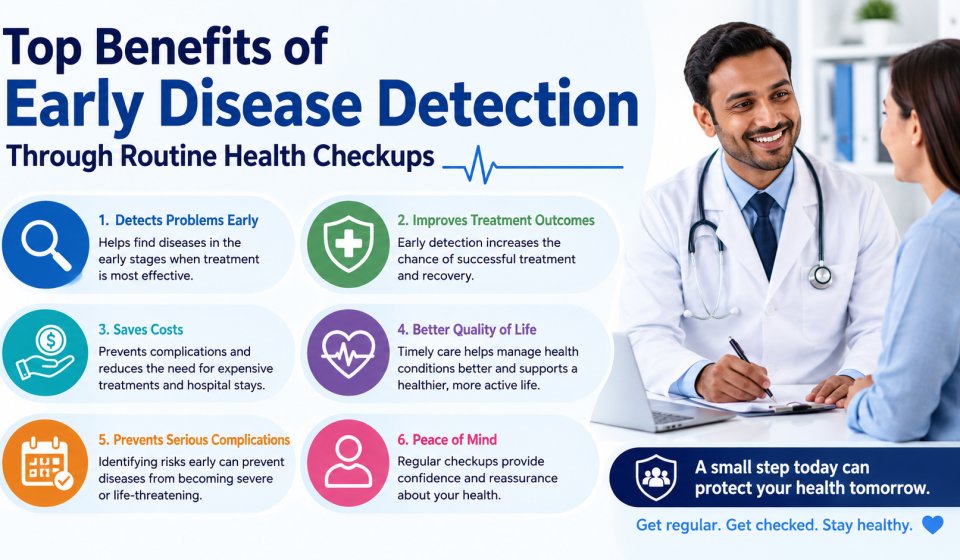

Discover the top benefits of early disease detection through routine health checkups. Learn how regular medical screenings help prevent serious illnesses, reduce healthcare costs, and improve overall health and quality of life.
In today’s busy lifestyle, many people visit a doctor only when they feel sick. Unfortunately, several serious health conditions such as diabetes, high blood pressure, heart disease, thyroid disorders, kidney disease, and even certain cancers often develop silently without showing noticeable symptoms in their early stages. By the time symptoms become obvious, treatment may become more complicated and expensive.
Routine health checkups play a crucial role in identifying these hidden health problems before they become severe. Early disease detection not only increases the chances of successful treatment but also helps people maintain a healthier and longer life.
Whether you are in your 20s or 60s, regular medical checkups should be an important part of your healthcare routine. This article explains the major benefits of early disease detection through routine health checkups and why preventive healthcare is one of the smartest investments you can make for yourself and your family.
What Is Early Disease Detection?
Early disease detection means identifying a health condition before noticeable symptoms appear. This is achieved through preventive health screenings, physical examinations, blood tests, urine tests, imaging scans, and consultations with healthcare professionals.
Routine checkups help doctors detect:
- Diabetes
- High blood pressure
- High cholesterol
- Heart disease
- Liver disorders
- Kidney disease
- Thyroid disorders
- Vitamin deficiencies
- Certain cancers
- Bone-related conditions
- Obesity and metabolic syndrome
Finding these conditions early allows treatment to begin before complications develop.
Why Routine Health Checkups Matter
Many diseases progress slowly. People often assume they are healthy because they feel normal. However, conditions like hypertension are commonly known as the “silent killer” because they rarely show symptoms until serious damage has already occurred.
Routine health checkups provide valuable information about your body’s functioning. They help doctors monitor changes over time and identify health risks before they become emergencies.
Instead of treating diseases after they develop, preventive healthcare focuses on stopping them from becoming severe.
Top Benefits of Early Disease Detection
1. Detects Diseases Before Symptoms Appear
One of the biggest advantages of routine health checkups is identifying illnesses before symptoms become noticeable.
For example:
- High blood pressure may exist for years without symptoms.
- Type 2 diabetes can slowly damage nerves, kidneys, and eyes before diagnosis.
- High cholesterol often has no warning signs.
Simple blood tests and physical examinations can detect these conditions early, allowing timely treatment.
2. Increases Treatment Success Rates
Many diseases respond much better to treatment when diagnosed early.
For example:
- Early-stage cancers often require less aggressive treatment.
- Diabetes can often be managed through lifestyle changes if caught early.
- Heart disease can be prevented through medication and lifestyle improvements before major complications occur.
Early diagnosis improves recovery rates and reduces long-term health complications.
3. Prevents Serious Complications
Ignoring small health problems can eventually lead to major medical emergencies.
Examples include:
- Untreated high blood pressure can cause stroke or heart attack.
- Poorly controlled diabetes can damage kidneys and eyesight.
- High cholesterol may lead to blocked arteries.
- Thyroid disorders can affect metabolism, fertility, and heart health.
Routine monitoring allows doctors to manage these conditions before permanent damage occurs.
4. Saves Money on Medical Expenses
Many people skip health checkups thinking they are expensive.
In reality, preventive healthcare usually costs much less than treating advanced diseases.
Consider this example:
A simple annual blood test may cost a few thousand rupees, while hospitalization for a heart attack or kidney failure can cost several lakhs.
Early diagnosis helps avoid:
- Emergency hospital admissions
- Major surgeries
- Intensive care treatment
- Long-term medication expenses
Regular checkups are one of the most cost-effective healthcare investments.
5. Improves Quality of Life
Healthy individuals are more productive, energetic, and mentally active.
Detecting health issues early helps people maintain:
- Better physical fitness
- Improved energy levels
- Healthy sleep
- Better work performance
- Increased confidence
- Better emotional well-being
Managing small health issues early prevents them from affecting everyday life.
6. Helps Monitor Existing Health Conditions
People already diagnosed with chronic diseases benefit greatly from regular follow-up checkups.
Routine monitoring helps doctors:
- Evaluate medication effectiveness
- Detect complications early
- Adjust treatment plans
- Track disease progression
Patients with diabetes, hypertension, thyroid disorders, asthma, or heart disease especially benefit from regular monitoring.
7. Encourages Healthy Lifestyle Changes
Routine checkups often motivate people to improve their lifestyle.
Doctors may recommend:
- Better nutrition
- Regular exercise
- Weight management
- Smoking cessation
- Reduced alcohol intake
- Better stress management
When patients see measurable improvements in their reports, they become more committed to maintaining healthy habits.
8. Detects Nutritional Deficiencies
Modern lifestyles frequently lead to deficiencies of:
- Vitamin D
- Vitamin B12
- Iron
- Calcium
These deficiencies may cause:
- Fatigue
- Weakness
- Poor concentration
- Bone pain
- Hair loss
Routine blood tests help identify these problems before they become severe.
9. Supports Better Heart Health
Cardiovascular disease remains one of the leading causes of death worldwide.
Routine health checkups evaluate:
- Blood pressure
- Cholesterol levels
- Blood sugar
- Body weight
- BMI
- ECG (when necessary)
Early intervention significantly lowers the risk of heart attacks and strokes.
10. Improves Cancer Detection
Several cancers have significantly higher survival rates when detected early.
Routine screening may include:
- Breast examination
- Mammography
- Pap smear
- Prostate screening
- Colon cancer screening
- Oral cancer examination
Early-stage cancers often require less intensive treatment and have much better outcomes.
11. Identifies Risk Factors Based on Family History
People with a family history of diabetes, hypertension, cancer, or heart disease are more likely to develop similar conditions.
Routine checkups allow doctors to:
- Recommend earlier screenings
- Monitor high-risk patients closely
- Suggest preventive lifestyle changes
Personalized preventive care reduces future health risks.
12. Protects Mental Health
Health checkups aren’t only about physical diseases.
Doctors may also identify:
- Anxiety
- Depression
- Sleep disorders
- Chronic stress
Early intervention through counseling or treatment helps improve overall well-being.
What Does a Routine Health Checkup Usually Include?
A comprehensive health checkup may include:
- Physical examination
- Blood pressure measurement
- Blood sugar test
- Complete blood count (CBC)
- Lipid profile
- Liver function test
- Kidney function test
- Thyroid profile
- Urine examination
- Vitamin deficiency tests
- ECG (if required)
- Chest X-ray (when necessary)
- BMI and weight assessment
Doctors may recommend additional tests depending on age, gender, medical history, and risk factors.
Who Should Get Routine Health Checkups?
Routine health screenings are beneficial for everyone, but they are especially important for:
- Adults above 30 years
- Individuals with obesity
- Smokers
- People with high blood pressure
- Diabetic patients
- Those with a family history of chronic illnesses
- Women planning pregnancy
- Senior citizens
- Individuals with sedentary lifestyles
Your doctor can recommend the appropriate screening schedule based on your individual needs.
How Often Should You Get a Health Checkup?
General recommendations include:
- 20–30 years: Every 2–3 years if healthy.
- 30–40 years: Every 1–2 years.
- Above 40 years: Annually.
- People with chronic conditions: As advised by the doctor.
The frequency may vary depending on your medical history and risk factors.
Tips to Make the Most of Your Health Checkup
- Schedule regular annual appointments.
- Share your family medical history honestly.
- Inform your doctor about medications and supplements.
- Fast if required for blood tests.
- Discuss any unusual symptoms, even if they seem minor.
- Follow your doctor’s recommendations after receiving your reports.
- Maintain a healthy lifestyle between checkups.
Preventive care works best when combined with healthy daily habits.
Real-Life Example
Rajesh, a 42-year-old office worker, visited a clinic for a routine annual health checkup even though he felt perfectly healthy. His blood tests revealed high cholesterol and early-stage diabetes. Since the condition was detected early, his doctor recommended dietary changes, regular exercise, and medication. Within six months, Rajesh improved his blood sugar and cholesterol levels without developing any serious complications.
Had he waited until symptoms appeared, he might have faced heart disease or other long-term health issues. His story highlights how routine health checkups can prevent major illnesses before they become life-threatening.
Sources
https://www.who.int
https://www.cdc.gov/prevention
Conclusion
Routine health checkups are one of the most effective ways to protect your long-term health. Many serious illnesses develop silently and may not show symptoms until significant damage has already occurred. Early disease detection allows doctors to diagnose health conditions at their earliest stages, improving treatment outcomes, reducing medical expenses, preventing complications, and enhancing overall quality of life.
Rather than waiting for illness to appear, adopting a preventive healthcare approach empowers you to take control of your well-being. Whether you are young, middle-aged, or older, regular health screenings provide valuable insights into your body’s condition and help ensure a healthier future. Investing a small amount of time in routine checkups today can help you avoid major health challenges tomorrow.
Frequently Asked Questions (FAQs)
1. Why are routine health checkups important even if I feel healthy?
Many diseases such as diabetes, hypertension, and high cholesterol develop without noticeable symptoms. Routine health checkups help detect these conditions early, allowing timely treatment and preventing serious complications.
2. How often should I undergo a routine health checkup?
Healthy adults under 30 can generally have checkups every 2–3 years. Adults over 40 and individuals with chronic conditions or risk factors should usually have annual health checkups or follow their doctor’s recommendations.
3. What diseases can be detected through routine health screenings?
Routine health checkups can help detect diabetes, high blood pressure, heart disease, thyroid disorders, kidney disease, liver problems, vitamin deficiencies, certain cancers, and other chronic health conditions.
4. Are routine health checkups expensive?
Routine screenings are generally much more affordable than treating advanced illnesses. Early detection can reduce hospitalization, surgeries, and long-term treatment costs, making preventive healthcare a cost-effective choice.
5. What should I do before a routine health checkup?
Follow your doctor’s instructions, which may include fasting before blood tests, staying hydrated, carrying previous medical reports, listing current medications, and discussing your family medical history during the consultation.